 +86-13752771911
 E-mail:ptfetube@yozonetech.cn



Ответ эксперта: Является ли тефлоновая трубка тем же самым, что и PTFE? Руководство 2025 года по 3 основным фторполимерам
18 декабря 2025 года
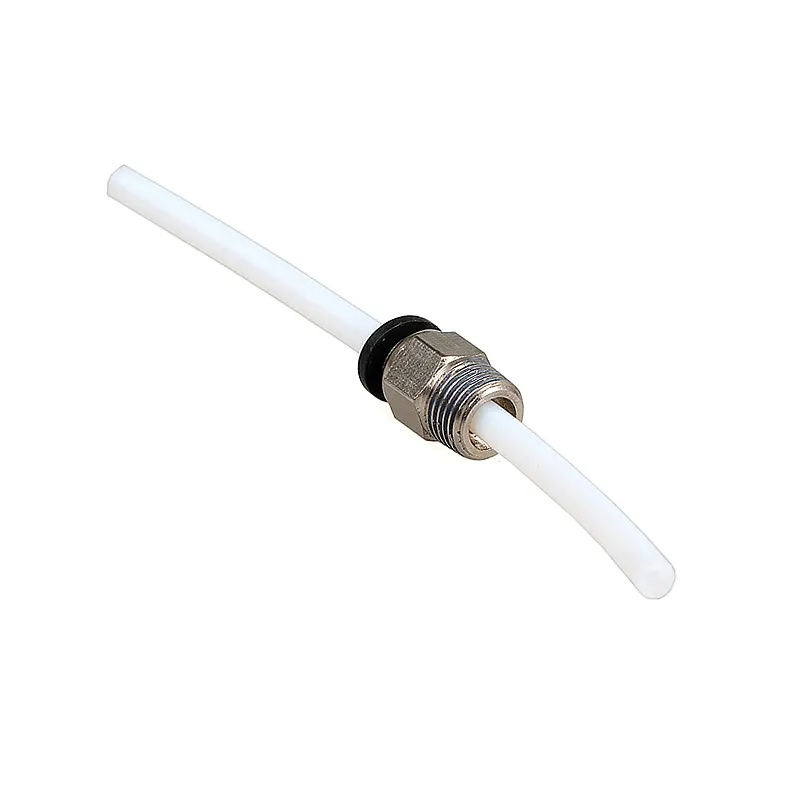
Аннотация
This document examines the relationship between Teflon and Polytetrafluoroethylene (PTFE), clarifying that Teflon is the registered trademark for PTFE, a synthetic fluoropolymer of tetrafluoroethylene. The analysis extends beyond this initial clarification to provide a detailed comparative study of PTFE against other key fluoropolymers, namely Fluorinated Ethylene Propylene (FEP) and Perfluoroalkoxy Alkane (PFA). It investigates their distinct molecular structures, which dictate their physical, thermal, and chemical properties. The discussion focuses on how these differences in material science translate into practical performance characteristics such as temperature resistance, chemical inertness, mechanical strength, and processability. By presenting these materials within a functional context, the paper aims to equip engineers, scientists, and procurement specialists with the nuanced understanding required to make informed material selections for specific industrial applications, ranging from semiconductor manufacturing to medical devices. The objective is to move beyond simple nomenclature and foster a deeper appreciation for the unique capabilities and limitations of each fluoropolymer.
Основные выводы
- Teflon is a brand name; the material itself is Polytetrafluoroethylene (PTFE).
- PTFE, PFA, and FEP share chemical resistance but differ in temperature limits and clarity.
- PFA offers the highest temperature resistance and purity, making it ideal for semiconductor use.
- FEP is more flexible and transparent than PTFE, suitable for flow monitoring applications.
- Understanding molecular differences is vital for selecting the correct fluoropolymer tubing.
- The question ‘Is Teflon tubing the same as PTFE?’ is answered by their brand-material relationship.
- Consider cost versus performance, as PFA and FEP are generally more expensive than PTFE.
Оглавление
- The Fundamental Question: Demystifying Teflon and PTFE
- A Comparative Analysis: PTFE, FEP, and PFA
- The Science Behind the Performance: A Deeper Look at Molecular Structure
- Choosing the Right Fluoropolymer Tubing for Your Application
- Practical Applications Across Industries
- FAQ: Answering Your Pressing Questions
- Заключение
- Ссылки
The Fundamental Question: Demystifying Teflon and PTFE
In the worlds of engineering, manufacturing, and even advanced hobbies, certain names become so iconic they eclipse the technical terms for the materials they represent. We ask for a Kleenex, not a facial tissue; we Google information, we don’t just search the web. A similar phenomenon has occurred with Teflon. For decades, professionals and laypeople alike have used the term “Teflon tubing.” This leads to a foundational point of confusion and a frequently asked question: Is Teflon tubing the same as PTFE? The direct answer is a simple yes, but the story behind that answer reveals much about material science, branding, and the specific needs of high-performance industries.
The Brand Name vs. The Chemical Compound
At its core, the relationship between Teflon and PTFE is that of a brand name to a generic material. Teflon™ is the registered trademark, originally held by the DuPont company (now Chemours), for a chemical compound called Polytetrafluoroethylene, or PTFE for short (Besteflon, n.d.). Think of it as the legal name versus a common nickname. While you might use the nickname in casual conversation, in a technical specification sheet or a scientific paper, using the precise chemical name is paramount for clarity and accuracy.
When a manufacturer produces tubing from Polytetrafluoroethylene resin, they are making PTFE tubing. If that manufacturer has licensed the Teflon™ brand name from Chemours, they can legally market it as Teflon™ tubing. However, another manufacturer might use the exact same grade of PTFE resin but, without the license, will sell it simply as PTFE tubing. The underlying material is identical. This distinction is not merely semantic; it affects how materials are specified, purchased, and verified in critical applications where material properties are non-negotiable.
A Brief History: The Accidental Discovery of a Revolutionary Polymer
The story of PTFE is a classic tale of scientific serendipity. In 1938, a chemist at DuPont named Dr. Roy J. Plunkett was working on developing a new, non-toxic refrigerant. He was experimenting with a gas called tetrafluoroethylene (TFE). One morning, he and his assistant checked a pressurized cylinder of TFE that they had prepared, only to find that the gas seemed to have vanished, even though the cylinder’s weight indicated it was still full.
Rather than discard the cylinder, their curiosity led them to cut it open. Inside, they found a waxy, white powder that was strangely slippery. The TFE gas had polymerized—its individual molecules had linked together into long chains—creating the world’s first fluoropolymer: Polytetrafluoroethylene. Initial testing revealed its astonishing properties: it was inert to nearly every chemical, it could withstand extreme temperatures, and nothing would stick to its surface. DuPont patented the material in 1941 and registered the Teflon trademark in 1945. It was a material born from a failed experiment that would go on to change industries from aerospace to cookware.
Why the Confusion Persists in Industrial Settings
The confusion between Teflon and PTFE persists because the Teflon brand became a victim of its own success. Its marketing was so effective that the name became synonymous with non-stick, low-friction performance. For many engineers and technicians who came up in the industry, “Teflon tubing” was the standard terminology. The term became a shorthand for a specific set of properties.
In 2025, however, the industrial landscape is more complex. While PTFE remains a cornerstone, a whole family of related fluoropolymers has been developed, each with its own niche. Materials like FEP and PFA offer different advantages in processing or performance. Therefore, simply specifying “Teflon tubing” is no longer sufficient. It begs the question, “Which Teflon?” Are you referring to the original PTFE, or perhaps a melt-processible grade like PFA or FEP, which are also sometimes sold under the Teflon brand? This is why understanding the specific material—PTFE, PFA, or FEP—is so vital. Precision in language prevents costly errors in material selection. The question, “Is Teflon tubing the same as PTFE?” opens the door to a more important discussion about choosing the right material for the right job.
A Comparative Analysis: PTFE, FEP, and PFA
Once we establish that Teflon is a brand name for PTFE, the next logical step is to understand where PTFE fits within the broader family of fluoropolymers. PTFE was the first, but it is not the only option. Two other prominent members of this family are FEP (Fluorinated Ethylene Propylene) and PFA (Perfluoroalkoxy Alkane). While they share the same lineage and many core traits, their subtle differences are what make them uniquely suited for different tasks. A failure to appreciate these distinctions can lead to material failure, project delays, or unnecessary costs.
Understanding the Fluoropolymer Family Tree
Imagine PTFE as the patriarch of the fluoropolymer family. It is composed of a long, simple chain of carbon atoms, each completely surrounded by fluorine atoms. This structure is what gives it its legendary chemical resistance and thermal stability. However, this robust structure also makes PTFE difficult to process. It doesn’t truly melt like a typical plastic; instead, it softens into a gel at a high temperature (around 327°C) and must be processed using techniques like paste extrusion and sintering, which can be complex and limit the forms it can take (Besteflon, n.d.).
To address this processing challenge, chemists developed FEP and PFA.
- FEP (фторированный этилен-пропилен): FEP was created by copolymerizing tetrafluoroethylene (TFE, the building block of PTFE) with hexafluoropropylene (HFP). This introduces a side branch into the polymer chain. This small change is enough to lower the melting point and viscosity, allowing FEP to be melt-processed using conventional techniques like injection molding and screw extrusion .
- ПФА (перфторалкоксиалкан): PFA is also a copolymer, but it uses a different modifier (perfluoropropyl vinyl ether) to create its side chains. PFA is often seen as a premium material that combines the processing ease of FEP with performance characteristics that are much closer to PTFE, especially in terms of high-temperature endurance.
These three materials form the core of the fluoropolymer tubing market. Each represents a different balance of performance, processability, and price.
Key Property Showdown: A Detailed Table
To visualize the differences, a direct comparison is often the most effective tool. The following table summarizes the key properties that engineers and designers must consider when selecting a fluoropolymer.
| Недвижимость | PTFE (политетрафторэтилен) | FEP (фторированный этилен-пропилен) | PFA (Perfluoroalkoxy Alkane) |
|---|---|---|---|
| Макс. Температура непрерывного использования. | 260°C (500°F) | 200°C (392°F) | 260°C (500°F) |
| Melting Point | ~327°C (sintering temp) | ~260°C | ~310°C |
| Химическая стойкость | Превосходно | Превосходно | Превосходно |
| Clarity / Transparency | Translucent to Opaque (milky white) | Optically Transparent | Transparent to Translucent |
| Flexibility (Flex Life) | Хорошо | Превосходно | Очень хорошо |
| Возможность обработки расплава? | No (Sintered) | Да | Да |
| Purity / Low Extractables | Хорошо | Очень хорошо | Превосходно |
| Relative Cost | Base | Средний | Высокий |
Performance Under Pressure: Temperature and Mechanical Strength
As the table illustrates, the most significant performance differentiator is temperature. Both PTFE and PFA can be used continuously at temperatures up to 260°C, making them suitable for the most demanding high-heat applications, such as in aerospace or chemical processing lines (). FEP, with its lower continuous use temperature of 200°C, is still highly capable but would be an inappropriate choice for applications that consistently operate above this threshold.
Mechanically, PFA often exhibits superior properties to FEP at elevated temperatures. PFA has better creep resistance, higher compressive strength, and greater hardness, making it a more robust choice for high-pressure environments, particularly when heat is also a factor. FEP, on the other hand, boasts superior flexibility. It has a much better flex life, meaning it can withstand more cycles of bending and flexing before fatigue and failure. This makes FEP tubing an excellent choice for applications involving robotics, moving parts, or complex routing where a tight bend radius is required.
Processing and Fabrication: The Practical Differences
The ability to be melt-processed is the primary reason for FEP and PFA’s existence. Because they can be melted and extruded or injection molded, they can be used to create more complex shapes, longer continuous lengths of tubing, and components with very smooth surfaces. This is particularly important in the semiconductor industry, where the ultra-smooth interior surface of PFA tubing minimizes particle entrapment and bacterial growth, ensuring the purity of the fluids being transported ().
PTFE, being non-melt-processable, has limitations. Tubing is typically made through ram extrusion, a process where a billet of resin is forced through a die. This can limit the maximum continuous length of the tubing. While techniques have improved, achieving the same very long, seamless lengths possible with FEP and PFA can be a challenge. Furthermore, welding PTFE is extremely difficult, whereas FEP and PFA can be heat-sealed or welded, allowing for the fabrication of complex assemblies. This processing difference is a fundamental consideration that often drives the material selection process as much as the raw performance metrics.
The Science Behind the Performance: A Deeper Look at Molecular Structure
To truly grasp why PTFE, FEP, and PFA behave so differently, we must move from the macroscopic world of temperature ratings and flex tests to the microscopic realm of molecules. The properties we observe—chemical inertness, thermal stability, flexibility—are direct consequences of their molecular architecture. Understanding this connection provides a more profound and predictive capability when selecting materials. It is the difference between memorizing facts and understanding the first principles from which those facts emerge.
The Strength of the Carbon-Fluorine Bond
The foundation of all fluoropolymer performance is the carbon-fluorine (C-F) bond. This is one of the strongest single bonds in organic chemistry. In a PTFE molecule, the carbon backbone is entirely sheathed in a dense helix of fluorine atoms. Think of the carbon chain as a wire and the fluorine atoms as a thick, impenetrable insulation wrapped tightly around it.
This fluorine sheath does two critical things:
- It provides a chemical shield. The fluorine atoms are electronically stable and physically block reactive chemicals from reaching the vulnerable carbon backbone. This is why PTFE is inert to almost everything, from boiling aqua regia to cryogenic propellants. Only a few exotic substances, like molten alkali metals and elemental fluorine at high temperatures, can attack it.
- It creates a low-energy surface. The strong C-F bonds result in very weak intermolecular forces (van der Waals forces). This means that other substances have very little to “grab onto” at the molecular level. This is the origin of PTFE’s famous non-stick properties and its incredibly low coefficient of friction, one of the lowest of any known solid material.
How Molecular Chains Affect Physical Properties (PTFE vs. FEP/PFA)
If the C-F bond is the source of their shared strengths, the differences in their polymer chain structures are the source of their unique personalities.
- PTFE’s Structure: The PTFE chain is a simple, linear repetition of the -CF₂-CF₂- monomer. This long, unbranched structure allows the chains to pack together very efficiently into a highly crystalline arrangement. This high crystallinity contributes to its high melting point, mechanical stiffness, and opacity (the crystalline regions scatter light). However, the immense energy required to break up this crystalline structure is why PTFE does not flow when heated—it doesn’t have a true “melt” phase.
- FEP and PFA’s Structure: FEP and PFA are copolymers. They interrupt the perfect linearity of the PTFE chain by inserting a bulky side group. FEP inserts a -CF(CF₃)- group, while PFA inserts an -O-CF₂-CF₂-CF₃ group. These side groups act like intentional imperfections. They disrupt the ability of the polymer chains to pack tightly together, which lowers the overall crystallinity of the material.
This reduction in crystallinity has several direct consequences:
- Lower Melting Point: Less energy is needed to break apart the less-organized structure, so the melting point is lower.
- Melt Processability: The disruption caused by the side groups allows the polymer chains to slide past one another when heated, enabling true melt flow.
- Increased Transparency: With fewer crystalline regions to scatter light, the material becomes more transparent. FEP, with its significant disruption, is optically clear, while PFA is typically translucent.
- Increased Flexibility: The less rigid, less crystalline structure makes the material inherently more flexible, which is why FEP has a superior flex life.
The following table provides a simplified comparison of these structural effects.
| Характеристика | PTFE | FEP | PFA |
|---|---|---|---|
| Chain Structure | Linear, unbranched | Branched (HFP group) | Branched (ether group) |
| Кристалличность | High (~90%) | Нижний | Низкий |
| Effect on Melting | Does not melt-flow | Melt-flows | Melt-flows |
| Effect on Clarity | Непрозрачный/прозрачный | Прозрачный | Translucent |
| Effect on Flex Life | Хорошо | Превосходно | Очень хорошо |
The Concept of Crystallinity and Its Impact on Tubing
Crystallinity is a crucial concept in polymer science. It refers to the degree of structural order in a solid polymer. Crystalline regions are where the polymer chains are folded and packed in a regular, ordered pattern, like neatly stacked logs. Amorphous regions are where the chains are randomly entangled, like a pile of loose string.
In fluoropolymer tubing, the degree of crystallinity directly influences several key properties:
- Stiffness and Hardness: Higher crystallinity leads to a stiffer, harder material because the ordered chains resist deformation more effectively. This is why PTFE feels more rigid than FEP.
- Permeability: Gases and liquids find it much harder to permeate through tightly packed crystalline regions than through the open spaces of amorphous regions. Therefore, more crystalline materials like PTFE often have lower permeability to certain chemicals than less crystalline ones.
- Creep Resistance: Creep is the tendency of a material to slowly deform over time under a constant load. The strong, ordered structure of crystalline regions resists this long-term deformation. PFA, despite being melt-processable, is designed to retain a high degree of performance, including better creep resistance than FEP, especially at high temperatures.
By understanding the material at this molecular level, one can predict its behavior. An engineer needing a tube to handle high-pressure gas over a long period might favor a material with higher crystallinity for its low permeability and creep resistance. Conversely, an engineer designing a fluid line for a robotic arm would prioritize the low crystallinity of FEP for its superior flexibility. The choice becomes an informed decision based on scientific principles, not just a catalog number.
Choosing the Right Fluoropolymer Tubing for Your Application
With a solid understanding of the properties and underlying science of PTFE, FEP, and PFA, the task now shifts to practical application. The “best” material does not exist in a vacuum; it is always relative to the specific demands of a job. The selection process is a balancing act, weighing performance requirements against processing needs and budget constraints. Making the right choice is fundamental to ensuring the safety, efficiency, and longevity of an engineered system.
When to Insist on PTFE: High-Temperature and Purity Applications
PTFE remains the workhorse of the fluoropolymer world for several good reasons. You should specify PTFE tubing when your primary concerns are:
- Maximum Thermal Performance at a Lower Cost: If your application consistently runs near 260°C and your budget is a primary driver, PTFE offers the same high-temperature rating as the more expensive PFA. For ovens, heat exchangers, and high-temperature fluid transfer, PTFE delivers exceptional value.
- Unmatched Chemical Inertness: While all three are excellent, PTFE is the historical benchmark for chemical resistance. For legacy systems specified with PTFE or for applications involving the most aggressive and exotic chemical mixtures, sticking with the original formulation provides the highest degree of confidence.
- Low Friction is Paramount: In applications like cable liners, low-friction bearings, or medical catheter guide wires, PTFE’s incredibly low coefficient of friction is often the single most important property.
However, one must also be aware of the processing limitations. You must be able to design your system around the available lengths of ram-extruded tubing and avoid any need for heat welding.
The Case for FEP: Optical Clarity and Flexibility
FEP tubing shines in a different set of applications. Its unique combination of properties makes it the ideal choice when:
- Visual Monitoring is Necessary: FEP’s optical transparency is its standout feature. In laboratory setups, fluidic systems for medical diagnostics, or chemical dosing lines, the ability to visually inspect the fluid for color, bubbles, or contaminants is invaluable. You can see what is happening inside the tube, which is impossible with opaque PTFE.
- High Flexibility is Required: As noted, FEP’s flex life is superior. For any application involving motion—robotics, automated analytical equipment, or systems with significant vibration—FEP tubing will outlast PTFE and PFA, reducing the risk of fatigue-related cracks and leaks.
- Complex Geometries or Heat Sealing: Because it is melt-processable, FEP can be easily thermoformed into specific shapes or heat-sealed to create custom assemblies. If your design requires a boot, a flare, or a welded manifold, FEP provides design freedom that PTFE cannot.
FEP is the solution for applications where the 200°C temperature limit is acceptable and flexibility or clarity are the driving design criteria.
Selecting PFA: The Best of Both Worlds for Demanding Environments
PFA occupies the premium end of the spectrum. It was engineered to bridge the gap between PTFE’s performance and FEP’s processability. You should invest in PFA tubing when the application is truly mission-critical and demands the highest level of performance:
- Semiconductor and Pharmaceutical Purity: PFA is the undisputed champion of high-purity applications. Its manufacturing process results in an extremely smooth internal surface and exceptionally low levels of extractable ions and other contaminants (). In semiconductor fabrication, where a single microscopic particle can ruin a multi-million-dollar wafer, PFA is the only acceptable choice for transporting ultra-pure water and aggressive process chemicals.
- High-Temperature and High-Pressure Service: PFA matches PTFE’s 260°C temperature rating while also offering superior mechanical properties at those temperatures compared to FEP. For high-pressure chemical injection lines in the oil and gas industry or for steam-in-place (SIP) sterilization cycles in biopharmaceutical reactors, PFA’s combination of thermal stability and mechanical robustness is essential.
- Long, Seamless Lengths for Critical Systems: The ability to extrude PFA in very long, continuous lengths is a major advantage. This minimizes the number of fittings required in a system, which in turn reduces the potential points of failure and leakage. For complex chemical delivery systems, this can significantly enhance overall system integrity and safety.
While PFA carries a higher initial cost, its superior performance and longevity in the most demanding environments often result in a lower total cost of ownership over the life of the system. For such critical applications, sourcing from a reliable поставщики птфэ трубок supplier is essential to guarantee material quality and traceability.
Considering the Cons of PTFE in Your Decision
No material is perfect, and it is just as important to understand a material’s limitations as its strengths. PTFE, despite its amazing properties, has drawbacks that might make FEP or PFA a better choice in certain contexts. Acknowledging the teflon tubing 1/4 is a mark of a thorough engineering analysis. These include its lack of melt processability, its tendency to creep under load (cold flow), and its susceptibility to radiation damage. For example, in a high-radiation environment, PTFE can become brittle, whereas other polymers might be more suitable. A thoughtful designer weighs these potential negatives against the well-known positives to arrive at the optimal solution.
Practical Applications Across Industries
Theoretical knowledge of material properties becomes truly valuable when applied to solve real-world problems. The choice between PTFE, FEP, and PFA is made every day in a vast range of industries, where the consequences of that choice can impact everything from patient health to the production yield of microchips. Examining these applications provides a tangible context for the material science we have discussed.
Medical and Pharmaceutical: Biocompatibility and Sterilization
In the medical field, any material that comes into contact with the human body or with sterile fluids must meet stringent requirements for biocompatibility and purity. Fluoropolymers are widely used due to their inertness, meaning they do not react with bodily fluids or leach harmful substances.
- Catheters and Introducer Sheaths: The low-friction surface of PTFE is invaluable for catheters that must navigate delicate blood vessels. A PTFE liner on a catheter reduces the force needed for insertion and minimizes trauma to the vessel walls.
- Fluid and Drug Delivery: FEP and PFA tubing are extensively used in pharmaceutical manufacturing and drug delivery systems. FEP’s clarity allows for visual confirmation of flow, which is vital in dosing applications. PFA is often chosen for bioprocessing and bioreactors due to its ultra-high purity and its ability to withstand repeated steam sterilization (autoclaving) cycles at high temperatures without degrading or deforming .
Semiconductor Manufacturing: The Quest for Ultra-High Purity
The semiconductor industry operates on a scale of purity that is difficult to comprehend. The fluids used to clean, etch, and rinse silicon wafers—often highly aggressive acids, bases, and solvents, alongside ultra-pure deionized water—must be free of any metallic ions or particulate contamination.
This is where PFA reigns supreme. PFA tubing is the industry standard for fluid handling systems in semiconductor fabrication plants (fabs). Its advantages are manifold:
- Extreme Purity: PFA has the lowest level of extractables among the three, ensuring it does not contaminate the process fluids.
- Химическая стойкость: It can handle the full spectrum of corrosive chemicals used in wafer processing at elevated temperatures.
- Smooth Surface: The mirror-smooth interior surface of melt-extruded PFA tubing prevents particles from getting trapped and minimizes the formation of biofilms, which is a concern even in ultra-pure water systems.
In this context, the higher cost of PFA is a negligible expense compared to the astronomical cost of a contaminated production batch.
Chemical Processing: Resisting the Most Corrosive Substances
The chemical processing industry (CPI) deals with a huge array of corrosive materials, often at high temperatures and pressures. Fluoropolymer tubing and lined pipes are essential for safely containing and transporting these substances.
- PTFE: Lined steel pipes using PTFE are a common solution for large-diameter process lines. The steel provides the mechanical strength, while the thick PTFE liner provides the chemical protection.
- PFA: For smaller diameter tubing in chemical sampling, injection, or analysis systems, PFA is often preferred. Its ability to handle high temperatures and pressures, combined with its availability in long, seamless lengths, makes it ideal for creating reliable, leak-free fluid paths for aggressive media .
- FEP: FEP can be used in less demanding chemical applications where temperatures do not exceed 200°C. Its flexibility and clarity can be advantageous in laboratory environments or for sight-glass applications where viewing the process is helpful.
3D Printing and Aerospace: Niche but Demanding Roles
Even in more modern or specialized fields, fluoropolymers play a key part.
- 3D Printing: In many consumer and prosumer Fused Deposition Modeling (FDM) 3D printers, a PTFE tube is used as a “Bowden tube.” This tube guides the plastic filament from the extruder motor to the hot end where it is melted. The low friction of the PTFE tube is essential to ensure the filament can be pushed smoothly and consistently over a distance, which is critical for print quality. This is a perfect example of a low-cost, high-impact application for standard PTFE tubing ().
- Aerospace: In aerospace, materials must be lightweight, reliable, and able to withstand extreme environmental conditions. Fluoropolymer tubing is used for wire insulation (harnesses), fuel lines, and hydraulic systems. PFA’s combination of high-temperature resistance, chemical inertness to jet fuels and hydraulic fluids, and mechanical durability makes it a valuable material in this demanding sector.
Across all these industries, the fundamental question is never just “Is Teflon tubing the same as PTFE?” but rather, “Which fluoropolymer—PTFE, FEP, or PFA—has the precise set of properties required for my specific application to succeed?”
FAQ: Answering Your Pressing Questions
Q: Is Teflon tubing safe for food and beverage applications? A: Yes, high-quality PTFE tubing is generally considered safe for food and beverage applications. Virgin PTFE is non-toxic, inert, and does not impart any taste or odor to the materials it contacts. Many grades of PTFE, as well as PFA and FEP, comply with FDA regulations (e.g., 21 CFR 177.1550) for food contact surfaces (). It is always recommended to verify that the specific tubing you purchase has the necessary certifications for your intended use.
Q: Can PTFE tubing be welded or bonded? A: PTFE is notoriously difficult to weld or bond. It cannot be conventionally melt-welded like FEP or PFA. While specialized techniques like sodium-etching can prepare the surface for adhesive bonding, the bond is typically not as strong or reliable as the base material. For applications requiring complex, welded assemblies, FEP or PFA are far better choices as they can be readily heat-sealed, thermoformed, and welded.
Q: What is the main visual difference between PTFE, PFA, and FEP tubing? A: The most noticeable visual difference is their transparency. FEP is typically optically clear, allowing for unobstructed viewing of the fluid inside. PFA is generally translucent, meaning you can see the fluid, but it is not perfectly clear. Standard PTFE is typically milky white and opaque or, in thin sections, translucent, making it difficult or impossible to see the contents of the tube .
Q: Why is PFA tubing more expensive than PTFE or FEP? A: PFA’s higher cost is due to several factors. The raw PFA resin itself is more complex and expensive to produce than PTFE or FEP resins. The manufacturing process, while melt-extrudable, often requires more precise control to produce the ultra-high purity grades needed for industries like semiconductors. Essentially, you are paying a premium for a material that combines the high-temperature performance of PTFE with the advanced processing capabilities and superior purity of a melt-processable polymer .
Q: How does wall thickness affect the performance of fluoropolymer tubing? A: Wall thickness is a critical parameter. A thicker wall increases the tubing’s pressure rating, kink resistance, and overall mechanical robustness. However, it also makes the tube stiffer and increases its bend radius. A thinner wall provides greater flexibility and is useful in tight spaces but will have a lower pressure rating. The choice of wall thickness is always a trade-off between flexibility and mechanical strength, tailored to the specific application’s pressure and routing requirements.
Q: Are there environmental concerns with PTFE production or disposal? A: The production of fluoropolymers has faced environmental scrutiny, particularly concerning the use of processing aids like PFOA (Perfluorooctanoic acid), which has been largely phased out by major manufacturers due to health and environmental concerns. Modern manufacturing processes have evolved to address these issues. In terms of disposal, PTFE is a very stable and inert polymer, meaning it does not readily biodegrade. It is a stable landfill material. Recycling options are limited and complex due to the material’s high thermal stability. Responsible sourcing from manufacturers who adhere to current environmental regulations is key.
Заключение
The journey that begins with the simple query, “Is Teflon tubing the same as PTFE?” quickly unfolds into a much richer exploration of material science. We have established that Teflon is a brand name for PTFE, but this simple fact serves as a gateway to a more nuanced understanding. The true challenge for any engineer, designer, or scientist lies not in knowing the names but in comprehending the distinct personalities of the key members of the fluoropolymer family: PTFE, FEP, and PFA.
Each material presents a unique portfolio of strengths rooted in its specific molecular architecture. PTFE offers unparalleled thermal stability and chemical inertness at an accessible cost, constrained only by its processing methods. FEP provides exceptional flexibility and optical clarity, making it a window into processes where visibility and motion are key. PFA stands as the premium option, delivering the high-temperature prowess of PTFE with superior purity and the advanced processability required for the most critical applications in semiconductors and pharmaceuticals.
Ultimately, the selection of the correct tubing is an exercise in precision. It requires a clear-eyed assessment of the application’s demands—temperature, pressure, chemical environment, purity requirements, and mechanical stresses—weighed against the specific, data-backed capabilities of each material. By moving beyond brand names and engaging with the fundamental properties of these remarkable polymers, we empower ourselves to build safer, more efficient, and more reliable systems. The right choice ensures performance and longevity, transforming a simple piece of tubing into a critical enabler of technology and innovation.
Ссылки
Besteflon. (n.d.). PTFE tubes manufacturer. Retrieved May 17, 2024, from
China Fluoropolymer. (n.d.). PFA. Retrieved May 17, 2024, from
Chinaptfetube.com. (n.d.). PTFE, FEP, PFA, PVDF, ETFE, PEEK tubing. Retrieved May 17, 2024, from https://www.chinaptfetube.com/extruded-tubing-c.html
Gendian Materials. (n.d.). FEP industrial fluoropolymer tubing. Retrieved May 17, 2024, from https://www.gendianmaterials.com/extruded-tube/fep-industrial-fluoropolymer-tubing/
PTFE Plastic. (n.d.). Summary of properties for PTFE, PFA, and FEP. Retrieved May 17, 2024, from
Rayflon. (n.d.). Fluoropolymer PFA tubing and pipes. Retrieved May 17, 2024, from https://www.rayflon-sealss.com/pfa-products/transparent-teflon-pfa-tubes.html
Yozone Technology. (2025). PTFE tubing: Comprehensive guide. Chinaptfetube.com. Retrieved May 17, 2024, from