+86-13752771911
 E-mail:ptfetube@yozonetech.cn




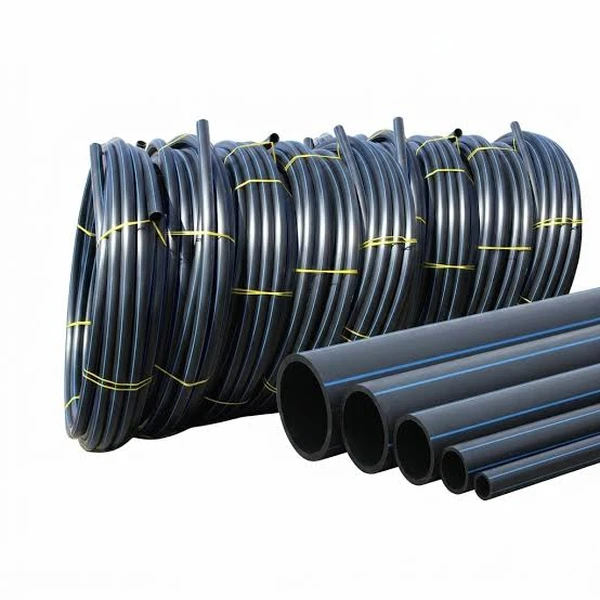
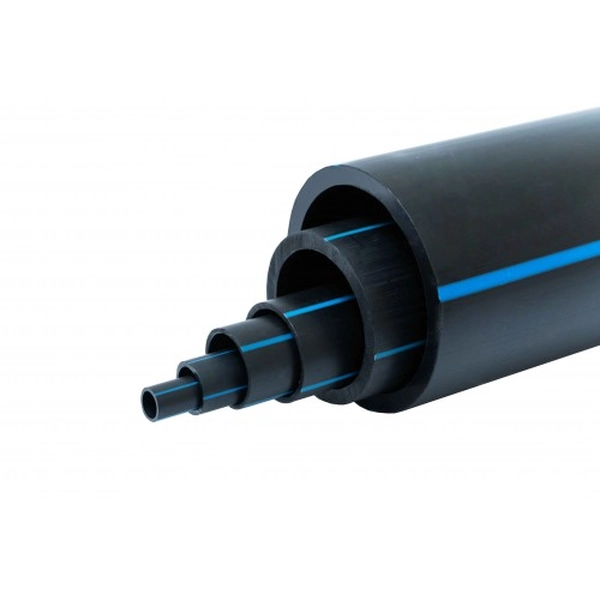
PE/HDPE/LDPE/MDPE Tubing
Product Overview
Yozonetech polyethylene tubing connects water-treatment equipment, instruments and OEM fluid systems with a lightweight, corrosion-resistant flow path. Choose the PE formulation around flexibility, fitting geometry, fluid compatibility and operating conditions. LDPE and LLDPE are useful starting points for flexible equipment lines, while HDPE provides a more rigid option. MDPE and specialty PE systems require their own application specification.
Product benefits
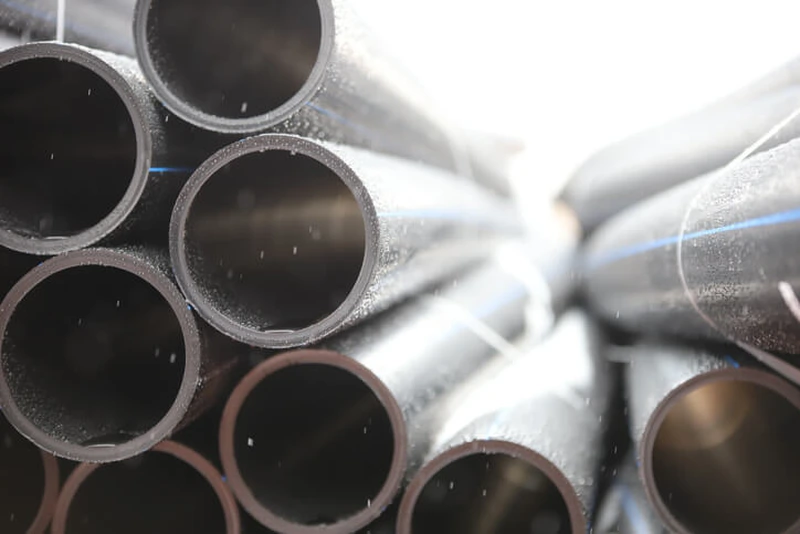
PE tubing combines low weight, low moisture absorption and a smooth internal surface. Natural material is generally translucent rather than optically clear; colored tubing can help identify separate circuits. A choice of wall thicknesses and resin grades allows the tube to be matched to connectors, installation space and handling requirements. Chemical suitability and pressure capacity remain specific to the compound and service conditions.
Приложения
Water filtration and dispensing
Connect filters, reservoirs and dispensing components using tubing qualified for the intended water quality and temperature. Match the controlled OD to the selected push-in or compression fitting.
Food and beverage equipment
Specify documented food-contact material for transfer and equipment connections. Review the actual beverage, alcohol or fat content, cleaning agents and contact temperature.
Laboratory and environmental sampling
Use appropriately selected PE tubing for sample transfer and instrument lines. Consider chemical compatibility, permeation, adsorption and extractables when sample integrity matters.
Industrial liquid transfer
Route compatible aqueous solutions and process liquids between tanks, pumps and instruments. Review concentration and temperature, and specify pressure pulses or vacuum explicitly.
Low pressure pneumatic controls
Consider qualified PE tubing for fixed or moderately flexible control-air lines. Confirm compressor oil compatibility, pressure at temperature and connector retention.
Irrigation and outdoor equipment
Select the material, wall and documented UV stabilization for the environment. Water-service and buried installations require the appropriate pipe system specification.
OEM protection and routing
Specify cut lengths, colors, printing and packaging to simplify assembly. Protective sleeving is selected for mechanical and environmental duty; it does not automatically carry an electrical safety rating.
PE material types and selection
PE is a family of materials, not one interchangeable grade. Density and molecular structure, crosslinking, long-term strength classification and multilayer construction describe different aspects of the product.
| Material family | Main characteristics | Selection focus |
| LDPE | Low-density polyethylene; flexible and easy to route. | General equipment tubing, sampling and compatible liquid lines. |
| LLDPE | Linear low-density polyethylene; combines flexibility with toughness. | Water-treatment and instrument lines; fitting stress and environmental stress cracking. |
| MDPE | Medium-density polyethylene; generally between low- and high-density grades in stiffness. | Water-service and selected utility systems; exact pipe compound and standard required. |
| HDPE | High-density polyethylene; generally stiffer than LDPE. | Shape retention, chemical-transfer lines and qualified pressure-pipe systems. |
| VLDPE and ULDPE | Very-low- and ultra-low-density descriptions used for especially soft PE-related formulations. | Special flexibility requirements; verify exact resin identity and tube performance. |
| HMWPE and UHMWPE | High- and ultra-high-molecular-weight PE, distinct from density-only labels. | Specialist wear-resistant tubes, liners and profiles; process and geometry need separate review. |
PEX crosslinked polyethylene
PEX uses crosslinking to change the polymer structure. Common routes are PEX-a using peroxide, PEX-b using silane and moisture curing, and PEX-c using electron-beam irradiation. These letters identify processing routes, not a quality ranking. Hot-water or heating service requires a qualified PEX system and compatible fittings; ordinary PE tubing is not a substitute.
PE RT polyethylene of raised temperature resistance
PE-RT uses a resin designed for elevated-temperature performance without relying on crosslinking. Type I and Type II are relevant distinctions in applicable specifications. Select the exact product by its service class, pressure-temperature rating and fitting system, rather than applying a generic maximum temperature.
Other material descriptions
Metallocene PE describes catalyst technology and may overlap with density categories. Conductive, antistatic, UV-stabilized and colored PE are formulation options requiring their own evidence. Barrier-layer and PE/aluminum composite tubes describe construction, not a new density class. Specialty families are included for selection guidance; production scope and qualification are reviewed separately.
Pressure grades and technical specification
PE80 PE100 and PE100 RC
PE80 and PE100 are long-term strength classifications, with minimum required strength values of 8.0 and 10.0 MPa respectively under the applicable classification framework. They do not mean 80 or 100 bar working pressure. PE100-RC retains the PE100 strength class while providing enhanced resistance to slow crack growth. Density alone does not establish any of these grades.
PE4710 and dimensional series
PE4710 is a North American material designation with its own requirements; do not treat it as automatically interchangeable with PE100. Pipe designs also specify an outside-diameter series and a dimension ratio. SDR is nominal outside diameter divided by nominal wall thickness. At the same OD and material design basis, a smaller SDR means a thicker wall, but the approved standard and service conditions determine the rating.
| Параметр | Specification for enquiry and acceptance |
| Материал | State LDPE, LLDPE, MDPE, HDPE or the exact specialist compound; do not specify only PE. |
| Размеры | State OD × ID or OD × wall, the nominal series and all critical tolerances. Do not mix pipe nominal size with tubing OD. |
| Температура | Specify minimum, normal and peak temperatures and duration. Obtain the grade-specific operating envelope and pressure derating. |
| Pressure | State continuous and surge pressure with temperature and fluid. Use an approved tube-and-fitting assembly rating. |
| Pressure units | 1 bar = 14.504 PSI; 1 MPa = 10 bar. Identify gauge or absolute pressure. |
| Vacuum and bending | Specify suction level, minimum routing radius and bend cycles. Check bore collapse and fitting loads. |
| Resin characterization | Specify density, melt-flow conditions and resin identity as required. These characterize the compound; they do not alone establish pressure performance. |
| Mechanical qualification | Agree tensile, elongation, creep and environmental stress-crack requirements appropriate to the application. |
| Appearance and UV exposure | Natural translucent or specified color; require documented outdoor stabilization rather than relying on black color alone. |
| Fittings | Confirm tube material, hardness, OD tolerance, wall and any required support insert with the fitting system. |
| Contact compliance | Specify food, drinking-water or other contact requirements and obtain documentation for the actual supplied grade. |
| Traceability and supply | Agree lot identification, cut or coil length, markings, packaging and inspection records. |
A melting point or softening temperature is not a continuous-service temperature. Short-term burst strength does not establish long-term pressure capability, and one PE grade’s pressure data must not be transferred to another.
Metric tubing dimensions
These nominal geometries are starting points for custom quotations. Material availability, tolerances and pressure capability are confirmed for each size. The metric dimensions below are conventional LDPE tubing combinations; an LLDPE or HDPE version requires separate production and performance confirmation.
| Outside diameter mm | Inside diameter mm | Nominal wall mm |
| 4 | 2 | 1.0 |
| 5 | 3 | 1.0 |
| 6 | 4 | 1.0 |
| 6.35 | 4.35 | 1.0 |
| 8 | 6 | 1.0 |
| 9.52 | 6.52 | 1.5 |
| 10 | 8 | 1.0 |
| 10 | 7 | 1.5 |
| 12 | 10 | 1.0 |
| 12 | 9 | 1.5 |
| 16 | 13 | 1.5 |
Controlled OD for equipment connectors
For push-in and compression systems, outside diameter and its tolerance are often the primary fitting dimensions. A 6 mm tube is not interchangeable with a 1/4 in tube, which has a 6.350 mm OD. Specify the nominal system before choosing a bore.
Small bore HDPE geometry options
| OD in | OD mm | ID in | ID mm | Wall mm |
| 1/4 | 6.350 | 0.170 | 4.318 | 1.016 |
| 3/8 | 9.525 | 0.250 | 6.350 | 1.588 |
These HDPE geometries are listed separately to keep material selection explicit. No pressure rating is implied by the shared size. For MDPE water-service pipe, PE100 systems, PEX or PE-RT, specify the relevant pipe standard and SDR or dimensional series rather than using these equipment-tubing tables.
Custom dimensional enquiries
Provide a drawing for non-listed microbore, larger diameter, special-wall or multi-lumen tubing. Define minimum clear opening, wall uniformity and connection geometry. Tooling and production capability are confirmed before a supply commitment.
Inch tubing dimensions with metric equivalents
Nominal decimal-inch LDPE geometries are shown with metric conversions. Millimetres are calculated using 1 in = 25.4 mm and rounded to 0.001 mm. Wall values are calculated from the displayed inch OD and ID; conversion precision is not a manufacturing tolerance.
| OD in | OD mm | ID in | ID mm | Wall mm |
| 0.125 | 3.175 | 0.062 | 1.575 | 0.800 |
| 0.188 | 4.775 | 0.125 | 3.175 | 0.800 |
| 0.250 | 6.350 | 0.125 | 3.175 | 1.587 |
| 0.250 | 6.350 | 0.170 | 4.318 | 1.016 |
| 0.375 | 9.525 | 0.250 | 6.350 | 1.587 |
| 0.500 | 12.700 | 0.375 | 9.525 | 1.587 |
| 0.625 | 15.875 | 0.500 | 12.700 | 1.587 |
| 0.750 | 19.050 | 0.625 | 15.875 | 1.587 |
| 0.875 | 22.225 | 0.750 | 19.050 | 1.587 |
Selecting LDPE LLDPE or HDPE
Start with LDPE where flexible routing is a priority. Review LLDPE where toughness and fitting-related stress resistance matter. Consider HDPE where greater stiffness and shape retention suit the installation. Final choice depends on the actual formulation, wall and service conditions; density is not a universal ranking of chemical resistance or product quality.
Color and transparency
Natural PE generally has a milky or translucent appearance. Visibility varies with resin, wall and surface finish; do not specify crystal-clear performance without an approved sample. Colors and stripes can identify lines, but outdoor resistance and food-contact suitability require separate formulation review.
OEM supply options
Specify coil or cut length, dimensional tolerance, identification, color, end preparation and packaging. Include any requirement for supported fittings, controlled cleanliness or a sample approval stage. Multi-bore, joined or specialty constructions should be reviewed as separate drawings.
Quotation checklist
Send the resin family, OD × ID or wall, nominal series, quantity, medium and concentration, temperature cycle, pressure or vacuum, bend radius, fitting details and required compliance documents. For a specialist pipe system, include the product standard, material designation, SDR and application class.
Use conditions and frequently asked questions
Check chemical compatibility for the complete fluid mixture and temperature. Review permeation and environmental stress cracking where relevant. Avoid kinks, hot surfaces and excessive fitting loads; support long runs and account for thermal movement. Pressure, vacuum, cleaning and outdoor exposure should all be covered by the agreed specification.
- Is PE tubing only LDPE and HDPE?
No. LLDPE and MDPE are also important families. Specialist selections include very-low-density grades, PEX, PE-RT and high-molecular-weight PE.
- How are LDPE and LLDPE different?
Both can provide flexible tubing. LLDPE has a different molecular structure and is often selected for toughness and stress-crack performance. Compare the actual compounds and finished tubes.
- Is HDPE always better?
No. It is generally stiffer, which may help shape retention but make compact routing more difficult. Select around the equipment and fluid conditions.
- Does PE100 mean a 100 bar rating?
No. PE100 is a long-term material strength class. Actual working pressure depends on the wall ratio, design factors, temperature and applicable pipe standard.
- Are PEX a b and c quality levels?
No. They describe crosslinking routes. Select the certified system, dimensions and compatible fittings for the required service.
- Can ordinary PE tubing carry hot water?
Only within its documented rating. Where elevated-temperature duty requires it, evaluate a qualified PE-RT or PEX system instead of assuming ordinary LDPE or HDPE is suitable.
- Is all PE food or drinking-water approved?
No. Material name alone is insufficient. Confirm the documentation and contact conditions for the supplied grade and finished product.
- Does black PE automatically resist UV?
No. Require an appropriate stabilization package and supporting outdoor-service information; color alone does not establish durability.
- Can PE tubing use push-in fittings?
Only when the fitting system accepts the material, OD tolerance and wall. Some installations need support inserts; follow the specified system requirements.
- Are all PE families included in the dimension tables?
No. The tables identify LDPE and selected HDPE geometries. LLDPE equivalents and specialist MDPE, PEX, PE-RT or UHMWPE designs require separate confirmation.