+86-13752771911
 E-mail:ptfetube@yozonetech.cn



ptfe pipes
-
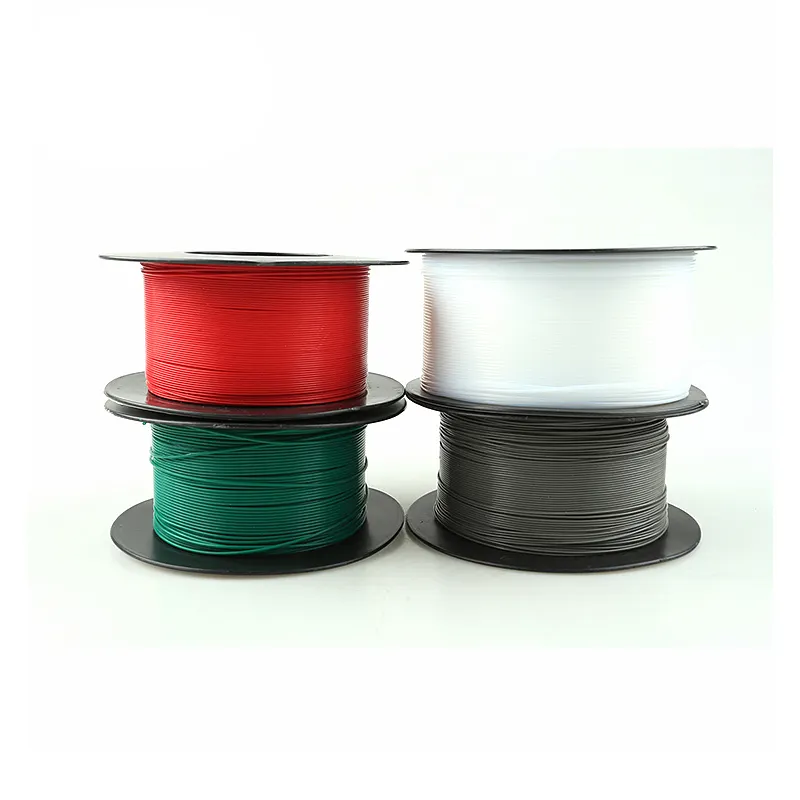
PTFE Capillary 0.05mm Thin-Wall Small Tubing OEM Manufacturer
Precision Small-Bore PTFE Tubing for Fluid Handling, Instrumentation and Industrial Applications
Yozonetech PTFE Capillary Tube is a precision small-bore tubing solution manufactured from high-performance PTFE. Designed for applications where compact dimensions, low friction, chemical resistance, electrical insulation, and dimensional consistency are important, PTFE capillary tubing provides a reliable fluid or cable pathway in demanding environments.
Compared with conventional PTFE tubing, capillary tubing is designed around smaller internal diameters and more precise dimensional requirements. It is widely used in analytical instruments, laboratory equipment, chemical dosing systems, pneumatic control, medical equipment, semiconductor equipment, electrical applications, and other systems requiring small-diameter tubing.
Yozonetech manufactures PTFE capillary tubing in a wide range of AWG-based sizes, with typical internal diameters from approximately 0.25 mm to 8.69 mm. Different S-Type, T-Type, and L-Type outside diameters are available for many sizes, allowing engineers to select the appropriate wall configuration according to their application.
Custom ID, OD, wall thickness, length, packaging, and other specifications can also be discussed according to project requirements.
Key Features
- Small Internal Diameters — Designed for small-bore applications where conventional tubing may be too large.
- Excellent Chemical Resistance — PTFE resists many chemicals, solvents, acids, bases, and aggressive media.
- Low Friction — The naturally low coefficient of friction helps reduce resistance to fluid movement and component insertion.
- High Temperature Resistance — PTFE provides excellent thermal stability for demanding temperature environments.
- Excellent Electrical Insulation — Suitable for wires, cables, sensors, and electrical component protection.
- Smooth Inner Surface — Helps reduce friction during fluid movement or insertion of wires and components.
- Dimensional Options — Multiple OD configurations are available for many AWG sizes.
- Custom Manufacturing — Custom ID, OD, wall thickness, tolerance, length, and packaging can be discussed.
PTFE Capillary Tube Specifications
AWG ID Min. (mm) ID Normal (mm) ID Max. (mm) S-Type OD (mm) T-Type OD (mm) L-Type OD (mm) Package (m) 30 0.25 0.30 0.38 0.76 0.76 0.60 305 28 0.33 0.38 0.46 0.84 0.84 0.68 305 26 0.41 0.46 0.53 0.92 0.92 0.76 305 24 0.51 0.56 0.66 1.16 1.06 0.86 305 23 0.58 0.66 0.74 1.26 1.16 0.96 305 22 0.66 0.71 0.81 1.31 1.21 1.01 305 21 0.74 0.81 0.89 1.41 1.31 1.11 305 20 0.81 0.86 0.97 1.66 1.46 1.16 305 19 0.91 0.96 1.07 1.76 1.56 1.26 305 18 1.01 1.07 1.17 1.87 1.67 1.37 305 17 1.14 1.19 1.32 1.99 1.79 1.49 305 16 1.29 1.34 1.47 2.14 1.94 1.64 305 15 1.45 1.50 1.65 2.30 2.10 1.80 153 14 1.62 1.68 1.83 2.48 2.28 2.08 153 13 1.83 1.93 2.05 2.73 2.53 2.33 153 12 2.05 2.16 2.31 2.96 2.77 2.56 153 11 2.31 2.41 2.57 3.21 3.01 2.81 153 10 2.59 2.69 2.84 3.49 3.29 3.09 153 9 2.90 3.00 3.15 4.00 3.76 3.40 100 8 3.28 3.38 3.53 4.38 4.14 3.78 100 7 3.65 3.76 3.94 4.76 4.52 4.16 100 6 4.11 4.22 4.41 5.22 4.98 4.72 100 5 4.62 4.72 4.95 5.72 5.48 6.22* 100 4 5.18 5.28 5.53 6.28 6.04 5.78 100 3 5.81 5.94 6.20 6.94 6.70 6.44 100 2 6.55 6.68 6.93 7.68 7.44 7.18 100 1 7.34 7.46 7.75 8.46 8.22 7.96 100 0 8.26 8.38 8.69 9.38 9.14 8.80 100 Note: Dimensions represent typical manufacturing sizes. Actual tolerances and available configurations should be confirmed according to the selected specification, application, and production requirements.
* The original specification supplied lists 6.22 mm for AWG 5 L-Type OD. Please confirm this value with the production/engineering team before final publication.
S-Type, T-Type and L-Type Configurations
Different outside-diameter configurations allow PTFE capillary tubing to be adapted to different application requirements. A smaller outside diameter can help reduce overall installation space, while a larger wall configuration can provide additional mechanical protection and dimensional stability.
When selecting a capillary tube, engineers should consider:
- Required internal diameter
- Required outside diameter
- Available installation space
- Required wall thickness
- Fluid volume and flow requirements
- Pressure conditions
- Temperature
- Chemical exposure
- Electrical insulation requirements
- Bending and routing conditions
For applications where dimensional tolerances are critical, customers are encouraged to provide drawings or detailed specifications so Yozonetech can recommend the most suitable tubing configuration.
Technical Characteristics of PTFE Capillary Tubing
Chemical Resistance
PTFE is one of the most chemically resistant engineering polymers available. PTFE capillary tubing can be used with many aggressive chemicals, solvents, corrosive fluids, and process media. This makes it particularly useful for laboratory instruments, chemical processing, analytical systems, and semiconductor-related equipment. Actual compatibility should always be evaluated against the specific chemical, concentration, temperature, pressure, and exposure time.
Temperature Resistance
PTFE provides excellent thermal stability and is suitable for high-temperature applications compared with many conventional flexible tubing materials. For applications involving continuous high-temperature exposure, thermal cycling, pressure, or mechanical loading, Yozonetech can evaluate the operating conditions and recommend an appropriate specification.
Low Friction
The smooth PTFE surface and naturally low friction characteristics make the tubing suitable for small-volume fluid transfer, wire insertion, cable protection, probe protection, and moving components.
Electrical Insulation
PTFE has excellent electrical insulating properties and can be used to protect wires, conductors, sensors, and other electrical components in demanding environments.
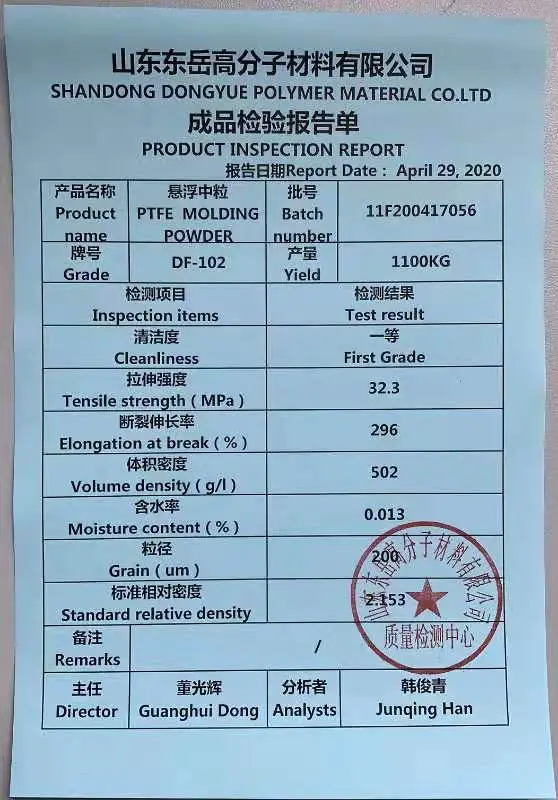
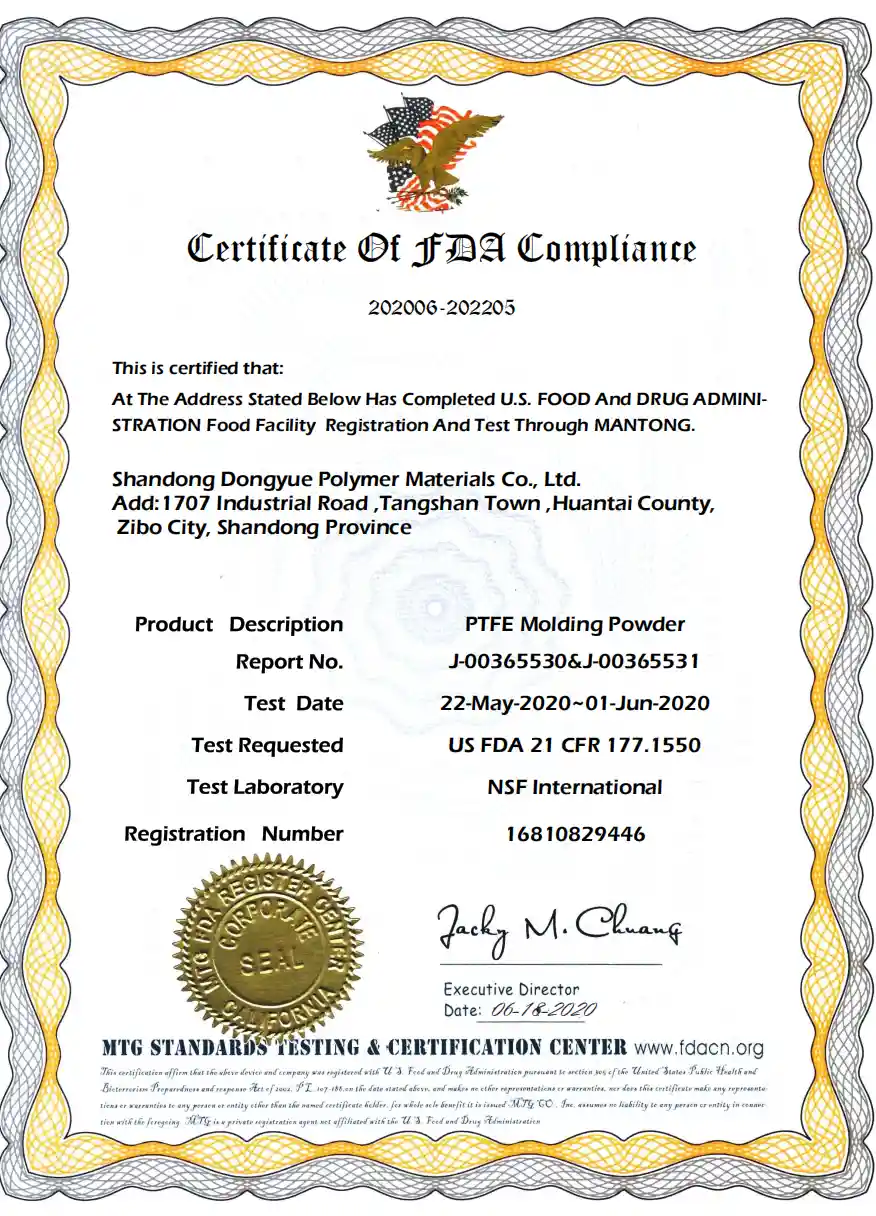
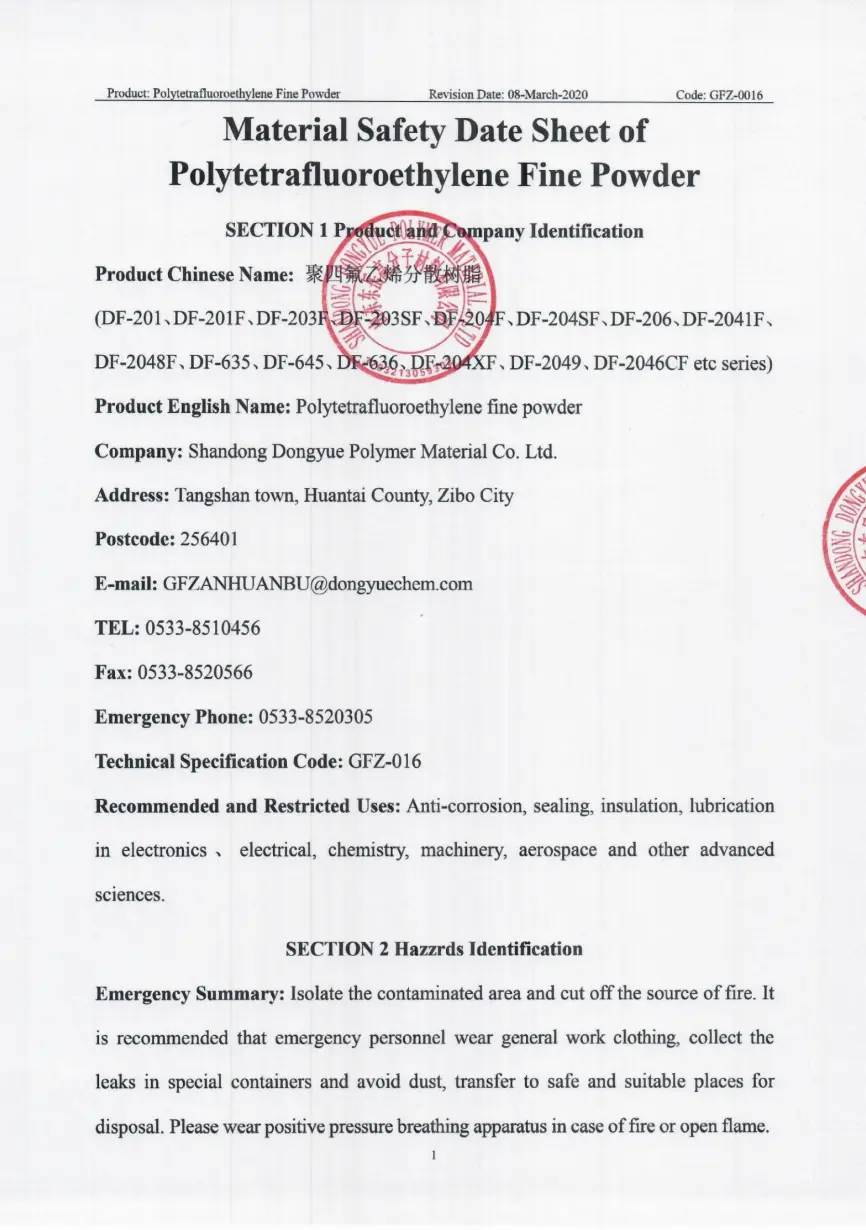
Certifications
Typical Applications
Analytical Instruments
PTFE capillary tubing is suitable for analytical and laboratory instruments where small internal diameters, chemical resistance, and clean fluid pathways are required. Typical uses include analytical fluid lines, sampling systems, instrument connections, chemical reagent delivery, and laboratory equipment.
Chemical Dosing and Fluid Handling
The small bore allows controlled transport of relatively small quantities of liquids or gases. Typical applications include chemical dosing, reagent delivery, sampling, and small-volume fluid transfer.
Semiconductor Equipment
PTFE capillary tubing can be used in selected semiconductor and electronics manufacturing equipment where chemical resistance, thermal stability, and reliable tubing dimensions are required. For high-purity applications, material grade, cleanliness, packaging, and production environment should be specified according to process requirements.
Medical and Laboratory Equipment
Small-diameter PTFE tubing can be used in equipment requiring chemical resistance, low friction, and stable dimensional performance. The appropriate grade and regulatory requirements should be confirmed according to the intended medical application.
Pneumatic and Instrumentation Systems
Suitable for compact pneumatic and instrumentation systems where small tubing dimensions and low friction are beneficial.
Wire and Sensor Protection
Can be used as an insulating or protective sleeve for wires, sensor elements, thermocouples, and other small components.
How to Select the Right PTFE Capillary Tube
1. Select the Required ID
Determine the required internal diameter according to the fluid, wire, probe, or component that will pass through the tube. For fluid applications, consider the desired flow rate and pressure drop.
2. Select the OD
After determining the ID, select the outside diameter according to available installation space and required wall thickness.
3. Consider Tolerance
If the tube is used in precision instruments, metering systems, connectors, or assemblies with tight dimensional requirements, specify the required ID and OD tolerances.
4. Consider Temperature
The actual operating temperature should include continuous operating temperature, short-term temperature peaks, thermal cycling, and contact with heated components.
5. Check Chemical Compatibility
PTFE has excellent chemical resistance, but compatibility should still be evaluated against the actual chemical and operating conditions.
6. Consider Length and Packaging
Yozonetech supplies different standard package lengths according to size and can discuss customized cut lengths or packaging requirements for OEM projects.
Custom PTFE Capillary Tube Manufacturing
Standard sizes cover many common applications, but not every engineering system uses a standard dimension. Yozonetech can support customized PTFE capillary tubing according to customer drawings, samples, or specifications.
- Custom ID
- Custom OD
- Custom wall thickness
- Custom tolerance
- Custom length
- Special packaging
- Material requirements
- OEM specifications
For a quotation, customers can provide the required ID, OD, length, application, operating temperature, media, pressure, and estimated annual quantity. Providing a drawing or existing sample is recommended when dimensional compatibility is critical.
Quality Control
For precision small-bore tubing, dimensional consistency is especially important because even a small variation in ID or OD can influence assembly, fluid flow, or component compatibility.
- Raw material control
- Extrusion process control
- Dimensional inspection
- ID and OD verification
- Visual inspection
- Length control
- Batch consistency
- Packaging protection
For OEM and customized orders, inspection requirements can be discussed before production.
Why Choose Yozonetech PTFE Capillary Tube?
Yozonetech specializes in high-performance fluoropolymer tubing and engineering plastic components for industrial applications. Our capabilities cover PTFE, FEP, PFA, ETFE, PEEK and other engineering polymer products, allowing customers to evaluate different materials when PTFE is not the only suitable option.
- Small-diameter fluoropolymer tubing
- Custom dimensions
- OEM manufacturing
- Drawing-based production
- Material selection
- Sample support
- Batch production
- Technical communication
Our objective is not simply to supply commodity tubing, but to provide a reliable tubing solution matched to the customer's application and technical requirements.
Frequently Asked Questions
1. What is PTFE capillary tubing?
PTFE capillary tubing is small-bore tubing manufactured from PTFE and designed for applications requiring compact dimensions, chemical resistance, low friction, thermal stability, and electrical insulation.
2. What is the smallest PTFE capillary tube you manufacture?
The typical size list supplied for Yozonetech starts at AWG 30, with an ID range of approximately 0.25–0.38 mm and a normal ID of 0.30 mm.
3. What is the maximum size in the current capillary tube range?
The supplied standard size list extends to AWG 0, with a normal ID of approximately 8.38 mm and a maximum ID of 8.69 mm.
4. What is the difference between PTFE capillary tube and standard PTFE tube?
PTFE capillary tubing focuses on smaller internal diameters and precision applications. Standard PTFE tubing generally covers a broader range of sizes and applications.
5. Is PTFE capillary tubing suitable for chemicals?
Yes. PTFE has excellent resistance to many acids, bases, solvents, and aggressive chemicals. The actual application should be evaluated based on the specific chemical and operating conditions.
6. Can PTFE capillary tubing be used at high temperatures?
PTFE has excellent high-temperature resistance compared with many conventional tubing materials. The appropriate operating temperature should be evaluated together with pressure and mechanical conditions.
7. Can you manufacture custom PTFE capillary tubing?
Yes. Yozonetech can discuss customized ID, OD, wall thickness, tolerance, length, packaging, and other specifications according to drawings, samples, or engineering requirements.
8. What information should I provide for a quotation?
Ideally provide the required ID, OD, length, tolerance, operating temperature, media, pressure, application, estimated quantity, and any special material or cleanliness requirements.
9. What package lengths are available?
The current standard size list specifies package lengths of 305 m, 153 m, or 100 m depending on the tube size. Customized lengths and packaging can be discussed for specific orders.
10. Can PTFE capillary tubing be used for semiconductor applications?
Yes, PTFE capillary tubing can be used in selected semiconductor equipment and chemical handling applications. For high-purity applications, material grade, cleanliness, packaging, and manufacturing requirements should be confirmed according to the process.
Request a PTFE Capillary Tube Quote
Whether you need a standard AWG size or a custom small-bore PTFE tube, Yozonetech can help evaluate the appropriate specification.
Send us your required ID, OD, length, application, temperature, media, pressure, and quantity, or simply send us your drawing or existing sample.
Our engineering and sales team can review the requirements and recommend a suitable PTFE capillary tubing configuration.
Yozonetech PTFE capillary has super-thin wall which is 0.025mm, and we can replace ZEUS INC to be your alternative supplier.
Yozonetech PTFE capillary tube will be packed on spool to protect.
Yozonetech PTFE capillary tube can be used in medical and food industry.
-
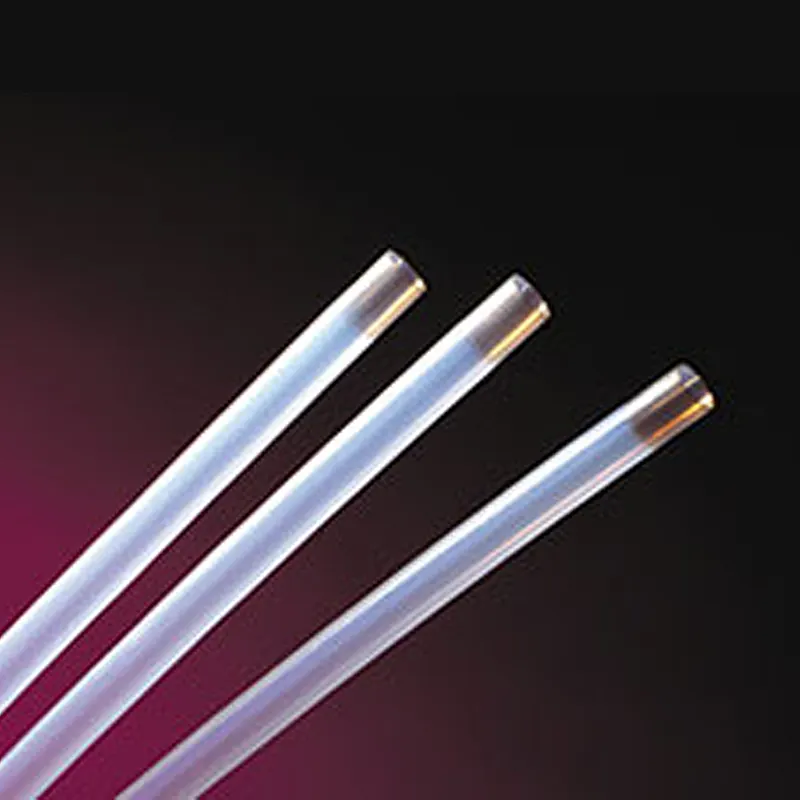
PTFE Etching Tubing OEM Manufacturer for Medical
Medical Tubing Extrusion Product Description
PTFE often needs to be mixed with other materials, but due to its famous smooth surface, it is difficult to combine with other materials. The purpose of fluoropolymer etching is to change the surface characteristics of PTFE, after treatment, it can be combined with other materials, whether it is plastic, metal, composite material or ceramic.
The inherent bonding of fluoropolymers results in extremely low friction. In its unchanged state, the bonds of these polymers are so stable that it is difficult for them to bond with anything, even for a short period of time. When the etching process changes the carbon-fluorine bond of the PTFE bottom layer, the surface of the PTFE changes. After the PTFE is etched, its surface will have more friction, and it can be glued, molded or glued to other materials. It also allows the PTFE tube to be printed or engraved.
YOZONE-Technology provides the following key solutions for PTFE, FEP, PFA and PEEK products. So, today we will introduce you our quality Extruded Tube below:
PTFE tube supplier Extruded tubing is a versatile and widely used product in various industries. It is a continuous length of material that is formed by forcing it through a die, resulting in a hollow cylindrical shape.
-
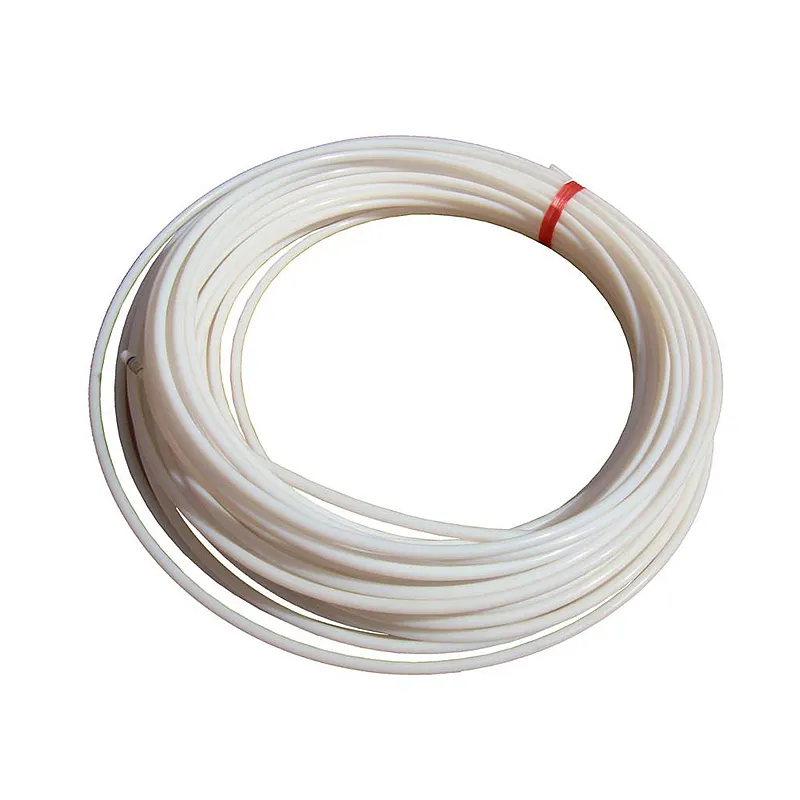
PTFE Customized Flexible Extruded Smooth Bore Tubing OEM Manufacturer
Product Overview
Yozonetech supplies PTFE tubing and rigid PTFE tubes for customers who need chemical resistance, thermal stability, electrical insulation and low friction. Our range covers small bore flexible tubing, standard metric and inch dimensions, and thick wall or large diameter rigid tubes. Nonstandard dimensions and special lengths can be customized to match drawings and application requirements.
PTFE stands for polytetrafluoroethylene. Its combination of chemical resistance and low surface friction makes it useful in industrial transfer lines, insulating sleeves and protective components. The right tube depends on the medium, temperature, pressure, installation space and connection method. We help customers turn those requirements into an agreed specification.
Product Highlights
Chemical resistance
The catalog rates PTFE chemical solvent resistance as excellent. Confirm compatibility with the actual medium, concentration and operating conditions before use.
Temperature capability
The material table lists a maximum continuous operating temperature of 260°C. This is a material reference and does not establish a pressure rating at that temperature.
Low friction
A reference coefficient of friction of 0.02 against steel supports applications where low surface drag is useful.
Electrical insulation
Reference dielectric constant is 2.1 at both 10³ Hz and 10⁵ Hz, with high volume and surface resistivity.
Low water absorption
The listed 24 hour water absorption is below 0.01 percent, helping limit moisture uptake.
Choice of dimensions
Flexible sizes, inch sizes and rigid tube dimensions allow selection around flow requirements, insulation clearance and component geometry.
Technical Specifications
The following values are PTFE material reference data, not guaranteed finished tube acceptance limits. Actual performance depends on resin grade, processing, tube geometry and service conditions. Agree any required test method and acceptance limit before ordering.
Property PTFE reference value Catalog test method Relative density 2.13–2.22 ASTM D792 Tensile strength 14–48 MPa ASTM D638 Elongation at break 200–450% ASTM D638 Compressive strength 24 MPa ASTM D695 Flexural modulus 490–586 MPa ASTM D790 Shore D hardness 50–60 ASTM D636 as printed Friction coefficient against steel 0.02 Not stated Melting point 320–327°C Not stated Thermal conductivity 0.25 Unit not stated Maximum continuous operating temperature 260°C Catalog reference at 20000 h Flame retardance UL 94 V-0 Material reference Dielectric constant at 10³ Hz 2.1 ASTM D150 Dielectric constant at 10⁵ Hz 2.1 ASTM D150 Volume resistivity >10¹⁸ Ω·cm ASTM D257 Surface resistivity >10¹⁷ Ω ASTM D257 Chemical solvent resistance Excellent ASTM D543 Water absorption at 24 h <0.01% ASTM D570 Refractive index 1.35 Not stated Material reference values do not establish certification of every finished tube. The hardness method is reproduced as printed and should be confirmed if a formal test report is required. Thermal conductivity is shown without an inferred unit because the source does not provide one.
Pressure and Temperature Selection
A PTFE tube pressure rating must be specified for the selected ID, OD, wall thickness, temperature and fitting arrangement. Request the permitted working pressure for your exact tube. Do not apply the PFA or FEP pressure charts to PTFE tubing. The temperature capability of the polymer also does not authorize pressurized service at the maximum temperature.
Standard Flexible Tubing Dimensions
All dimensions below are in millimeters. ID means inner diameter; OD means outer diameter. Wall thickness is calculated as (OD − ID) ÷ 2. The catalog lists these sizes in its common fluoropolymer tubing table and refers the PTFE flexible tube range to that table. Confirm the PTFE material and dimensional tolerance when ordering.
ID mm OD mm Wall mm 0.3 0.6 0.15 1 2 0.5 1 3 1 1.5 2.5 0.5 2 3 0.5 2 4 1 2 4.5 1.25 2 5 1.5 2.5 4.5 1 3 4 0.5 3 5 1 3 6 1.5 3.5 4.5 0.5 3.5 5.5 1 4 5 0.5 4 5.5 0.75 4 6 1 4 7 1.5 4 8 2 5 6 0.5 5 7 1 5 8 1.5 5 9 2 6 7 0.5 6 7.5 0.75 6 8 1 6 9 1.5 6 10 2 6.5 8.5 1 6.5 10 1.75 7 8 0.5 7 9 1 7 10 1.5 7.5 9 0.75 7.5 10 1.25 8 10 1 8 12 2 8.5 10.5 1 9 10 0.5 9 11 1 9 12 1.5 9.5 10.5 0.5 9.5 11.5 1 10 11 0.5 10 11.5 0.75 10 12 1 10 13 1.5 11 12.5 0.75 11 13 1 12 14 1 12 15 1.5 12 16 2 13 15 1 14 16 1 15 17 1 15 18 1.5 16 19 1.5 17 19 1 17 20 1.5 18 20 1 20 22 1 20 23 1.5 22 24 1 22 25 1.5 33 38 2.5 Other sizes can be customized. A listed dimension is a catalog option rather than a statement of stock availability.
Inch Tubing Dimensions
The source expresses inch tubing as OD × ID. This table retains that order and the catalog millimeter conversions rather than silently changing rounding conventions.
OD inch ID inch OD mm ID mm 1/8 1/16 3.17 1.57 1/4 1/8 6.35 3.17 1/4 5/32 6.35 3.96 1 1/4 — 31.75 27.95 1/4 5.5/32 6.35 4.35 1/4 3/16 6.35 4.76 3/8 1/4 9.525 6.35 1 1/2 — 38.1 33.7 1/2 3/8 12.7 9.525 3/4 5/8 19.05 15.88 1 7/8 25.4 22.2 2 — 50.8 42.5 The 1/4 × 5.5/32 inch entry and its 4.35 mm ID are reproduced from the catalog. Confirm the intended nominal size before ordering. For entries with no inch ID given, use the listed millimeter bore.
Packaging and Color Options
Catalog packaging options include 10 m, 20 m, 30.4 m, 50 m, 100 m and 500 m rolls, plus 2 m straight lengths. Availability depends on the selected tube size and construction. Specify whether your production process needs continuous rolls, straight pieces or custom cut lengths.
The shared tubing table lists transparent, semitransparent, white, red, blue, black, yellow, green and multicolor options across PTFE, FEP and PFA. PTFE is typically associated with a milky white or semitransparent appearance in the catalog. Confirm the achievable color and appearance for the chosen PTFE grade; transparent options in the shared table should not be interpreted as a promise of clear PTFE.
Dimensional Ordering
Always state which diameter comes first. Metric flexible sizes here use ID × OD; rigid tube dimensions on the following pages use OD, ID and wall thickness in separate columns. For custom production, provide tolerances for both diameters, cut length, end finish and any inspection requirements.
Rigid PTFE Tube Dimensions
The following is the complete rigid tube size list from the catalog. Dimensions are in millimeters. Reference mass is the theoretical value for 1000 mm of tube, expressed in kilograms. It is not a measured shipment weight. The catalog also gives 4200 mm theoretical masses; use the confirmed finished length and actual weight for purchasing or freight planning.
OD mm ID mm Wall mm Mass kg per m 9.5 6 1.75 0.09 9.5 4 2.75 0.13 13.5 5.5 4 0.26 14.5 6.5 4 0.28 20 15 2.5 0.30 20 16 2 0.24 20 14 3 0.34 20 13 3.5 0.39 20 12 4 0.43 20 10 5 0.51 20 8 6 0.57 20.5 16.5 2 0.25 30 24 3 0.55 30 25 2.5 0.47 30 20 5 0.84 30 18 6 0.97 30.5 22.5 4 0.72 40 34 3 0.75 40 33 3.5 0.86 40 32 4 0.97 40 30 5 1.18 40 25 7.5 1.65 50 46 2 0.65 50 45 2.5 0.80 50 44 3 0.95 50 43 3.5 1.10 50 23 13.5 3.33 50 40 5 1.52 60 53 3.5 1.34 60 50 5 1.86 70 64 3 1.36 70 46 12 4.70 71 61 5 2.23 70 50 10 4.05 80 75 2.5 1.31 80 74 3 1.56 80 70 5 2.53 80 72 4 2.05 90 84 3 1.76 90 80 5 2.87 90 74 8 4.43 90 70 10 5.40 90 78 6 3.40 100 80 10 6.08 100 90 5 3.21 110 104 3 2.17 110 100 5 3.54 130 121 4.5 3.81 150 143.6 3.2 3.17 250 220 15 23.80 260 250 5 8.61 305 295 5 10.13 350 340 5 11.65 360 349 5.5 13.16 408 397 5.5 14.95 460 448 6 18.39 508 495.4 6.3 21.34 Nonstandard sizes and special lengths can be customized. The catalog size labels for some rigid tubes are shorthand; select by the explicit OD and ID columns.
Catalog Diameter Tolerance Bands
Catalog diameter band mm Listed tolerance mm 15–50 ±0.3 51–100 ±0.4 101–207 ±0.5 208–360 ±1 400–500 ±1.5 The catalog does not identify which diameter these bands control, and it leaves some sizes outside the stated bands. Confirm OD, ID and wall acceptance limits separately for every order; do not extrapolate the bands to unlisted sizes.
Full Process Quality Control System
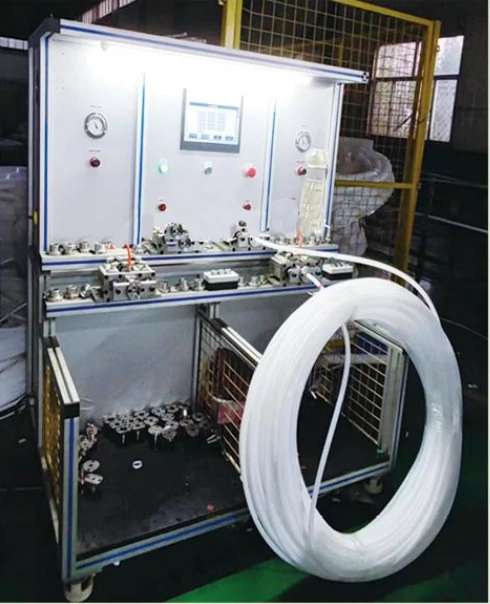
Air pressure detection
Our ptfe tube manufacturers uses fully automatic imported sensor air pressure testing equipment. All PTFE tubes are tested with 8 kg air pressure inside and the pressure is maintained for 60 seconds to prevent all gas leaks.
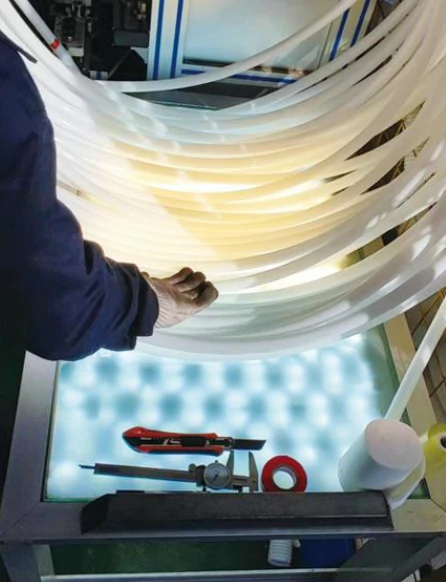
Strong light impurity detection
The detection light source is composed of various monochromatic light sources and composite light sources to check various impurities such as black impurities and paraffin that are not easy to find in the production process of PTFE inner tubes.
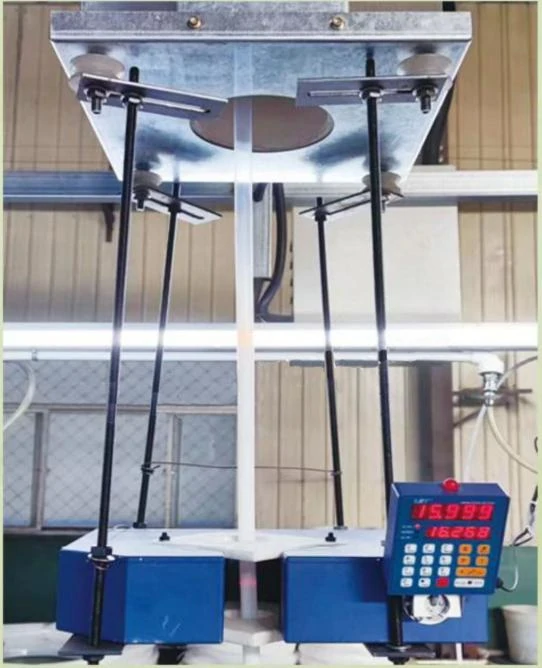
Laser diameter controller
It can continuously and accurately control the inner and outer diameters and tolerances throughout the PTFE tube production process
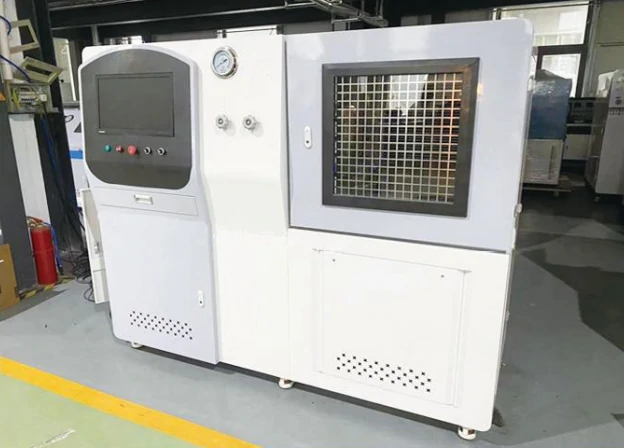
High temperature pulse test bench
Wholesale ptfe tube company is the first medium high temperature (+260°) pulse test bench in the industry, which can test the pulse frequency of polytetrafluoroethylene tubes at different medium temperatures.
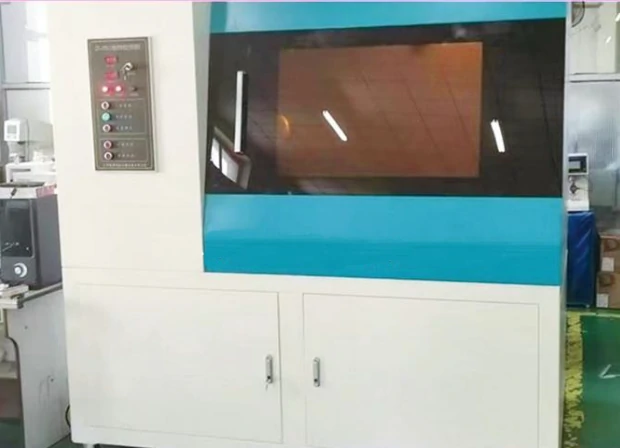
Electrical breakdown test (SAE J30)
Test the insulation of PTFE tube
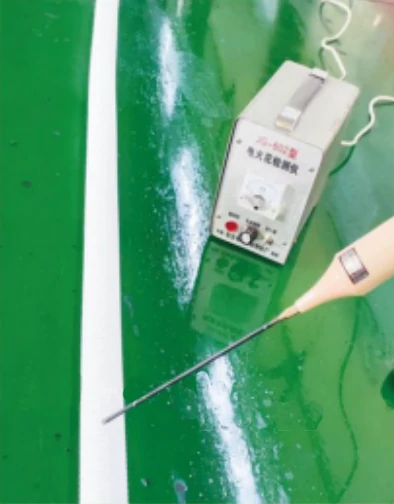
Sparkle test
Sparkle testing can more accurately detect the small leaks of PTFE tube
Certifications
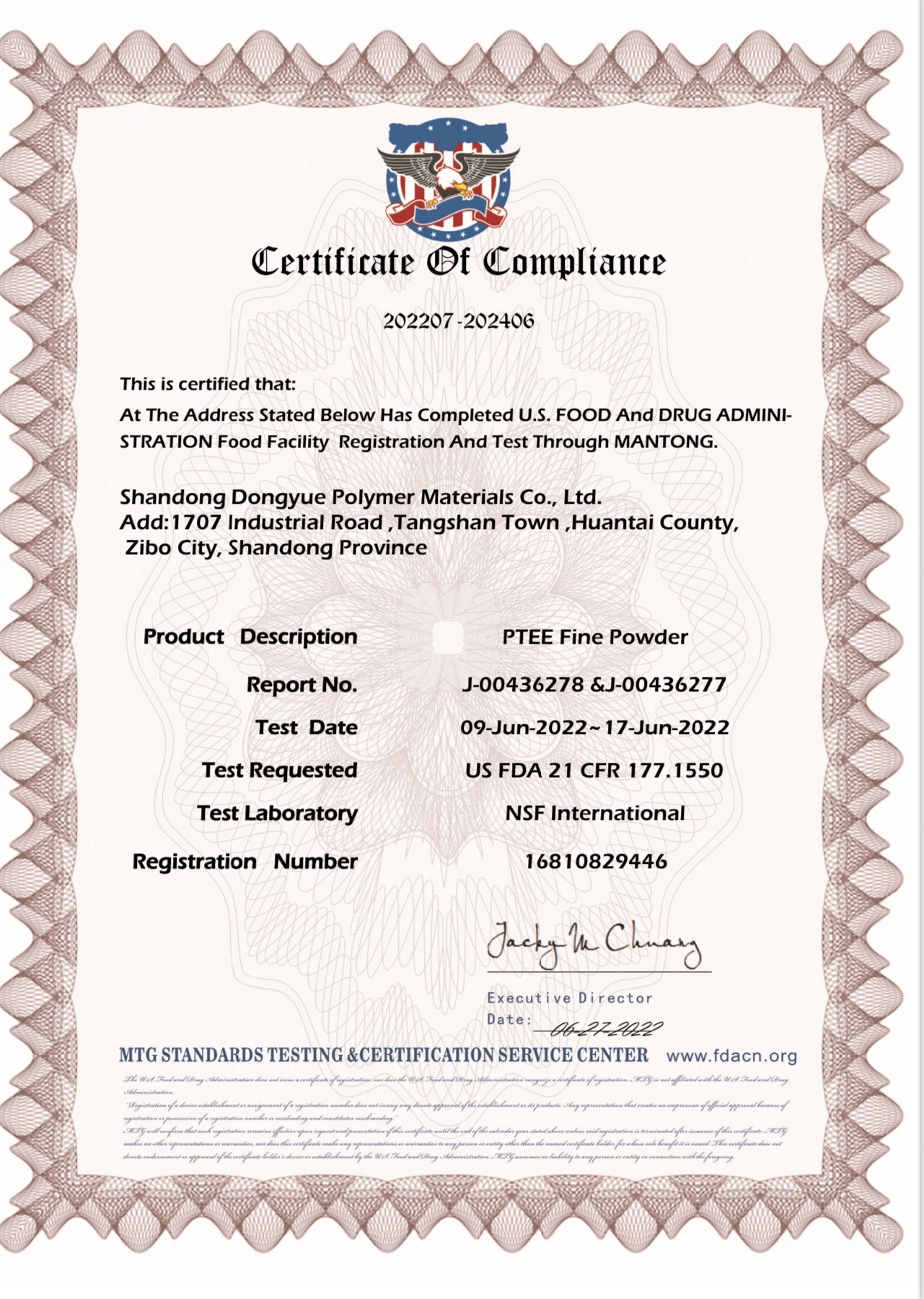
PTFE tube FDA certificate
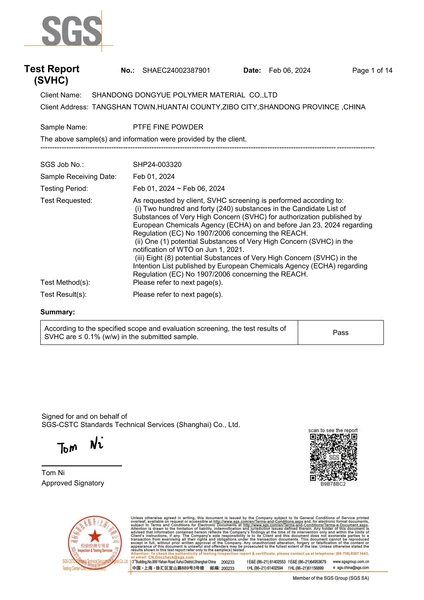
PTFE tube REACH certificate
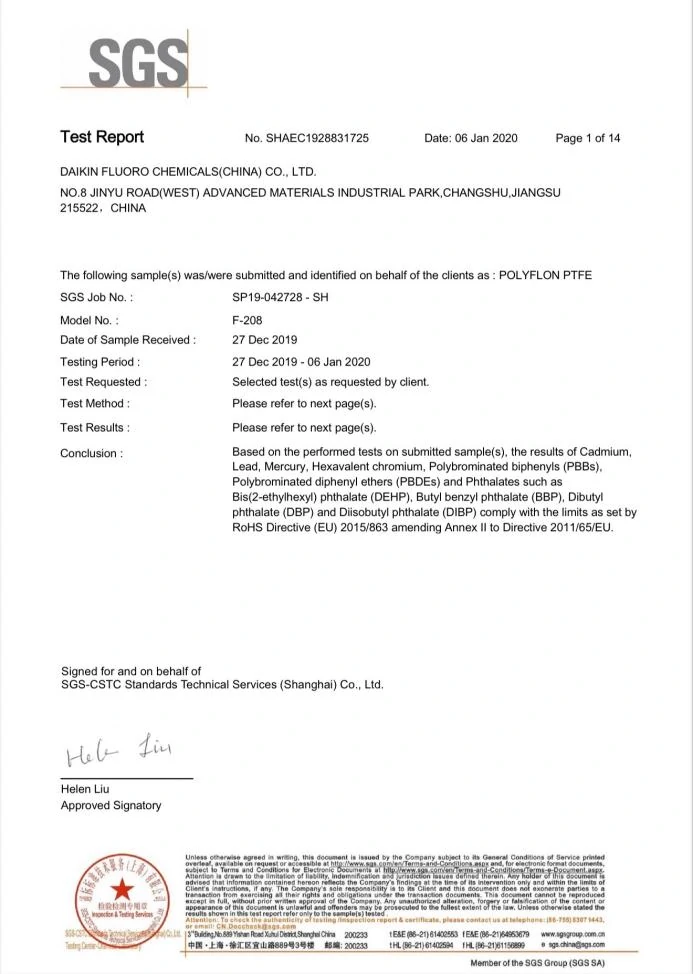
PTFE tube RoHS certificate
PTFE capillary tube specifications
AWG ID OD PACKING Min Normal Max S Model T Model L Model 30 0.25 0.30 0.38 0.76 0.76 0.60 305 28 0.33 0.38 0.46 0.84 0.84 0.68 305 26 0.41 0.46 0.53 0.92 0.92 0.76 305 24 0.51 0.56 0.66 1.16 1.06 0.86 305 23 0.58 0.66 0.74 1.26 1.16 0.96 305 22 0.66 0.71 0.81 1.31 1.21 1.01 305 21 0.74 0.81 0.89 1.41 1.31 1.11 305 20 0.81 0.86 0.97 1.66 1.46 1.16 305 19 0.91 0.96 1.07 1.76 1.56 1.26 305 18 1.01 1.07 1.17 1.87 1.67 1.37 305 17 1.14 1.19 1.32 1.99 1.79 1.49 305 16 1.29 1.34 1.47 2.14 1.94 1.64 305 15 1.45 1.50 1.65 2.30 2.10 1.80 153 14 1.62 1.68 1.83 2.48 2.28 2.08 153 13 1.83 1.93 2.05 2.73 2.53 2.33 153 12 2.05 2.16 2.31 2.96 2.77 2.56 153 11 2.31 2.41 2.57 3.21 3.01 2.81 153 10 2.59 2.69 2.84 3.49 3.29 3.09 100 9 2.90 3.00 3.15 4.00 3.76 3.40 100 8 3.28 3.38 3.53 4.38 4.14 3.78 100 7 3.65 3.76 3.94 4.76 4.52 4.16 100 6 4.11 4.22 4.41 5.22 4.98 4.72 100 5 4.62 4.72 4.95 5.72 5.48 5.22 100 4 5.18 5.28 5.53 6.28 6.04 5.78 100 3 5.81 5.94 6.20 6.94 6.70 6.44 100 2 6.55 6.68 6.93 7.68 7.44 7.18 100 1 7.34 7.46 7.75 8.48 6.22 7.96 100 0 8.26 8.38 8.69 9.38 9.14 8.88 100 Applications and Selection
Industrial Chemical Transfer
PTFE tubing is a candidate for industrial lines exposed to chemically demanding media. Select the tube around the actual fluid and concentration, including any cleaning chemicals. Chemical resistance alone does not determine whether a tube is suitable: pressure, permeation, temperature and connection integrity also matter. Send the full operating conditions for technical review.
Electrical and Electronic Insulation
Small bore PTFE tubing can serve as an insulating sleeve around wires or components when its dimensions and electrical performance match the design. Low water absorption and the catalog electrical reference data support this selection process. Required voltage performance must be verified for the finished wall thickness and assembly.
Laboratory and Analytical Equipment
PTFE tubing may be considered for reagent transfer and protective sleeves in laboratory equipment. Specify bore size, routing, dead volume constraints and connection dimensions. Applications sensitive to contamination should define cleanliness, extractables and packaging requirements separately rather than assuming that every standard industrial tube meets them.
Machinery and Protective Components
Rigid PTFE tubes provide hollow stock for sleeves, spacers or other components where a tubular starting shape is useful. Select enough wall thickness for the final geometry and machining allowance. Review mechanical loading, dimensional stability and friction behavior under the actual operating conditions.
Semiconductor and Medical Equipment Selection
For semiconductor applications, define purity, particle and contamination requirements before selecting a grade. Standard PTFE tubing is not automatically qualified for high purity chemical delivery. For medical equipment, consider only appropriately reviewed external or nonpatient contact functions: this catalog specifically prohibits direct contact with biological tissues or fluids and use inside the human body. Medical contact applications require a separately qualified product and supporting evidence.
Choosing the Tube Construction
Flexible tubing is suited to installations that need routing flexibility and a small outside diameter. Rigid tubing is intended for layouts or components that benefit from a stiffer tubular form. Neither construction should be selected solely by name. Check the actual size, allowable pressure, installation geometry and joint design.
Capillary tubing, spiral cut tubing, corrugated tubing, heat shrink tubing and braided hose are separate product constructions. Their own size tables and performance data should be used when those functions are required; a smooth tube specification does not qualify them interchangeably.
Custom Production and Quality Requirements
Yozonetech manufactures standard and customized polymer products according to drawings and agreed specifications. Our company capabilities include extrusion, injection molding, blow molding and CNC machining or turning across the wider product range. Our quality management systems include ISO 9001 and ISO 45001.
Custom Specifications
For a custom PTFE tube, provide ID, OD, wall thickness, length and dimensional tolerance. Add resin grade requirements, color, surface condition, end finish and preferred packaging. For a machined rigid component, include a drawing with critical features, datum references and the inspection method needed for those features.
Inspection and Documentation
Agree the inspection plan before production. Relevant items may include diameter and wall measurements, ovality, length, visible defects, end condition and identification. If pressure performance is required, specify the test conditions and acceptance criteria for the finished tube and its intended fittings. Material documentation, certificates and any application specific reports should be confirmed at quotation stage.
A polymer property table is useful for initial selection, but it does not replace a batch test report or finished product qualification. Any requirement for food contact, biocompatibility, flame testing, restricted substances or special cleanliness must be tied to the actual grade and supplied product.
Installation and Use
Use the product only for its agreed application and within the confirmed service temperature and pressure limits. Allow a routing radius that avoids flattening or kinking, and confirm bend performance for the exact tube. Do not use another material’s bend radius table as a PTFE specification.
Support the tube to prevent strain at connections. Use fittings compatible with the chosen tube material and dimensions, and confirm the assembled system rating. Review the line after repeated use for abrasion, damage, hardening, dimensional change or signs of leakage. The catalog recommends periodic replacement where recurring friction may cause deterioration.
For acids, alkalis and highly hazardous media, consult technical personnel and confirm suitability before use. Keep tubing away from fire and welding. Processing above the stated maximum service temperature may release fluoropolymer decomposition gases; maintain adequate ventilation and follow the product safety data sheet. Dispose of used material in accordance with applicable local requirements.
Request a PTFE Tube Quotation
Send your required quantity, ID and OD or drawing, length, tolerances, color and packaging. Include the medium, concentration, normal and maximum temperature, working pressure and fitting type. For equipment qualification, add the standards and reports required. We can then review the specification and confirm supply details.
Website: www.chinaptfetube.com
Email: ptfetube@yozonetech.cn
WhatsApp / Tel / WeChat: +86 13752771911Frequently Asked Questions
1 What is PTFE tubing used for
PTFE tubing is used where chemical resistance, insulation or low friction is needed. Candidate applications include industrial fluid lines, insulating sleeves, laboratory equipment and protective components. Confirm the tube against the actual service conditions.
2 What is the difference between flexible and rigid PTFE tubes
Flexible tubing allows easier routing, while rigid tubes provide a stiffer tubular form and can serve as stock for components. Size, wall thickness and construction determine practical behavior, so compare the exact product specifications.
3 Which standard metric sizes are available
The common flexible tubing table lists ID values from 0.3 to 33 mm and OD values from 0.6 to 38 mm. The rigid tube table spans OD 9.5 to 508 mm. These are listed catalog options, with nonstandard dimensions available for review.
4 Can you supply inch sizes
Yes. Catalog options include 1/8, 1/4, 3/8, 1/2, 3/4 and 1 inch outside diameters, plus larger entries. Specify both OD and ID because a nominal inch diameter alone does not define the bore or wall thickness.
5 What is the maximum operating temperature
The material reference table lists 260°C as the maximum continuous operating temperature. Confirm the finished tube service limits for its load, pressure and installation. The melting point of 320–327°C is not an operating temperature.
6 What working pressure can PTFE tubing withstand
There is no single rating covering this entire range. Working pressure must be confirmed for the actual tube dimensions, material, service temperature and fittings. Provide those details when requesting a quotation.
7 Are the listed material properties guaranteed for every tube
No. The catalog states that technical performance data are experimental reference values rather than guaranteed limits. Required properties and acceptance criteria must be agreed for the supplied product.
8 Is this PTFE tubing suitable for direct medical contact
The catalog prohibits contact with biological tissues or fluids and use inside the human body. Do not use this standard industrial range for direct patient contact. Such applications need a separately qualified product and documentation.
9 Can dimensions and colors be customized
Nonstandard sizes and special lengths can be reviewed. Color availability should be confirmed for PTFE rather than inferred from the shared PTFE, FEP and PFA color list. State the desired appearance and tolerances in your inquiry.
10 How is the tubing packaged
Catalog options include rolls of 10, 20, 30.4, 50, 100 and 500 meters and 2 meter straight lengths. Confirm the packaging option for your selected size, or request custom cut lengths and protective packaging requirements.
-
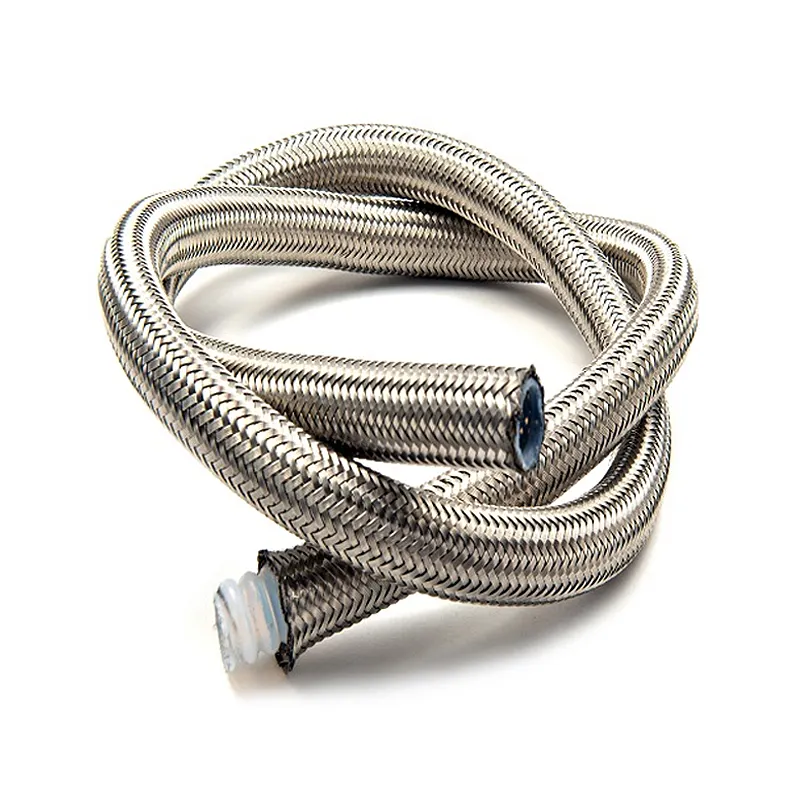
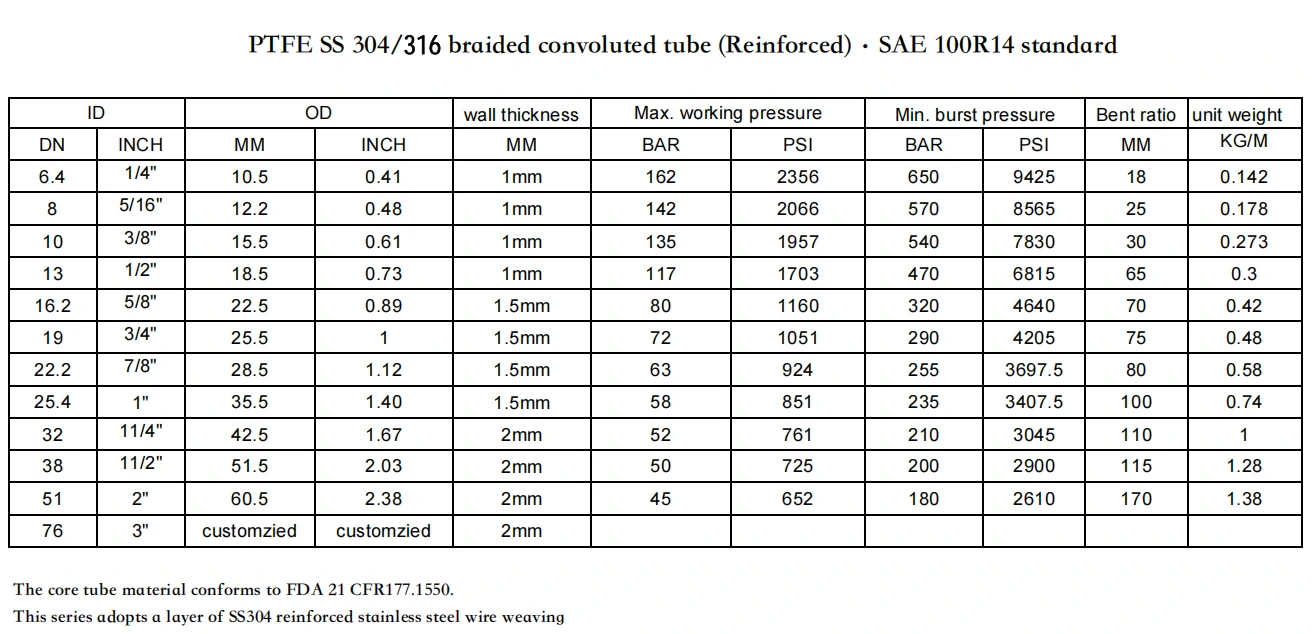
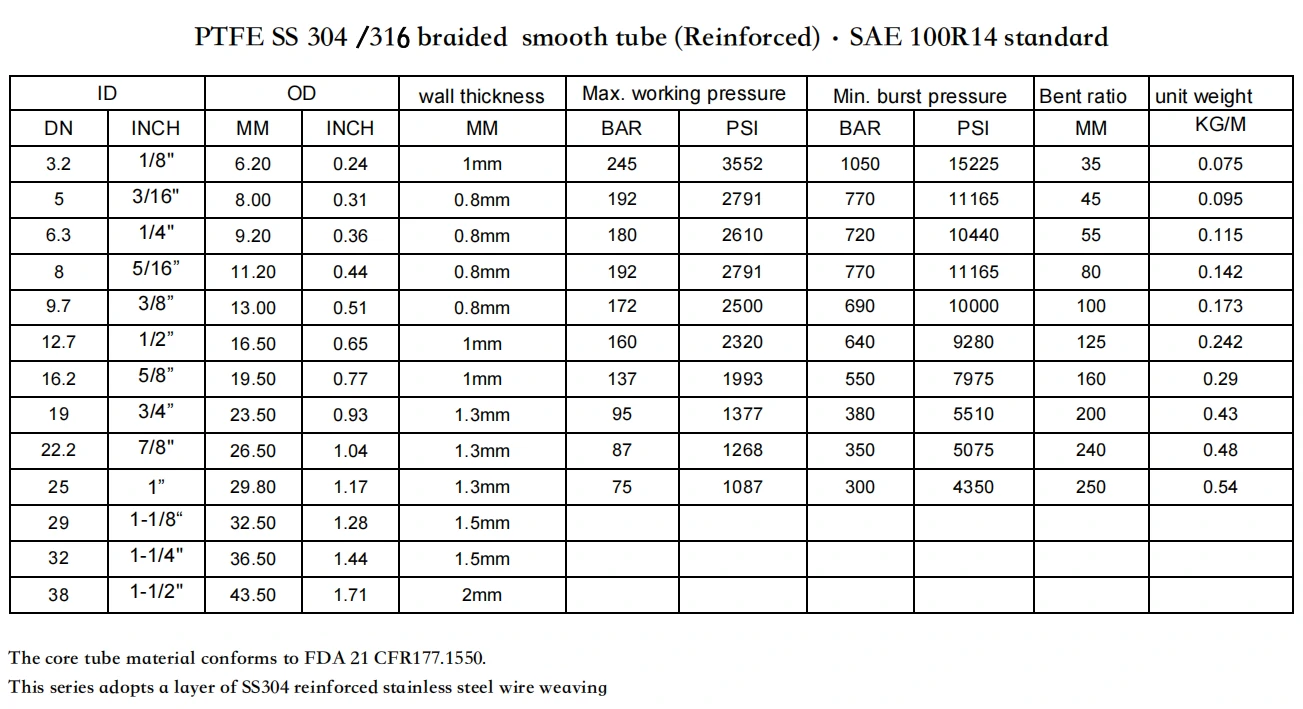
PTFE SS304/316 Braided Hose SAE100R14 for Industry and Food Grade
8mm PTFE tube Product Description:
1. Our 8mm PTFE tube product includes braided high-pressure tube, suitable for almost any demanding application. Because the stainless steel braided PTFE tube has super pressure resistance, extruded tube can be used in a variety of harsh working environments for a long time
2. The inner tube of this fluoroplastic high-pressure hose is made of modified PTFE, PTFE, ETFE or Zytel, and the outer layer is woven with stainless steel braids ranging from one to four layers. For applications requiring extreme working pressures, ptfe tube supplier can complete the hose with additional Kevlar coating.
3. The PTFE liner hose can provide straight or bellow design. Other fluoroplastic variants are available on request.
4. For protection or identification, our high-pressure PTFE tube are sometimes equipped with additional PVC shells or polyethylene/silicone.
Range of product:
• High pressure hose for oxygen
• High pressure hose for hydrogen-helium
• Super high pressure hose for gas applications
• High pressure hose for liquid including sulfuric acid and nitric acid
Product Specification:
Place of Origin: China
Brand Name: YOZONE
Model Number: tsmcay-07
Pipe Material: 100% Virgin PTFE
Material brand: Daikin chemical, DuPont. Dongyue & Chenguang (Domestic)
Specification: customized.
Length: Customized
Shape: Round
Density: 2.16 - 2.3g/cm³
Tolerance: ±0.05 mm
Working Pressure: 127 KG
Burst Pressure: 382 KG
Working Temperature: -60 - 240°C
Chemical Resistance: stable in most medium.
Electrical Property: Insulation Resistant
Certification: UL, CE, FDA, RoHS, REACH.
Standard: ISO9001:2008.
Test: SGS passed
Sample: Free
Payment: T/T
Service Life: Depends on environment, please kindly consult our engineers.
Application: Petroleum transportation, food procession, electrical and etc.
Supply Ability:
20 Tons per Month Plastic PTFE Stainless Steel Braided Tube
Lead Time:
Quantity(Kilograms)
1-10: 3 days
11-500: 7 days
501-1000: 15 days
1000+: negotiable
Packaging & Delivery
Plastic PTFE extruded Lined Pipe Tube into Spool in Carton or Wooden Pallet
Port: Tianjin, Shanghai, Shenzhen, Qingdao.