 +86-13752771911
 E-mail:ptfetube@yozonetech.cn



wholesale reinforced flexible hose
-
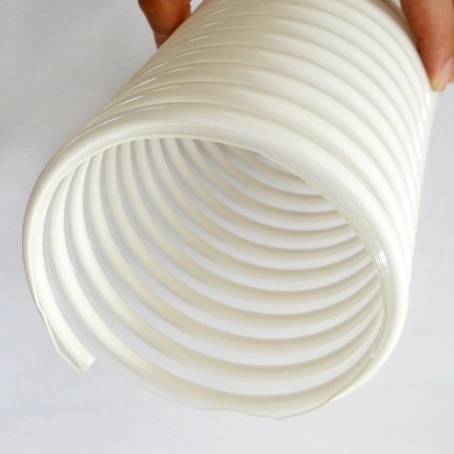
TPU Reinforced Hose
Product Overview
TPU Reinforced Hose is a high-performance flexible hose designed for applications requiring a combination of abrasion resistance, flexibility, pressure capability, and reliable mechanical strength. Manufactured from thermoplastic polyurethane with an integrated reinforcement layer, it is suitable for conveying air, water, oils, slurries, powders, and other compatible media depending on the selected TPU formulation.
Compared with conventional PVC hoses, TPU offers superior resistance to abrasion and repeated flexing, making this hose particularly suitable for dynamic working environments where the hose is frequently moved, dragged, bent, or exposed to particulate materials. Its relatively smooth inner surface supports efficient material transfer, while the reinforcement improves dimensional stability under internal pressure.
Different TPU hardness grades, reinforcement structures, wall thicknesses, and transparency levels can be engineered according to the application. The result is a hose that combines the processing advantages of a thermoplastic material with the mechanical performance required for demanding industrial fluid and material-transfer systems.
As a leading PTFE Hose Supplier, we engineer our flexible reinforced hoses to withstand extreme temperatures and aggressive chemicals, delivering exceptional durability and pressure resistance for demanding industrial applications worldwide.
Key Features
- Exceptional abrasion resistance— TPU withstands repeated contact with abrasive particles and aggressive mechanical handling better than many conventional flexible hose materials.
- High flex-fatigue resistance— Suitable for applications involving frequent bending, movement, and mechanical cycling.
- Strong tear resistance— Helps maintain hose integrity during installation and repeated handling.
- Pressure-capable reinforced structure— Internal reinforcement improves dimensional stability and pressure performance.
- Broad media compatibility— Suitable for selected air, water, oil, slurry, powder, and granular-material applications depending on TPU grade.
- Excellent flexibility at relatively low temperatures— Maintains useful flexibility in demanding working environments.
- Thermoplastic construction— Supports extrusion-based manufacturing, dimensional customization, and efficient OEM production.
Technical Specifications
Parameter Specification Product Name TPU Reinforced Hose Main Material Thermoplastic Polyurethane (TPU) Reinforcement Fiber / textile / other customized reinforcement TPU Hardness Typically 80A–98A Shore A, customizable Inner Diameter Custom Outer Diameter Custom Wall Thickness Custom Working Temperature Typically -40°C to +80°C, depending on TPU grade Working Pressure Size and reinforcement dependent Vacuum Resistance Construction dependent Color Transparent, natural, colored, or customized Surface Smooth Standard Length Custom Media Air, water, oil, slurry, powders, compatible fluids Connection Clamp, barb fitting, quick connector, customized OEM / ODM Available The actual temperature range, pressure rating, chemical resistance, and vacuum performance depend on TPU chemistry, hardness, hose dimensions, reinforcement design, and operating conditions.
Standard sizes
ID (mm) OD (mm) Suggestion Bending (mm) Weight single length Over pressure Bar Vacuum bar 20 27 1,37 0,26 27 0,19 10-30 25 32 1,11 0,25 32 0,23 10-30 30 38 0,93 0,235 38 0,25 10-30 32 40 0,875 0,23 40 0,27 10-30 35 43 0,8 0,225 43 0,3 10-30 38 46 0,74 0,215 46 0,32 10-30 40 48 0,705 0,21 48 0,33 10-30 42 50 0,67 0,205 50 0,35 10-30 45 53 0,63 0,195 53 0,37 10-30 50 58 0,565 0,18 58 0,41 10-30 55 63 0,515 0,16 63 0,45 10-30 60 68 0,475 0,145 68 0,49 10-30 65 73 0,44 0,125 73 0,52 10-30 70 79 0,41 0,105 79 0,54 10-30 75 84 0,38 0,095 84 0,58 10-30 80 89 0,36 0,09 89 0,61 10-30 90 99 0,32 0,075 99 0,7 10-30 100 109 0,285 0,06 109 0,085 10-30 105 114 0,275 0,06 114 0,09 10-30 110 119 0,26 0,055 119 0,94 10-30 115 124 0,25 0,055 124 0,98 10-30 120 129 0,24 0,05 129 1,02 10-30 ID (mm) OD (mm) Suggestion Bending (mm) Weight single length Over pressure Bar Vacuum bar 125 134 0,23 0,04 134 1,06 10-30 130 139 0,22 0,04 139 1,1 10-30 140 149 0,205 0,04 149 1,18 10-30 150 159 0,19 0,04 159 1,26 10-30 160 169 0,18 0,035 169 1,35 10-30 170 179 0,17 0,03 179 1,43 10-30 175 184 0,165 0,03 184 1,47 10-30 180 189 0,16 0,03 189 1,51 10-30 200 209 0,145 0,03 209 1,67 10-30 225 234 0,13 0,02 234 2,26 10-30 250 259 0,115 0,01 259 2,51 10-30 275 284 0,105 0,01 284 2,76 10-30 280 289 0,1 0,01 289 2,8 10-30 300 309 0,095 0,01 309 3 10-30 315 324 0,09 0,01 324 3,15 10-30 320 329 0,09 0,01 329 3,2 10-30 325 334 0,085 0,01 331 3,25 10-30 350 359 0,08 0,005 359 3,5 10-30 375 384 0,075 0,005 384 4,21 10-30 400 410 0,07 0,005 410 4,49 10-30 450 460 0,065 0,005 460 5,05 10-30 500 510 0,055 0,005 510 5,6 10-30 Materials & Construction
TPU Reinforced Hose uses thermoplastic polyurethane as the primary polymer matrix. TPU is available in different polyester-based and polyether-based formulations, allowing the material to be selected according to requirements such as hydrolysis resistance, oil resistance, abrasion resistance, flexibility, and environmental exposure.
A reinforcing layer is integrated within the hose wall to provide additional tensile strength and control dimensional expansion under pressure. Depending on the intended service conditions, reinforcement can be designed using high-strength textile or other suitable structures.
The TPU inner layer provides the primary contact surface for the conveyed medium. Its smooth bore reduces turbulence and helps facilitate the movement of fluids, powders, or granular materials. The outer TPU layer protects the reinforcement and contributes to resistance against abrasion, impact, and repeated bending.
Material hardness and wall construction can be adjusted to achieve different combinations of flexibility and mechanical strength. For dynamic applications, the construction can prioritize flex life, while pressure-transfer applications may require a higher reinforcement density.
Applications
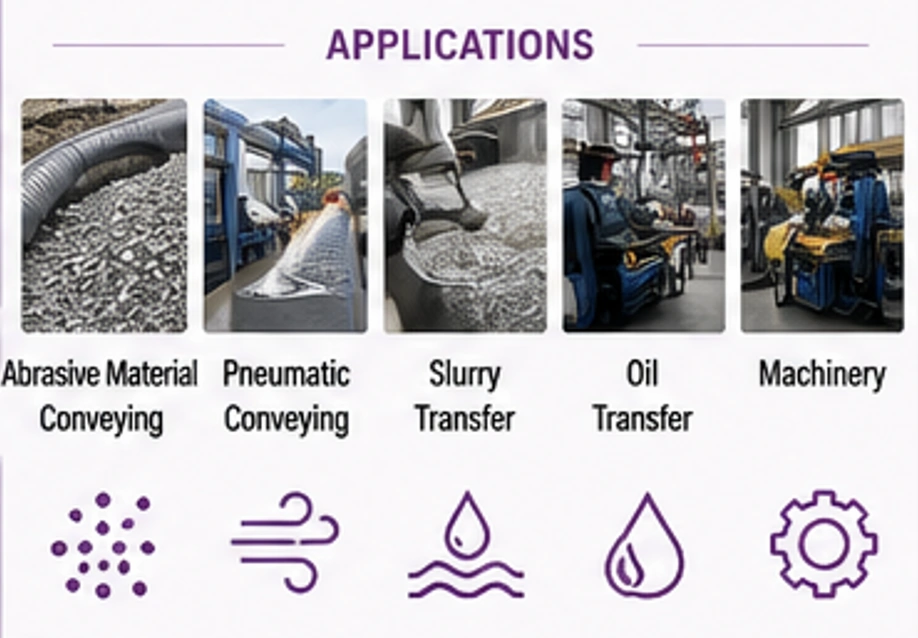
Reinforced flexible hose is widely used in industrial environments where conventional PVC hoses may experience excessive abrasion, flex fatigue, or mechanical wear. Typical applications include pneumatic conveying, industrial air lines, material handling, agricultural equipment, machinery connections, slurry transfer, and selected oil or fluid-transfer systems.
Its high abrasion resistance makes it particularly valuable for conveying dry powders, granules, pellets, dust, and other particulate materials that can progressively wear the internal wall of ordinary flexible tubing. In pneumatic conveying systems, the hose can be used for connections between fixed pipes and moving machinery where flexibility is required.
TPU’s flexibility and resistance to repeated bending also make it suitable for mobile equipment and automated machinery. Depending on the selected TPU formulation, it can provide improved resistance to oils, moisture, hydrolysis, and low-temperature exposure.
For fuels, concentrated chemicals, high-temperature media, or highly specialized fluids, material compatibility should be confirmed with the specific TPU grade before use.
Manufacturing & Quality Control
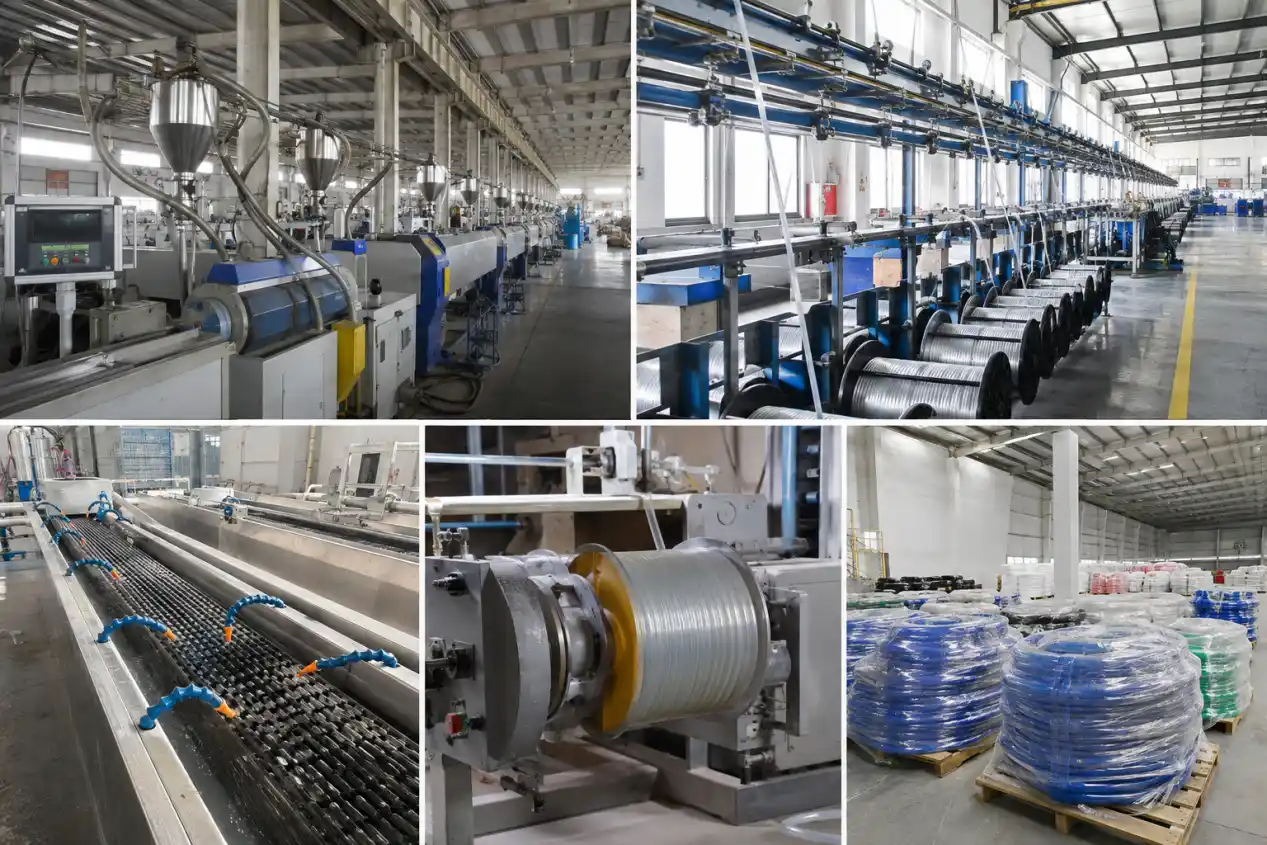
TPU reinforced hose is produced using controlled thermoplastic extrusion and reinforcement integration technology. TPU pellets are first dried and conditioned according to the material manufacturer’s processing requirements, since excessive moisture during processing can affect surface quality, mechanical properties, and dimensional stability.
The TPU material is then plasticized and extruded under controlled temperature and pressure conditions. The reinforcement layer is introduced at a controlled position within the hose wall, followed by the formation of the outer TPU layer. Precise control of extrusion speed, melt temperature, reinforcement tension, and cooling conditions is essential for maintaining concentricity and consistent wall construction.
During production, dimensional parameters such as inner diameter, outer diameter, wall thickness, and reinforcement position are monitored. Particular attention is given to the bonding and encapsulation of the reinforcement because incomplete coverage can create weak points during pressure cycling or repeated bending.
Finished hoses undergo visual and dimensional inspection. Depending on the application, additional testing can include tensile strength, elongation, hardness, pressure resistance, leakage, flex-fatigue, abrasion, and low-temperature performance evaluation.
For OEM projects, inspection criteria can be established according to customer drawings, technical specifications, or agreed quality standards. Production batches can also be identified and documented to support consistent repeat orders.
Customization / OEM & ODM
TPU reinforced hose can be engineered around the mechanical and environmental requirements of the end application. Yozonetech supports customized development for customers who require specific dimensions, pressure levels, flexibility, or material performance.
The process begins by reviewing the conveyed medium, operating pressure, temperature, bending frequency, required service life, hose dimensions, and connection method. Based on these conditions, we can recommend an appropriate TPU grade, hardness, reinforcement configuration, and wall structure.
Customization options include:
- TPU formulation and hardness
- Polyester-based or polyether-based TPU
- Inner and outer diameter
- Wall thickness
- Reinforcement material and density
- Transparent or colored construction
- Hose length and coil configuration
- Surface printing and identification
- Fittings, cuffs, and end connections
- Customized packaging and private labeling
Customers can provide drawings, existing samples, equipment interfaces, or performance requirements. Prototype samples can be produced for dimensional and application testing before mass production. This allows the final hose construction to be validated against the customer’s actual equipment rather than relying solely on theoretical specifications.
FAQ
1. What makes TPU reinforced hose different from PVC reinforced hose?
TPU generally offers significantly higher abrasion resistance and better resistance to repeated flexing than standard PVC. It is particularly advantageous for abrasive material conveying and dynamic applications where mechanical wear is a major concern.
2. Is TPU suitable for conveying abrasive powders and granules?
Yes. TPU is widely used for abrasive particulate conveying because of its strong resistance to wear. The appropriate wall thickness and hardness should be selected according to particle characteristics, conveying velocity, and operating frequency.
3. Should I choose polyester TPU or polyether TPU?
The choice depends on the environment. Polyether TPU generally provides better hydrolysis resistance and can be advantageous in humid or water-exposed applications, while polyester TPU often provides strong mechanical and abrasion performance and good resistance to many oils and fuels. The actual medium and environment should be evaluated before selection.
4. Can the hose be manufactured with a specific pressure rating?
Yes. Pressure performance can be influenced by hose diameter, wall thickness, TPU hardness, and reinforcement structure. We can design the construction around a specified working pressure and required safety margin.
5. Can you develop a TPU hose based on an existing product?
Yes. OEM/ODM development can be based on a sample, technical drawing, dimensional specification, or application requirement. Our production team can analyze the construction and develop a corresponding specification for sample approval and subsequent mass production.
-
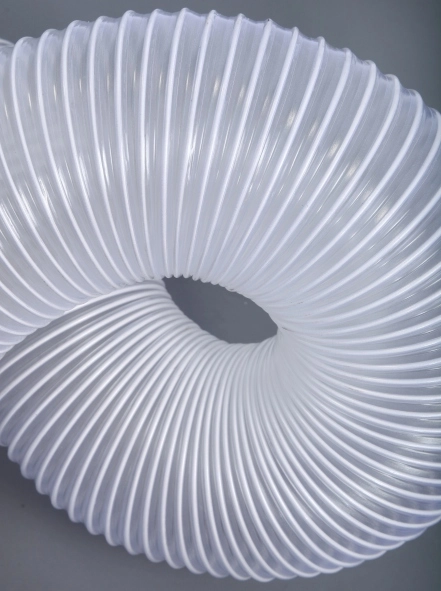
PVC Steel Wire Vacuum Cleaner Hose
Product Overview
PVC Steel Wire Vacuum Cleaner Hose is a flexible suction hose engineered for vacuum systems, dust extraction equipment, industrial cleaning machines, and material recovery applications. Unlike pressure-oriented reinforced hoses, its primary function is maintaining a stable flow passage under negative pressure. A spiral steel wire embedded within the PVC wall provides structural support, helping the hose resist collapse when a vacuum is generated.
The Flexible industrial hose features a relatively smooth internal passage for efficient air and dust movement while retaining the flexibility required for mobile cleaning equipment. Its transparent or semi-transparent PVC construction can also provide visual monitoring of conveyed dust and debris. The combination of a lightweight PVC body and steel-wire reinforcement makes it suitable for applications requiring repeated bending, routing, and connection to vacuum equipment.
As a leading wholesale ptfe tube Supplier, we engineer our flexible reinforced hoses to withstand extreme temperatures and aggressive chemicals, delivering exceptional durability and pressure resistance for demanding industrial applications worldwide.
Key Features
- Vacuum-resistant spiral construction — Embedded steel wire supports the hose wall against deformation under negative pressure.
- Designed for suction systems — Optimized for air, dust, debris, and particulate extraction rather than conventional pressure transfer.
- Flexible spiral profile — Allows repeated bending and directional changes around cleaning machinery.
- Abrasion-resistant PVC wall — Suitable for frequent contact with dust, particles, and general industrial environments.
- Visible flow path — Transparent or translucent options allow operators to observe material movement and detect blockages.
- Lightweight compared with rigid suction piping — Easier to install, reposition, and connect to mobile vacuum equipment.
- Custom connection compatibility — Inner diameter, wire structure, length, color, and end connections can be adapted to equipment requirements.
Technical Specifications
Parameter Specification Product Name PVC Steel Wire Vacuum Cleaner Hose Main Material Flexible PVC Reinforcement Spiral steel wire Structure PVC wall with embedded steel wire Inner Diameter Custom / according to equipment Outer Diameter Custom Wall Thickness Custom Steel Wire Diameter Custom according to hose size Working Pressure Application dependent Vacuum Resistance Application and size dependent Working Temperature Typically -10°C to +60°C Color Transparent / translucent / customized Surface Smooth PVC / customized Standard Length Custom coils or cut lengths End Connection Clamp, cuff, connector, flange, or customized Application Vacuum extraction, dust collection, industrial cleaning OEM / ODM Available Vacuum performance depends on hose diameter, wall structure, steel-wire geometry, bending radius, temperature, and operating conditions. Final specifications should be confirmed for the actual vacuum system.
Model OD mm Wall Min. Bending radius Suggest Single length mm Working pressure bar Negative pressure bar m 25.00 32.00 0.4/0.6 38.00 1.50 0.45 10 or 15 or20 32.00 38.00 0.4/0.6 46.00 1.50 0.43 10 or 15 or20 38.00 44.00 0.4/0.6 53.00 1.40 0.40 10 or 15 or20 40.00 48.00 0.4/0.6 55.00 1.40 0.40 10 or 15or20 51.00 56.00 0.4/0.6 67.00 1.30 0.30 10 or 15 or20 60.00 65.00 0.4/0.6 78.00 1.20 0.30 10 or15 or20 63.00 70.00 0.4/0.6 84.00 1.20 0.30 10 or 15or20 76.00 74.00 0.4/0.6 89.00 0.90 0.25 10 or 15 or20 80.00 88.00 0.4/0.6 106.00 0.90 0.25 10 or 15 or20 90.00 98.00 0.4/0.6 118.00 0.80 0.20 10 or 15or20 Model OD mm Wall Min. Bending radius Suggest Single length mm Working pressure bar Negative pressure bar m 102.00 110.00 0.4/0.6 165.00 0.70 0.20 10 or 15 or20 127.00 136.00 0.4/0.6 202.00 0.60 0.15 10 or 15 or20 140.00 148.00 0.4/0.6 222.00 0.40 0.13 10 or 15 or20 152.00 160.00 0.4/0.6 240.00 0.30 0.10 10 or 15 or20 159.00 167.00 0.4/0.6 250.00 0.28 0.09 10 or 15 or20 178.00 186.00 0.4/0.6 279.00 0.28 0.08 10 or 15or20 203.00 211.00 0.4/0.6 308.00 0.23 0.06 10 or 15or20 254.00 263.00 0.4/0.6 394.00 0.20 0.07 10 or 15 or20 305.00 316.00 0.4/0.6 472.00 0.16 0.06 10 or 15 or20 406.00 418.00 0.4/0.6 627.00 0.08 0.02 10 or 15or20 Materials & Construction
The hose uses flexible PVC as the primary body material, with a continuous spiral steel wire integrated into the wall during manufacturing. The steel wire functions as the structural backbone of the hose rather than simply serving as an external reinforcement. This is particularly important in suction applications, where atmospheric pressure acts against the hose wall when the internal pressure falls below ambient pressure.
The spiral configuration allows the hose to bend while maintaining mechanical support along its length. When routed around vacuum cleaners, extraction units, or industrial equipment, the hose can change direction without requiring multiple rigid elbows.
The PVC wall provides the working surface for the conveyed material and contributes flexibility, abrasion resistance, and environmental protection. Depending on the intended application, the formulation and wall thickness can be adjusted to balance flexibility, vacuum resistance, wear performance, and weight.
For applications involving abrasive particles, the internal construction can be selected according to particle size, concentration, conveying velocity, and operating frequency.
Applications
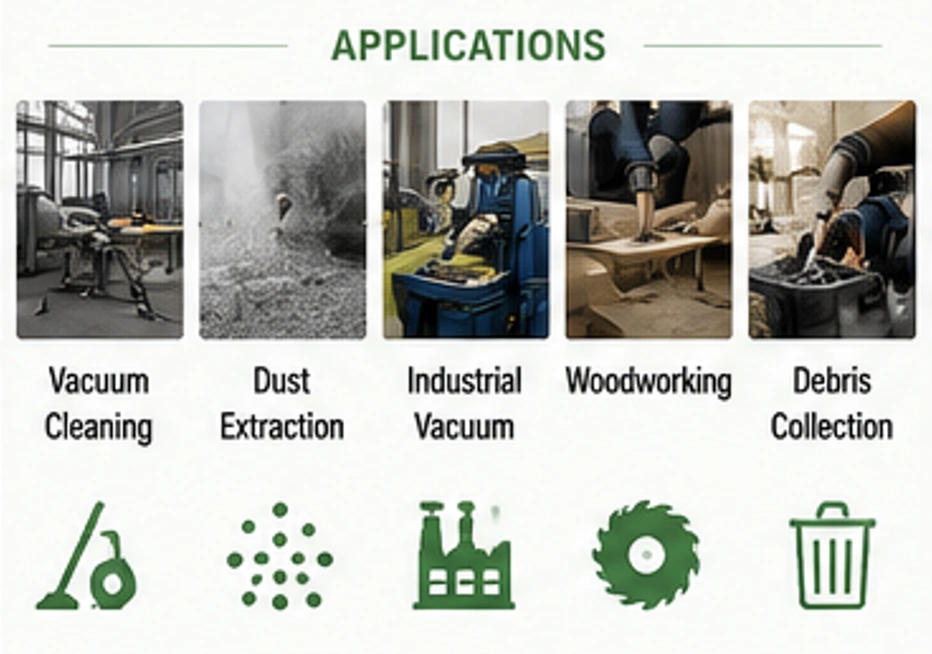
PVC Steel Wire Vacuum Cleaner Hose is primarily used in equipment where negative pressure is generated to draw air, dust, debris, or lightweight particles through a flexible hose. Typical applications include industrial vacuum cleaners, commercial cleaning machines, workshop dust extractors, central vacuum systems, woodworking dust collection, and general-purpose extraction equipment.
In woodworking and fabrication environments, the hose can connect dust-producing machinery to collection systems, allowing chips and airborne particles to be removed from the working area. For industrial cleaning equipment, its flexible construction allows operators to move the suction hose while the machine remains stationary.
The transparent version is particularly useful where visual inspection of the conveyed material is important. Operators can observe airflow and material movement, identify accumulation, and detect potential blockages without immediately disconnecting the hose.
For heavy abrasive particles, elevated temperatures, conductive dust, or chemically aggressive media, the hose construction should be evaluated against the actual operating conditions before selection.
Manufacturing & Quality Control
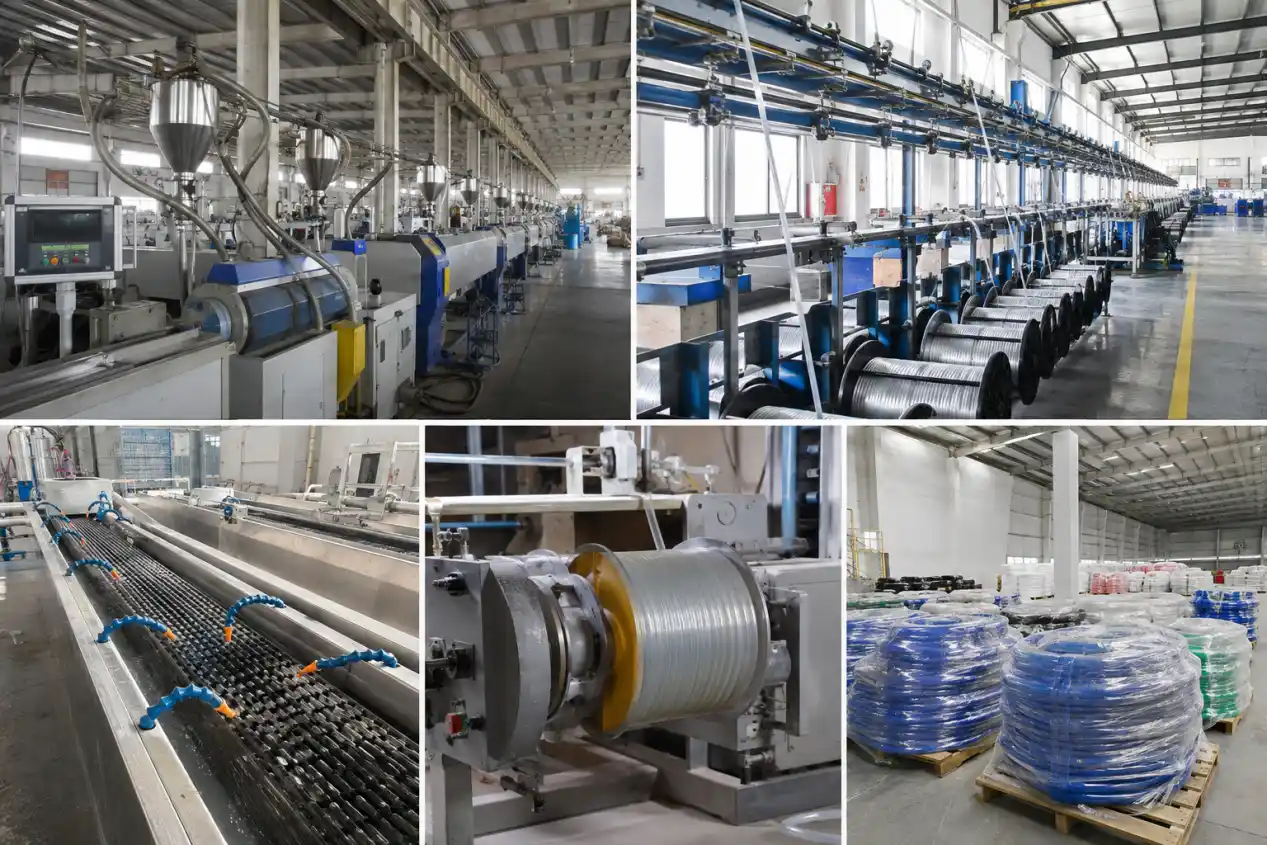
The manufacturing process is designed around the dimensional relationship between the PVC wall and the embedded spiral steel wire. PVC material is prepared according to the required flexibility, hardness, transparency, and environmental performance. The steel wire is formed into a controlled spiral before being integrated with the extruded PVC structure.
During production, the wire pitch, wire positioning, PVC wall thickness, and extrusion conditions are continuously controlled. Consistent wire geometry is particularly important because variations in spiral pitch or embedding depth can influence flexibility, bending behavior, and resistance to vacuum-induced deformation.
After forming, the hose passes through controlled cooling to stabilize its dimensions. Finished sections are then inspected for inner diameter, outer diameter, wall thickness, surface quality, wire continuity, and overall dimensional consistency. Visual inspection is used to identify defects such as uneven PVC coverage, exposed reinforcement, surface damage, or irregular spiral formation.
Where required, production can include vacuum-resistance evaluation, pressure testing, flexibility assessment, dimensional verification, and batch inspection. Testing conditions can be established according to the customer’s equipment specifications rather than relying on a single universal vacuum rating.
Before shipment, hoses are cut or coiled according to the agreed configuration and protected against deformation during transportation. Production records and inspection information can be provided for orders requiring traceability or controlled quality documentation.
Customization / OEM & ODM
Vacuum hose performance is strongly influenced by the geometry of the hose and the vacuum equipment to which it is connected. Yozonetech therefore supports application-based OEM and ODM development rather than limiting customization to diameter and length.
The development process begins with the customer’s vacuum level, airflow, hose diameter, conveying material, operating temperature, bending requirements, and connection method. Our technical team can then determine an appropriate PVC wall structure and spiral steel-wire configuration.
Available customization options include:
- Inner diameter and outer diameter
- PVC wall thickness
- Steel-wire diameter and spiral pitch
- Hardness and flexibility
- Transparent, translucent, or colored PVC
- Hose length and coil dimensions
- Connector, cuff, flange, or fitting configuration
- Surface printing and identification
- Private-label packaging
- OEM drawings and product specifications
For new applications, prototype samples can be evaluated on the customer’s equipment before mass production. This approach helps verify connection compatibility, bending behavior, airflow requirements, and vacuum resistance before the final specification is released.
FAQ
1. Why is steel wire used in a vacuum cleaner hose?
A vacuum creates negative pressure inside the hose. Without sufficient structural support, a flexible hose can deform or collapse. The spiral steel wire reinforces the wall and helps maintain the internal flow passage during suction.
2. Is this hose suitable for industrial dust extraction?
Yes. It can be used for many industrial dust and debris extraction systems, including woodworking, workshop cleaning, machinery dust collection, and industrial vacuum equipment. The exact construction should be selected according to the type and abrasiveness of the material being conveyed.
3. Can the hose be connected directly to a vacuum cleaner?
Yes. The hose can be manufactured or supplied with suitable cuffs, clamps, connectors, or other end configurations. The connection dimensions should be confirmed according to the vacuum cleaner or extraction equipment.
4. Can you make a more flexible or more rigid version?
Yes. Flexibility can be adjusted through PVC formulation, wall thickness, steel-wire diameter, and spiral geometry. The final construction can be optimized according to bending radius and vacuum requirements.
5. Can you manufacture the hose according to an existing sample?
Yes. OEM development can be based on a physical sample, drawing, dimensional specification, or existing hose. We can evaluate the construction and develop a corresponding production specification for approval before bulk manufacturing.
-
PVC Spiral Steel Wire Hose
Product Overview
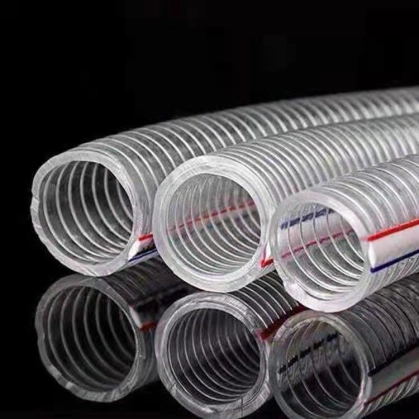
PVC Spiral Steel Wire Hose is a flexible suction and delivery hose designed for applications requiring both mechanical flexibility and resistance to vacuum-induced collapse. A continuous steel wire helix is embedded within the PVC wall, creating a reinforced structure capable of maintaining the hose bore during suction, bending, and fluid transfer.
The spiral construction makes this hose particularly suitable for applications where conventional soft PVC tubing would deform under negative pressure or repeated handling. Depending on the formulation and dimensions, it can be used for water, air, light chemicals, slurry, powders, granular materials, and other compatible media. Transparent and translucent versions allow operators to visually monitor material movement through the hose.
The combination of a flexible PVC body and steel-wire helix provides a practical balance between weight, bending capability, structural stability, and service life. Different wire diameters, spiral pitches, wall thicknesses, and PVC formulations can be selected according to pressure, vacuum, abrasion, and flexibility requirements.
As a leading wholesale ptfe tube Supplier, we engineer our flexible reinforced hoses to withstand extreme temperatures and aggressive chemicals, delivering exceptional durability and pressure resistance for demanding industrial applications worldwide.
Key Features
- Continuous steel-wire helix— Provides circumferential support and helps preserve the internal passage during suction.
- Suitable for positive and negative pressure service— Construction can be configured for delivery, suction, or combined operating conditions.
- Controlled bending behavior— Spiral reinforcement allows the hose to flex without behaving like rigid piping.
- High visual transparency options— Clear PVC versions allow inspection of fluid and particulate movement.
- Good resistance to abrasion and weather exposure— Suitable for general industrial and outdoor handling conditions.
- Reduced risk of hose collapse— Reinforcement supports the wall when internal pressure falls below atmospheric pressure.
- Variable reinforcement geometry— Steel-wire diameter and spiral pitch can be engineered for different mechanical requirements.
Technical Specifications
Parameter Specification Product Name PVC Spiral Steel Wire Hose Main Material Flexible PVC Reinforcement Spiral steel wire Construction Steel wire embedded in PVC wall Inner Diameter Custom Outer Diameter Custom Wall Thickness Custom Steel Wire Diameter Custom Spiral Pitch Application dependent Working Pressure Size and construction dependent Vacuum Rating Size, wall structure, and wire geometry dependent Working Temperature Typically -10°C to +60°C Color Transparent, translucent, blue, green, or customized Surface Smooth / customized Standard Length Custom coil length Connection Clamp, flange, cuff, connector, or customized Media Water, air, slurry, powders, granules, compatible fluids OEM / ODM Available Pressure and vacuum ratings are construction-specific. The final specification should be established according to hose diameter, steel-wire configuration, temperature, medium, and actual operating conditions.
Standard sizes
Size/mm Color length/m Weight/kg Pressure/MPa Break pressure/MPa 6x3 clear 100 12 1.2 3.6 8x3 clear 100 15 1.2 3.6 10x3 clear 100 18 1.2 3.6 12x3 clear 100 22 1.1 3.3 15x3.5 clear 100 31 1.1 3.3 19x3.5 clear 50 19 1.0 3.0 25x3.5 clear 50 24 0.9 2.7 32x4 clear 50 28 0.8 2.4 38x4 clear 50 40 0.7 2.1 40x4 clear 50 40.5 0.7 2.1 45x5 clear 50 62 0.6 1.8 48x5 clear 50 66.5 0.6 1.8 50x5.5 clear 50 57.5 0.6 1.8 60x7 clear 30 67 0.6 1.8 63x8 clear 30 86 0.6 1.8 64x7 clear 30 71 0.6 1.8 Size/mm Color length/m Weight/kg Pressure/MPa Break pressure/MPa 75x7.5 clear 30 87.5 0.5 1.5 76x5 clear 30 62 0.5 1.5 80x6 clear 30 75 0.5 1.5 89x8 clear 30 110 0.5 1.5 102x8 clear 30 123 0.4 1.2 110x6.5 clear 30 114 0.3 0.9 127x8 clear 30 145 0.4 0.9 133x8.5 clear 30 150 0.3 0.9 140x7 clear 30 149 0.3 0.9 152x8 clear 30 178 0.3 0.9 160x8 clear 30 209 0.3 0.9 180x9 clear 30 256 0.3 0.9 200x10 clear 30 330 0.3 0.9 220x2 clear 30 420 0.3 0.9 252x12 clear 30 478 0.2 0.6 Materials & Construction
The reinforced flexible hose consists of a flexible PVC matrix surrounding a continuous spiral steel wire. Unlike textile-reinforced pressure hose, where reinforcement is primarily intended to withstand internal pressure, the steel helix in this construction provides radial support along the entire length of the hose. This makes the design particularly effective for suction and vacuum applications.
The steel wire is formed into a controlled spiral and integrated into the PVC wall during extrusion. Its pitch and diameter influence several performance characteristics, including bending radius, crush resistance, vacuum stability, weight, and overall flexibility.
The inner PVC surface provides the direct contact path for the conveyed material. A smooth bore helps maintain consistent flow and reduces locations where particles can accumulate. The outer PVC layer protects the embedded steel wire against normal environmental exposure and mechanical handling.
PVC formulations can be modified according to the intended service. Softer compounds can provide easier bending, while a more rigid formulation and stronger wire structure can improve resistance to deformation. For abrasive media, wall thickness and material formulation can be adjusted to extend service life.
Applications
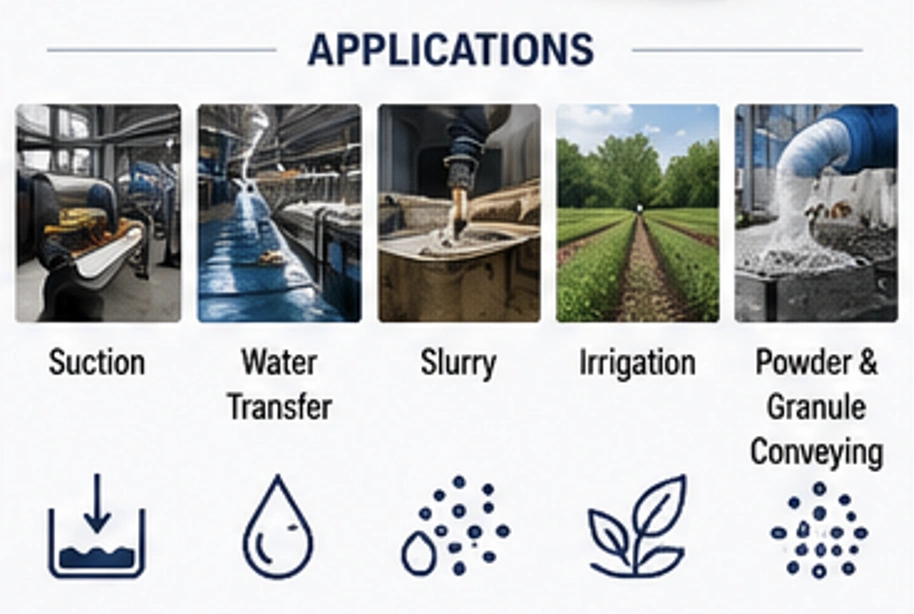
PVC Spiral Steel Wire Hose is widely used in suction, discharge, and material-transfer systems where flexibility and structural stability are required simultaneously. Typical applications include agricultural irrigation, water suction, pump connections, industrial vacuum systems, slurry transfer, liquid handling, and pneumatic or mechanical transport of selected particulate materials.
In agricultural equipment, the hose can be used between pumps, tanks, irrigation systems, and water sources. Its flexible construction allows the suction line to follow equipment movement and uneven installation paths.
Industrial applications include transferring water, wastewater, light chemicals, slurry, powders, pellets, and other compatible materials. Transparent versions are especially useful when operators need to observe the flow condition or identify blockages without dismantling the system.
The steel-wire structure also makes the hose suitable for applications where a flexible connection must withstand external bending and negative pressure. For highly abrasive solids, concentrated chemicals, elevated temperatures, or demanding continuous vacuum service, the hose construction should be selected according to the actual operating parameters.
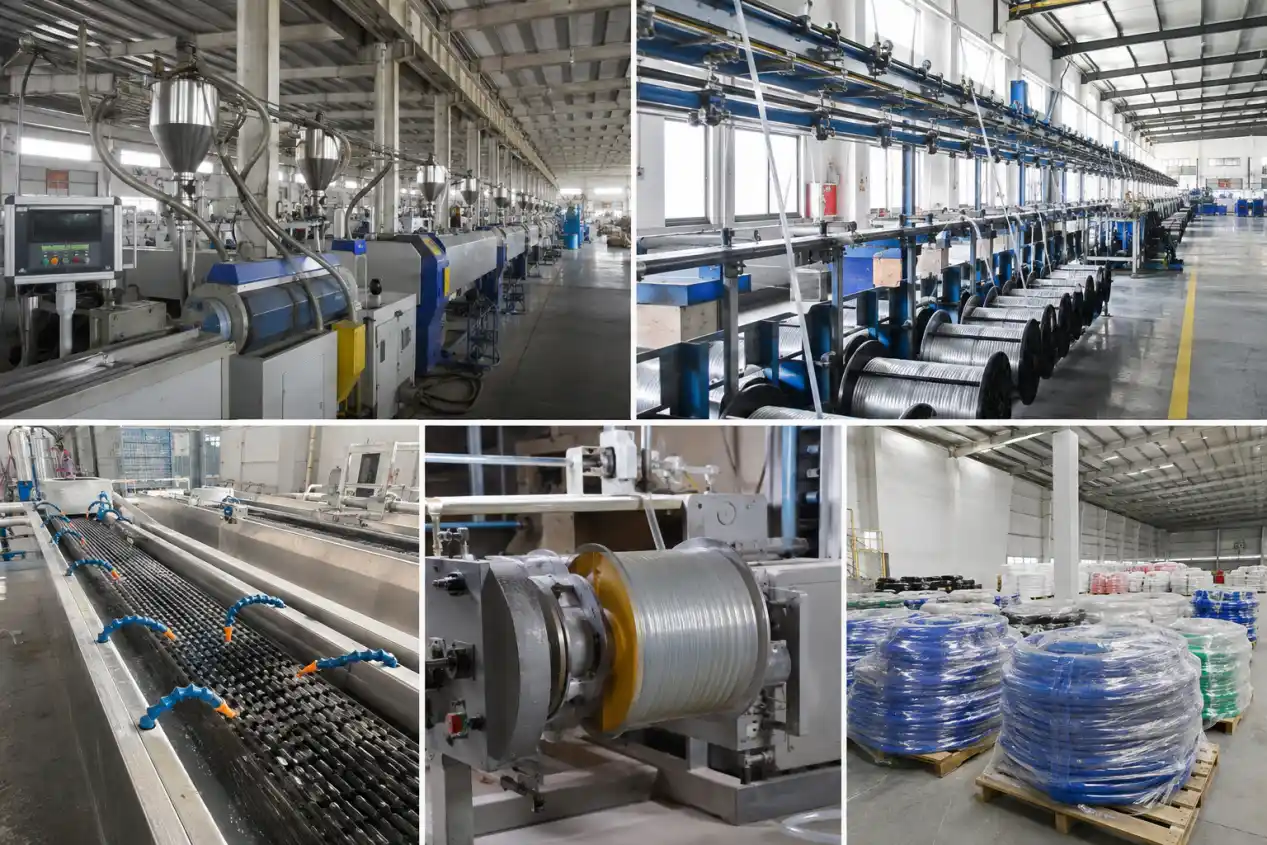
Manufacturing & Quality Control
Manufacturing PVC spiral steel wire hose requires accurate coordination between PVC extrusion and steel-wire forming. The PVC compound is prepared according to the required flexibility, hardness, transparency, and environmental performance. Steel wire is formed into a controlled helical geometry before being integrated into the hose wall.
During production, extrusion temperature, material flow, line speed, wire tension, spiral pitch, and embedding position are controlled continuously. Correct wire placement is critical: insufficient PVC coverage can expose the reinforcement, while excessive displacement can create variations in wall thickness and affect bending characteristics.
After the hose is formed, controlled cooling stabilizes the PVC profile and helps maintain dimensional accuracy. Finished hose is inspected for inner diameter, outer diameter, wall thickness, spiral uniformity, surface condition, and overall appearance.
For applications involving suction or pressure, additional performance checks can be conducted according to the agreed specification. These may include vacuum-resistance testing, pressure testing, leakage inspection, bending evaluation, and dimensional recovery after deformation.
Particular attention is paid to the transition between the steel-wire-reinforced body and the hose ends, where cutting and connection can influence installation quality. Finished products are coiled and packaged in a way that minimizes permanent deformation during transportation and storage.
For OEM production, inspection criteria can be established in advance, including dimensional tolerances, wire specifications, vacuum requirements, pressure requirements, and appearance standards.
Customization / OEM & ODM
PVC spiral steel wire hose is highly dependent on the relationship between hose diameter, wall thickness, steel-wire geometry, and operating conditions. Yozonetech provides OEM and ODM development for applications requiring a specific balance of flexibility, vacuum resistance, pressure capability, and wear performance.
The process starts with the customer’s medium, working pressure, vacuum level, temperature, flow characteristics, hose diameter, bending radius, and connection method. These parameters are used to determine the appropriate PVC formulation and steel-wire structure.
Customization options include:
- Inner and outer diameter
- PVC hardness and formulation
- Wall thickness
- Steel-wire diameter
- Spiral pitch
- Wire material and surface treatment
- Transparency and color
- Hose length and coil configuration
- Smooth or customized surface
- Clamps, cuffs, flanges, and other connections
- Surface printing and identification
- OEM packaging and private labeling
Customers can provide an existing sample, drawing, equipment interface, or performance specification. Prototype production allows the hose to be evaluated under actual suction, pressure, bending, and connection conditions before the final construction is approved for series production.
FAQ
1. What is the main purpose of the steel wire inside the hose?
The spiral steel wire acts as a continuous structural support. It helps prevent the PVC wall from collapsing when the hose is subjected to negative pressure and also improves resistance to external deformation.
2. Is PVC spiral steel wire hose suitable for suction applications?
Yes. This is one of its primary applications. The steel-wire helix helps maintain the internal passage under vacuum. However, the appropriate wire diameter, pitch, and wall thickness must be selected according to the required vacuum level.
3. Can this hose be used for both suction and discharge?
Yes, depending on its construction. The required working pressure and vacuum rating should be considered together when selecting the hose. A hose optimized for suction should not automatically be assumed to have a high positive-pressure rating.
4. What is the advantage of a transparent version?
A transparent or translucent hose allows operators to observe the conveyed material. This can help identify flow interruptions, air pockets, blockages, or contamination without opening the system.
5. Can the steel wire and spiral pitch be customized?
Yes. Wire diameter and spiral pitch can be adjusted according to the required flexibility, crush resistance, vacuum performance, and mechanical strength. Custom construction is particularly useful for OEM equipment and specialized suction systems.
-
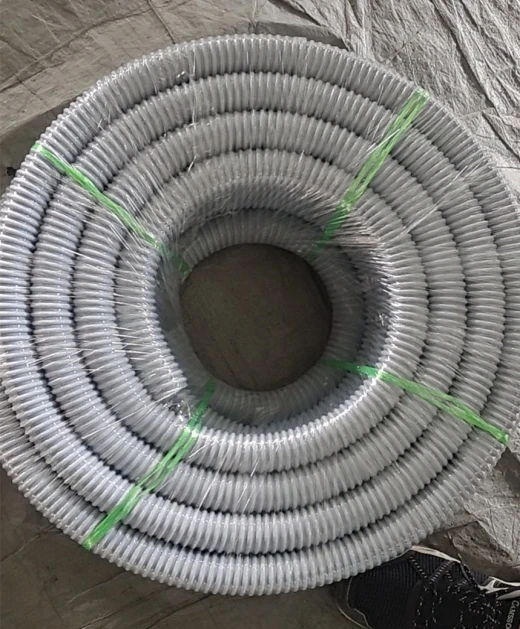
PVC Reinforced Hose
PVC Reinforced Hose Overview
PVC Reinforced Hose is a flexible pressure hose designed for the reliable transfer of water, air, light chemicals, and other compatible fluids in industrial, agricultural, and general-purpose applications. Its construction combines a flexible PVC inner tube with a high-strength reinforcement layer, providing a practical balance between flexibility, pressure resistance, and handling convenience.
Compared with ordinary PVC tubing, the reinforced structure helps the hose maintain its shape under working pressure while reducing the risk of expansion and deformation. The smooth inner surface supports efficient fluid flow and helps minimize material buildup. The hose can be supplied in different diameters, wall thicknesses, colors, and lengths to meet different operating requirements. Depending on the application, reinforcement can be selected according to the required pressure level and flexibility.
As a leading wholesale ptfe tube Supplier, we engineer our flexible reinforced hoses to withstand extreme temperatures and aggressive chemicals, delivering exceptional durability and pressure resistance for demanding industrial applications worldwide.
Key Features
- Reinforced pressure structure— Provides higher pressure resistance than standard non-reinforced PVC tubing.
- Flexible and easy to handle— Suitable for routing around equipment and confined installation spaces.
- Smooth inner wall— Supports efficient flow and reduces resistance during fluid transfer.
- Good abrasion resistance— Suitable for repeated handling and general industrial use.
- Wide application range— Suitable for water, air, irrigation, machinery, and compatible fluids.
- Customizable construction— Available in different sizes, reinforcement structures, colors, and lengths.
- Convenient storage and installation— Flexible construction allows practical coiling, cutting, and connection.
Technical Specifications
Item Specification Product Name PVC Reinforced Hose Tube Material Flexible PVC Reinforcement Fiber / textile reinforcement Inner Diameter Customizable Outer Diameter Customizable Wall Thickness Customizable Working Temperature Typically -10°C to +60°C Working Pressure Depends on size and construction Color Transparent, clear, blue, red, yellow, or customized Standard Length 20 m / 30 m / 50 m / 100 m or customized Connection Hose clamp, barb fitting, quick connector, or customized Surface Smooth or customized OEM / ODM Available Actual pressure, temperature, and dimensional specifications depend on hose size, reinforcement density, and application conditions.
Standard Sizes
ID mm OD mm Wall mm Overpressure bar Vacuum bar Single length (m) 25 32 0.6-7 7.5 1.275 10/15/20/30 32 38 0.6-7 6 1.275 10/15/20/30 38 44 0.6-7 6 1.275 10/15/20/30 51 58 0.6-7 6 1.2 10/15/20/30 60 65 0.6-7 6 1.2 10/15/20/30 63 70 0.6-7 6 1.2 10/15/20/30 76 83 0.6-7 5.4 1.05 10/15/20/30 102 108 0.6-7 5.4 1.05 10/15/20/30 127 133 0.6-7 2.25 0.9 10/15/20/30 152 158 0.6-7 2.25 0.8 10/15/20/30 203 212 0.6-7 2 0.72 10/15/20/30 254 263 0.6-7 1.8 0.56 10/15/20/30 280 289 0.6-7 1.65 0.47 10/15/20/30 300 315 0.6-7 1.1 0.36 10/15/20/30 Materials & Construction
The reinforced flexible hose is manufactured primarily from flexible PVC, selected for its combination of flexibility, abrasion resistance, weatherability, and economical processing. A reinforced layer is incorporated into the hose wall to improve dimensional stability and pressure performance during operation.
The inner PVC layer forms a smooth flow channel, helping fluids pass through the hose with relatively low flow resistance. The reinforcement layer provides additional mechanical strength and helps limit radial expansion when internal pressure increases. An outer PVC layer protects the reinforcement from abrasion, moisture, and normal handling conditions.
Different reinforcement densities can be selected according to the intended working pressure and flexibility requirements. For applications requiring easier handling, a lighter reinforcement structure can be used, while higher-pressure applications can utilize a denser reinforcement layer. This construction allows the same basic hose design to be adapted to different industrial and commercial requirements.
Applications
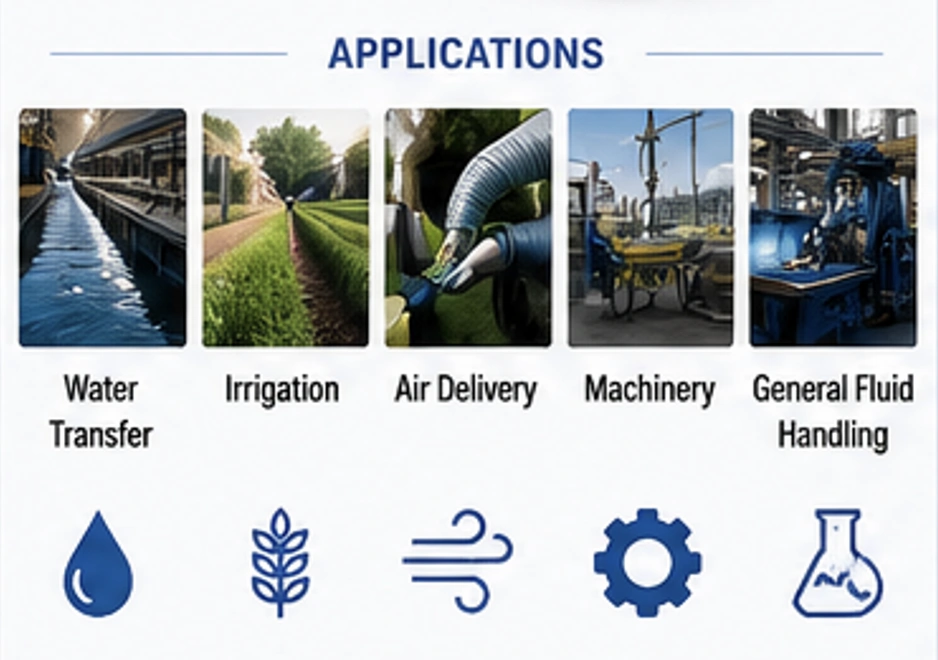
PVC Reinforced Hose is widely used where flexible pressure transfer is required without the weight and rigidity of conventional rigid piping. It is commonly used for water delivery, agricultural irrigation, air transfer, equipment connections, machinery, cleaning systems, and general industrial fluid handling.
In agricultural applications, the hose can be used for irrigation and water distribution where frequent movement and installation flexibility are important. In workshops and factories, it can connect pumps, equipment, tanks, and processing systems. Its flexible construction is also useful for temporary or semi-permanent connections where rigid pipes would be inconvenient.
The hose can handle many commonly used fluids, but compatibility should be confirmed before use with oils, aggressive chemicals, high-temperature media, or other specialized fluids. For demanding applications, Yozonetech can recommend an appropriate PVC formulation and reinforcement structure based on the actual working conditions.
Manufacturing & Quality Control
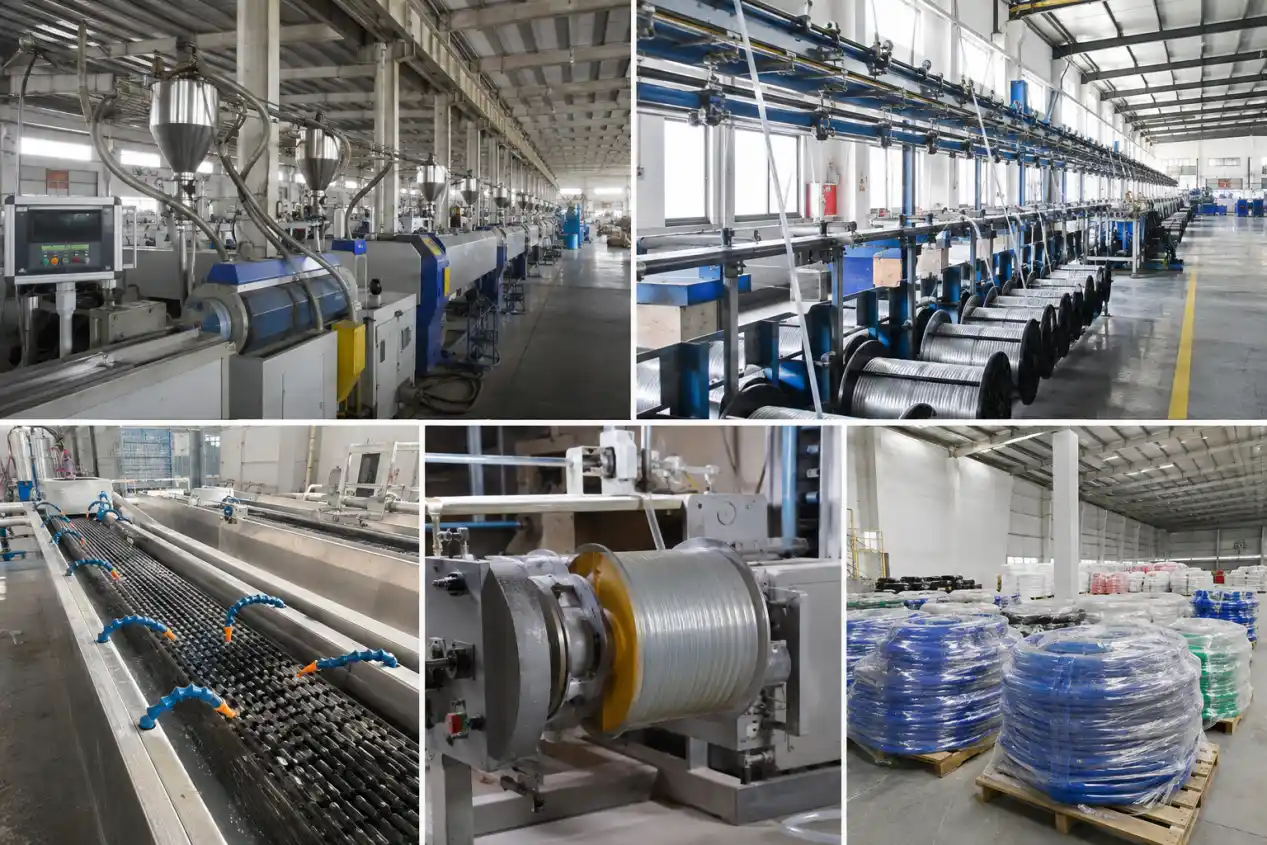
Yozonetech manufactures PVC reinforced hose through controlled extrusion and reinforcement processes designed to maintain consistent dimensions and bonding between the hose layers. PVC raw materials are prepared according to the required formulation before being processed through precision extrusion equipment.
During production, the inner PVC layer is formed first, followed by the reinforcement layer and outer PVC covering. Process parameters such as extrusion temperature, material feeding, line speed, and cooling conditions are controlled to maintain a stable hose structure. The reinforcement is positioned evenly around the hose to reduce variations in wall thickness and pressure performance.
After extrusion, the hose is cooled, measured, cut to the specified length, and visually inspected. Quality control focuses on key characteristics including inner and outer diameter, wall thickness, surface appearance, flexibility, reinforcement position, and dimensional consistency. Pressure testing can also be performed according to customer requirements.
Before shipment, finished hoses are checked against production specifications and packaging requirements. Customized labels, markings, rolls, coils, and packaging configurations are available for different markets and distribution channels.
Customization / OEM & ODM
Yozonetech provides OEM and ODM solutions for customers requiring PVC reinforced hose with application-specific dimensions or construction.
The customization process normally begins with confirmation of the application, medium, working pressure, temperature, required diameter, and hose length. Based on these conditions, we recommend a suitable PVC formulation and reinforcement structure.
Customers can customize:
- Inner and outer diameter
- Wall thickness
- Reinforcement density
- Hose length
- Color and appearance
- Surface marking and printing
- Fittings and connection methods
- Roll, coil, or straight-length packaging
- Private labels and customized packaging
For regular production, samples or technical drawings can be reviewed before mass production. Our engineering and production teams can then optimize the construction according to the customer's performance requirements, helping achieve a balance between pressure resistance, flexibility, service life, and production cost.
FAQ
1. What is the difference between PVC reinforced hose and ordinary PVC hose?
PVC reinforced hose contains an additional reinforcement layer inside the wall. This provides better dimensional stability and pressure resistance while maintaining much of the flexibility of PVC tubing.
2. Can the hose be used for water and air?
Yes. PVC reinforced hose is commonly used for water, irrigation, air, and other compatible fluids. The appropriate specification should be selected according to pressure, temperature, and medium.
3. Can you manufacture different sizes and colors?
Yes. Inner diameter, outer diameter, wall thickness, length, color, reinforcement density, printing, and packaging can be customized according to the order requirements.
4. Can you provide samples before bulk production?
Yes. Samples can be produced or supplied for dimensional, material, flexibility, and application evaluation before regular production.
5. Is PVC reinforced hose suitable for oil or chemicals?
This depends on the specific medium and concentration. For oil, fuel, solvents, or aggressive chemicals, the material compatibility should be evaluated before production. Yozonetech can recommend a more suitable hose construction when standard PVC is not sufficient.
-
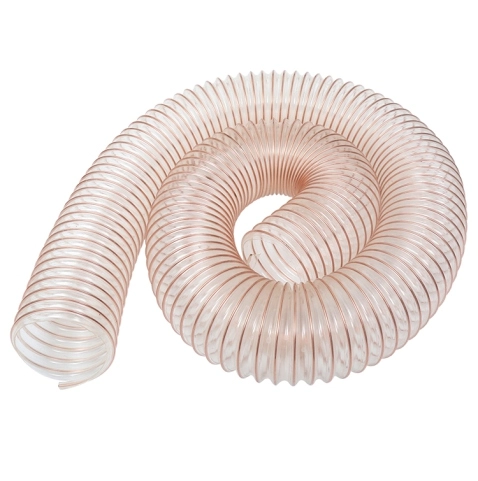
Oil-Resistant & Anti-Static PU Hose
Oil Resistant PU hose Overview
Oil-Resistant & Anti-Static PU Hose is engineered for pneumatic conveying, industrial suction, material handling, and equipment connections where exposure to oils or lubricants is combined with a requirement for controlled electrostatic discharge. Manufactured from specially selected polyurethane, the hose provides a balance of flexibility, abrasion resistance, mechanical durability, and oil resistance while incorporating an electrically dissipative construction.
Its anti-static characteristic is particularly important when dry powders, dust, granules, or other particulate materials move at high velocity through the hose. Friction between the conveyed material and hose wall can generate electrostatic charge. A conductive or dissipative PU formulation helps reduce charge accumulation and provides a controlled path for static dissipation when the complete system is properly grounded.
Compared with conventional PU tubing, this specialized construction is intended for more demanding industrial environments. Different hardness levels, wall thicknesses, reinforcement structures, colors, and dimensions can be developed according to conveying conditions and equipment requirements.
As a leading wholesale ptfe tube Supplier, we engineer our flexible reinforced hoses to withstand extreme temperatures and aggressive chemicals, delivering exceptional durability and pressure resistance for demanding industrial applications worldwide.
Key Features
- Oil-resistant PU formulation— Designed to maintain mechanical integrity when exposed to oils, lubricants, and selected hydrocarbon-based media.
- Electrostatic dissipation— Conductive or dissipative construction helps control static charge generated during material conveying.
- High abrasion resistance— Suitable for repeated contact with powders, granules, dust, and other abrasive materials.
- Excellent flex fatigue performance— Supports repeated bending and movement in pneumatic and automated equipment.
- Low weight with high mechanical strength— Provides a practical alternative to heavier rigid or rubber conveying lines.
- Smooth bore— Promotes efficient movement of air and particulate materials while reducing internal accumulation.
- Custom electrical resistance— Electrical properties can be engineered according to the required anti-static performance and grounding system.
Technical Specifications
Parameter Specification Product Name Oil-Resistant & Anti-Static PU Hose Main Material Polyurethane (PU) PU Type Polyester or Polyether, application dependent Anti-Static Structure Conductive / dissipative PU formulation Surface Resistance Application-specific Hardness Typically 80A–98A Shore A, customizable Inner Diameter Custom Outer Diameter Custom Wall Thickness Custom Working Temperature Typically -40°C to +80°C, grade dependent Working Pressure Size and construction dependent Oil Resistance Application dependent Reinforcement Optional Color Black, transparent, translucent, or customized Surface Smooth Length Custom Connection Push-in fitting, barb, clamp, cuff, or customized OEM / ODM Available Electrical resistance and temperature/pressure ratings must be specified according to the selected PU compound and actual system design. Anti-static performance also depends on proper grounding of the hose assembly and connected equipment.
Standard sizes
Model OD (mm) Wall (mm) Min. Bneding radius Suggestion single length (m) Working pressure Bar Negative pressure bar 25 32 0.60 38 1.60 0.45 10-15m 32 39 0.60 47 1.60 0.40 10-15m 38 45 0.60 54 1.60 0.40 10-15m 40 47 0.60 58 1.50 0.30 10-15m 51 58 0.60 69 1.40 0.35 10-15m 60 68 0.60 81 1.20 0.25 10-15m 63 71 0.60 85 1.20 0.25 10-15m 70 79 0.60 94 1.10 0.23 10-15m 76 85 0.60 102 1.00 0.23 10-15m 80 89 0.60 107 0.90 0.20 10-15m 82 91 0.60 109 0.90 0.20 10-15m 90 99 0.60 119 0.80 0.18 10-15m Model OD (mm) Wall (mm) Min. Bneding radius Suggestion single length (m) Working pressure Bar Negative pressure bar 102 111 0.60 168 0.75 0.15 10-15m 115 124 0.60 188 0.65 0.15 10-15m 120 129 0.60 193 0.65 0.15 10-15m 127 136 0.60 204 0.50 0.13 10-15m 140 149 0.60 223 0.40 0.13 10-15m 152 161 0.60 241 0.30 0.12 10-15m 159 168 0.60 252 0.25 0.12 10-15m 178 187 0.60 280 0.23 0.10 10-15m 203 212 0.60 318 0.22 0.09 10-15m 254 263 0.60 394 0.20 0.08 10-15m 305 314 0.60 471 0.15 0.06 10-15m Materials & Construction
The reinforced flexible hose is manufactured from polyurethane selected for its combination of wear resistance, flexibility, tensile strength, and resistance to repeated mechanical deformation. For oil-exposed environments, the PU formulation can be selected according to the type of oil, lubricant, concentration, temperature, and exposure duration.
The anti-static function is achieved through an electrically dissipative or conductive material system incorporated into the hose rather than relying solely on an external coating. This allows static charge generated during pneumatic conveying or material movement to be controlled through a suitable grounding path.
For demanding applications, polyester-based or polyether-based PU can be considered according to the environment. Polyether PU is often advantageous where moisture and hydrolysis resistance are important, while polyester PU can provide strong mechanical and abrasion performance in many industrial applications.
The hose can be manufactured as a single-wall flexible tube or with additional reinforcement where pressure stability is required. Wall thickness, hardness, conductivity, and reinforcement can be adjusted to meet the requirements of the complete conveying system.
Applications
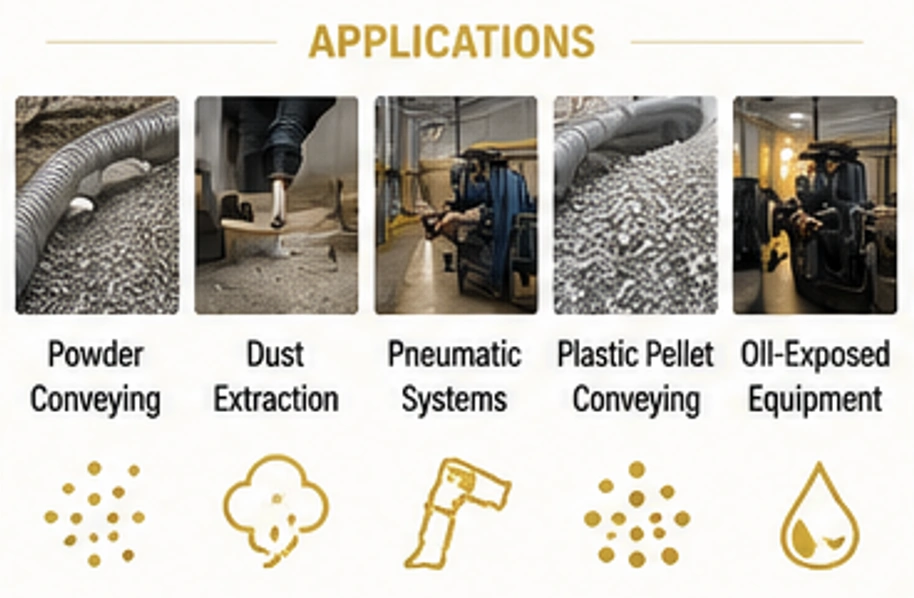
Oil-resistant and anti-static PU hose is commonly used in pneumatic conveying, industrial vacuum systems, powder transfer, plastics processing, woodworking dust collection, automated machinery, and equipment requiring flexible air or material connections.
It is particularly useful in systems conveying dry powders, plastic pellets, granules, dust, and other particulate materials where friction can generate static electricity. The dissipative construction helps reduce charge accumulation when the hose is correctly incorporated into a grounded system.
The oil-resistant formulation also makes the hose suitable for machinery and workshop environments where contact with lubricating oils, cutting fluids, or oil mist may occur. Its flexibility allows connections between moving components, robotic equipment, extraction units, and fixed pipelines.
Typical applications include plastic pellet conveying, CNC dust extraction, pneumatic material transfer, industrial vacuum cleaners, woodworking equipment, air-operated machinery, and selected oil-containing pneumatic environments.
For combustible dust or potentially explosive atmospheres, hose electrical properties must be evaluated as part of the complete system. An anti-static hose alone does not constitute a complete explosion-protection solution.
Manufacturing & Quality Control
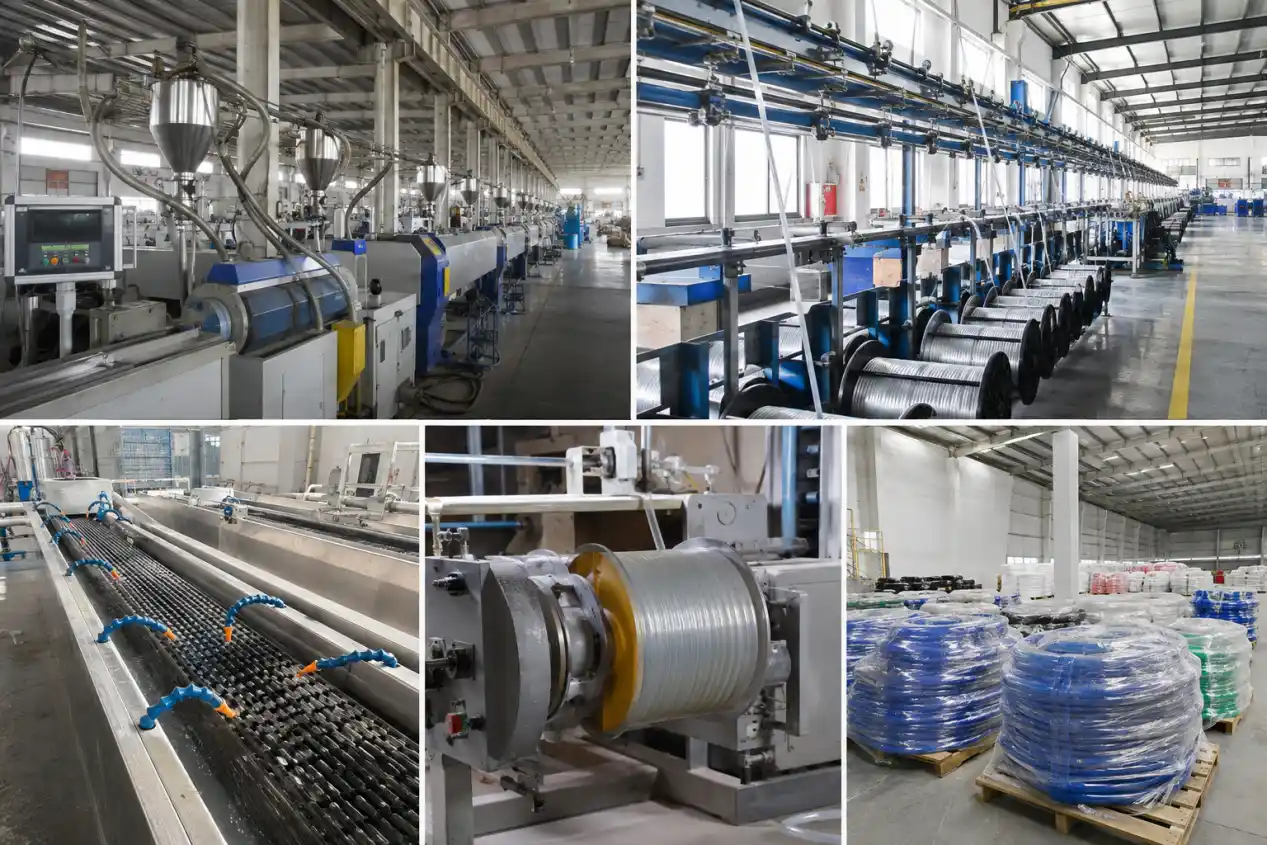
Production begins with the selection and preparation of a PU compound designed to provide the required combination of oil resistance, abrasion performance, flexibility, and electrical behavior. For specialized applications, the formulation is developed around the customer’s conveying medium and operating environment.
The PU material is processed through precision extrusion equipment under controlled thermal and mechanical conditions. Melt temperature, extrusion pressure, die geometry, and line speed are monitored to maintain consistent wall dimensions. For anti-static products, electrical performance depends on maintaining a uniform distribution of the conductive or dissipative component throughout the specified material structure.
During continuous production, inner diameter, outer diameter, wall thickness, surface appearance, and dimensional stability are monitored. Special attention is given to electrical resistance because excessive variation can affect static-dissipation performance. Samples from production batches can be tested using agreed electrical-resistance methods.
Depending on the application, additional quality checks may include hardness, tensile strength, elongation, pressure resistance, leakage, abrasion resistance, oil immersion, heat aging, and repeated-flex testing.
For OEM orders, acceptance criteria can be defined before production, including dimensional tolerances, electrical resistance range, material grade, packaging, and identification requirements. This allows subsequent production batches to be evaluated against the same technical baseline.
Customization / OEM & ODM
Anti-static PU hose should be specified according to the entire conveying system rather than simply selecting a nominal hose diameter. Yozonetech supports OEM and ODM development for customers with specific requirements for electrical properties, oil resistance, pressure, flexibility, and abrasion performance.
The process starts with collecting the conveyed material, oil or chemical exposure, operating pressure, temperature, airflow, hose dimensions, bending frequency, and grounding requirements. The appropriate PU formulation and electrical construction can then be selected.
Customization options include:
- Polyester or polyether PU
- Oil-resistant formulation
- Conductive or dissipative grade
- Target electrical resistance
- Inner and outer diameter
- Wall thickness
- Hardness
- Reinforcement structure
- Transparent, translucent, or colored construction
- Hose length and coil configuration
- Fittings and end connections
- Surface printing and private labeling
For new projects, customers can provide an existing hose sample, technical drawing, equipment interface, or electrical-performance requirement. Prototype samples can be produced for dimensional, mechanical, oil-resistance, and electrical evaluation before mass production.
FAQ
1. Why does a pneumatic conveying system need an anti-static hose?
High-speed movement of dry powders, granules, or dust can generate electrostatic charge through friction. An electrically dissipative hose can help prevent excessive charge accumulation when connected to an appropriate grounding system.
2. Is anti-static PU hose suitable for oil exposure?
Yes, selected PU formulations provide good resistance to oils and lubricants. However, resistance varies according to the specific oil type, concentration, temperature, and exposure time, so the actual medium should be confirmed before selection.
3. Is an anti-static hose automatically suitable for explosive environments?
No. Anti-static performance is only one component of a complete safety system. For combustible dust or explosive atmospheres, electrical resistance, grounding, equipment design, and applicable safety requirements must all be evaluated.
4. What is the difference between conductive and dissipative PU?
The distinction is primarily related to electrical resistance and the rate at which charge can be transported away. The appropriate resistance range should be selected according to the conveying system, grounding design, and applicable technical requirements.
5. Can you manufacture PU hose according to a required electrical resistance?
Yes. For OEM projects, the electrical resistance range can be incorporated into the product specification. Customers should provide the intended test method and target resistance where applicable so that production and inspection criteria can be aligned.
-
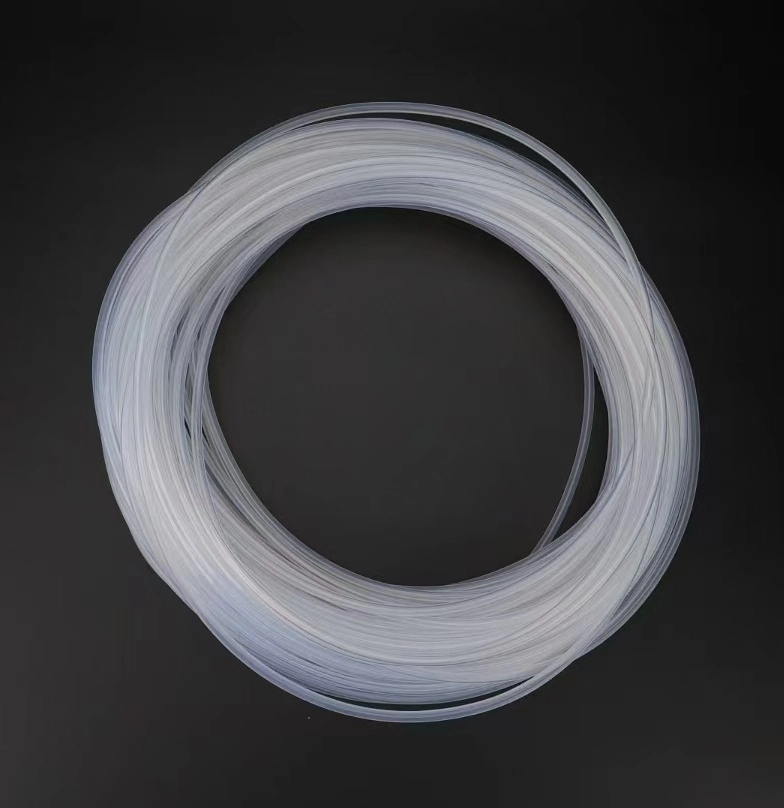
Fluid Hose & Pneumatic Hose
Product Overview
Fluid Hose & Pneumatic Hose is a versatile flexible tubing solution developed for the controlled transfer of compressed air, water, and other compatible low-to-medium pressure fluids in industrial and equipment systems. Its construction is optimized for reliable routing between pneumatic components, valves, actuators, pumps, manifolds, and machine assemblies where compact dimensions and repeated movement are important.
The hose is available in different thermoplastic material grades to match the requirements of pressure, temperature, flexibility, and media compatibility. A smooth internal bore promotes stable flow and helps minimize pressure losses across relatively long or complex routing paths. The flexible wall allows tight installation around machinery without the rigidity associated with metal piping.
For pneumatic applications, dimensional consistency is particularly important because fittings rely on accurate outside diameter and surface quality to maintain a secure seal. Depending on the application, the hose can be supplied as a standard flexible tube or developed with enhanced mechanical, chemical, or environmental resistance for specialized equipment.
As a leading PTFE Hose Supplier, we engineer our flexible reinforced hoses to withstand extreme temperatures and aggressive chemicals, delivering exceptional durability and pressure resistance for demanding industrial applications worldwide.
Key Features
- Stable dimensional accuracy— Controlled tube geometry supports reliable connection with pneumatic push-in and compression fittings.
- Efficient airflow and fluid transfer— Smooth internal surfaces help maintain consistent flow through the hose.
- High flexibility— Suitable for compact routing around cylinders, valves, control units, and moving assemblies.
- Fast installation— Can be cut to length and combined with common pneumatic connection systems.
- Material selection by application— Different thermoplastic formulations can be selected for temperature, chemical, oil, or mechanical requirements.
- Good resistance to repeated movement— Suitable for machine automation and applications involving regular hose repositioning.
- Custom dimensions and colors— Available in different diameters, wall thicknesses, lengths, colors, and identification markings.
Technical Specifications
Product Name Fluid Hose & Pneumatic Hose Material PU / TPU / PA / PE / PVC or customized Structure Single-layer or reinforced, application dependent Inner Diameter Custom Outer Diameter Custom Wall Thickness Custom Working Pressure Diameter and material dependent Burst Pressure Application dependent Working Temperature Material dependent Flexibility Flexible Fluid Compatibility Air, water, and compatible fluids Oil Resistance Material dependent Color Transparent, blue, black, red, green, or customized Surface Smooth Standard Form Coil / roll / cut length Connection Push-in, barb, compression, quick fitting, customized OEM / ODM Available Pressure, temperature, and chemical compatibility vary significantly between materials and dimensions. Final specifications should be confirmed against the selected material and actual operating conditions.
Standard sizes
Model O.D. (mm) I.D. (mm) Length (m) Min. bending Standard color Working pressure
kgfcm²Breaking pressure kgf/cm² 0425-200 4.00 2.50 200 10 Clear, orange blue 12 38 0604-200 6.00 4.00 200 15 Clear, orange blue 12 31 0635-200 6.35 4.06 200 15 Clear, orange blue 12 31 0805-100 8.00 5.00 100 25 Clear, orange blue 10 32 0953-100 9.53 6.35 100 30 Clear, orange blue 10 31 1065-100 10.00 6.50 100 30 Clear, orange blue 10 31 1208-100 12.00 8.00 100 35 Clear, orange blue 10 30 1270-100 12.70 9.50 100 40 Clear, orange blue 9 25 1410-100 14.00 10.00 100 55 Clear, orange blue 8 20 1612-100 16.00 12.00 100 65 Clear, orange blue 6 17 Materials & Construction
Flexible industrial hose can be manufactured from several thermoplastic materials, allowing the construction to be matched to the application rather than relying on a universal polymer. Common options include polyurethane (PU/TPU), polyamide (PA), polyethylene (PE), PVC, and other engineering thermoplastics.
For pneumatic automation, polyurethane is often selected when flexibility, repeated bending, and abrasion resistance are important. Polyamide can be considered where higher pressure capability, dimensional stability, or elevated-temperature performance is required. PE can provide a lightweight and economical solution for selected low-pressure applications, while PVC may be suitable for general-purpose fluid transfer.
The hose may be produced with a smooth single-layer wall for standard applications or modified with reinforcement and special formulations where higher pressure, chemical resistance, or environmental durability is required.
Accurate extrusion control is essential because pneumatic fittings depend heavily on the hose’s outside diameter, roundness, and surface condition. Consistent dimensions help reduce leakage and improve connection reliability during installation.
Applications
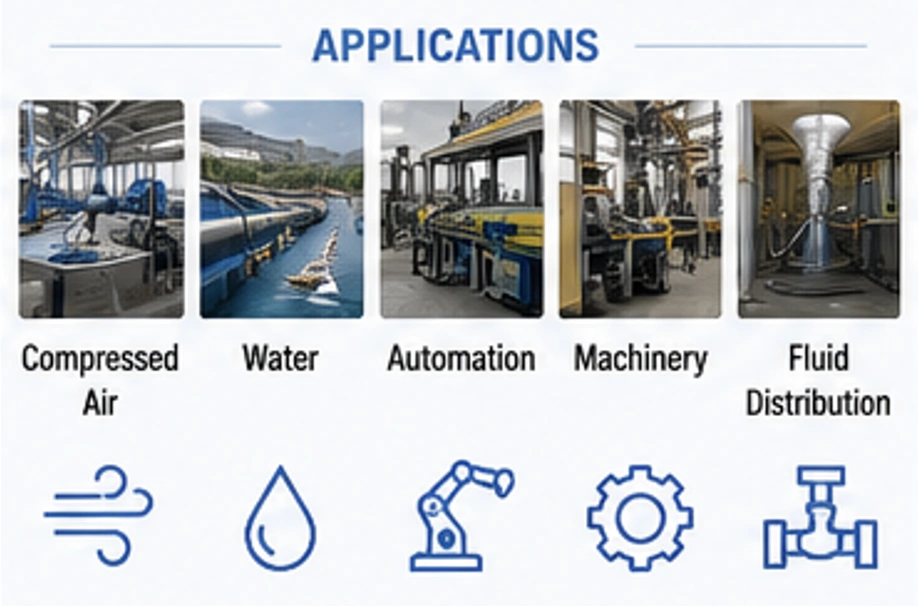
Fluid and pneumatic hoses are widely used in factory automation, compressed-air systems, pneumatic control circuits, instrumentation, machinery, fluid distribution, and equipment interconnections. Typical pneumatic applications include connections between air preparation units, solenoid valves, cylinders, actuators, pressure regulators, manifolds, and control panels.
In automated machinery, flexible tubing provides a practical method of routing compressed air around moving assemblies without requiring rigid pipework. Small-diameter hoses are particularly useful in compact machine layouts where installation space is limited.
For fluid applications, suitable material grades can be selected for water, cooling circuits, lubrication systems, and other compatible low-to-medium pressure media. The appropriate hose should always be selected according to fluid chemistry, temperature, pressure, and exposure duration.
For robotic and dynamic applications, the hose construction can be optimized for repeated bending and movement. Where the hose is installed inside cable carriers or subjected to continuous flexing, a material and wall design specifically intended for dynamic service should be considered.
Manufacturing & Quality Control
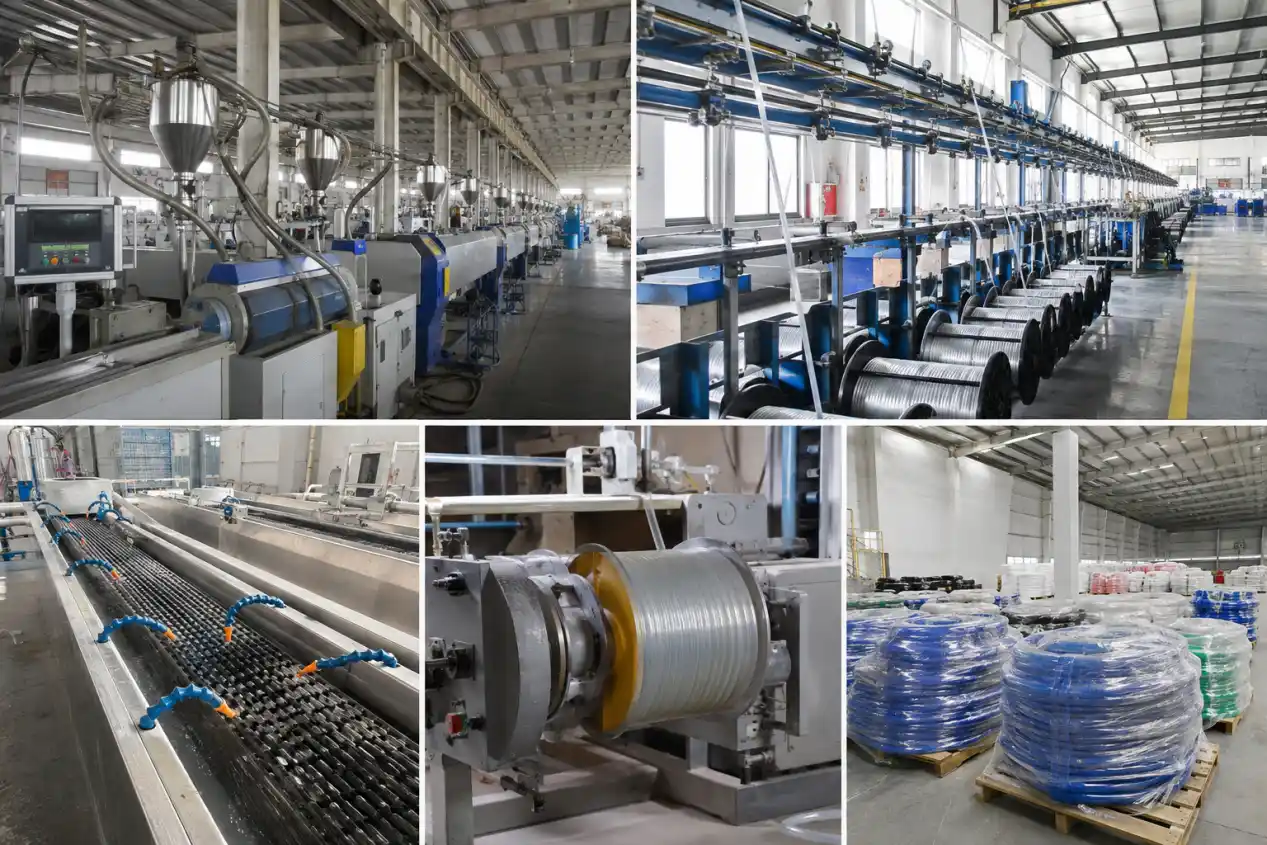
Manufacturing begins with polymer selection based on the required pressure, flexibility, temperature range, media compatibility, and connection system. Thermoplastic raw materials are prepared and processed through precision extrusion equipment to produce a continuous tube with controlled dimensions.
During extrusion, melt temperature, die geometry, extrusion speed, cooling rate, and material flow are monitored to maintain a stable profile. For pneumatic tubing, particular attention is given to outside diameter and roundness because these dimensions directly influence the sealing performance of push-in and compression fittings.
The production line continuously monitors key dimensional parameters. Finished tubing is inspected for inner diameter, outer diameter, wall thickness, surface quality, and length accuracy. Visual inspection is used to identify scratches, bubbles, surface contamination, deformation, or other defects that could affect connection integrity.
Depending on the product specification, additional tests may include working-pressure verification, burst-pressure testing, leakage testing, tensile and elongation testing, hardness measurement, heat aging, low-temperature flexibility, and chemical compatibility evaluation.
For pneumatic tubing supplied in long continuous coils, controlled winding and packaging are also important. Proper coiling helps prevent excessive deformation and ensures the hose can be easily unwound during installation. OEM orders can be manufactured according to approved drawings, dimensional tolerances, testing requirements, and packaging specifications.
Customization / OEM & ODM
Fluid and pneumatic hose requirements vary considerably between equipment manufacturers, so Yozonetech provides customized solutions based on the actual connection and operating conditions.
The development process begins with the medium, working pressure, operating temperature, required flexibility, hose dimensions, fitting type, and installation environment. These parameters determine the appropriate polymer and wall structure.
Available customization options include:
- PU, TPU, PA, PE, PVC, or other specified materials
- Inner and outer diameter
- Wall thickness and pressure rating
- Hardness and flexibility
- Single-layer or reinforced construction
- Color coding for different circuits
- Custom hose lengths and coil sizes
- Surface printing and meter marking
- Push-in, barb, compression, or special end connections
- OEM packaging and private labeling
For equipment manufacturers, customers can provide drawings, fitting specifications, existing samples, or complete tubing assemblies. Prototype samples can then be evaluated for fit, sealing, pressure performance, and installation behavior before the final specification is released for mass production.
FAQ
1. Which material is best for pneumatic hose?
There is no single material suitable for every pneumatic system. PU is often preferred for flexibility and dynamic applications, while PA can be advantageous for higher pressure and dimensional stability. The correct choice depends on pressure, temperature, fittings, and movement requirements.
2. Can the same hose be used for both air and water?
Some materials are compatible with both compressed air and water, but the operating pressure, temperature, and chemical environment must be checked separately. A hose suitable for pneumatic service is not automatically suitable for every fluid.
3. Why is outside diameter important for pneumatic tubing?
Many pneumatic fittings seal against the hose’s outside surface. Variations in diameter, ovality, or surface quality can affect insertion force and sealing performance, making extrusion accuracy particularly important for pneumatic tubing.
4. Can you supply tubing in custom colors?
Yes. Color can be customized for equipment identification, circuit differentiation, branding, or visual requirements, subject to material and production-volume considerations.
5. Can you manufacture the hose to match an existing pneumatic system?
Yes. Customers can provide the existing tube, fitting model, drawing, or equipment requirements. We can develop a compatible hose specification based on dimensions, material, pressure, temperature, and connection requirements.
Water and Air Systems
PVC, TPU and other suitable tubing materials can be used for general water and compressed-air applications.
Different wall thicknesses and dimensions can be produced according to system requirements.
Suitable Industries
Semiconductor Manufacturing
Suitable for selected pneumatic, fluid and chemical handling applications requiring precision tubing.
Electronics Manufacturing
Used for pneumatic equipment, fluid systems and automation machinery.
Industrial Automation
Suitable for pneumatic lines, sensors, actuators and automated equipment.
Machinery Manufacturing
Used for internal pneumatic and fluid connections in industrial machinery.
Chemical Processing
PTFE, FEP and PFA options provide excellent chemical resistance for compatible applications.
Laboratory Equipment
Transparent tubing allows easy visual observation of fluid and air movement.
Water Treatment
Suitable tubing materials can be used for compatible water and fluid handling systems.
Product Structure
Tube Wall
The tube wall is manufactured from the selected FEP, TPU, PVC, PTFE or PFA material.
Wall thickness can be customized according to pressure, flexibility and application requirements.
Smooth Inner Surface
The inner surface is designed to provide a smooth flow passage, helping reduce resistance and material accumulation.
Transparent or Colored Construction
Transparent tubing allows direct observation of media flow.
Colored tubing can be manufactured using high-weather-resistant pigments to provide stable and easily identifiable colors.
Manufacturing Process
1. Raw Material Selection
High-quality FEP, TPU, PVC, PTFE or PFA raw materials are selected according to the required application.
2. Material Preparation
Raw materials are prepared and processed under controlled production conditions.
3. Tube Extrusion
The selected material is extruded into the required tube dimensions.
4. Online Diameter Control
An online pipe diameter control system continuously monitors tubing dimensions during production.
Diameter tolerances can be controlled within approximately ±0.05 mm.
5. Cooling and Sizing
The extruded tubing is cooled and calibrated to maintain dimensional consistency.
6. Appearance Inspection
Transparency, color, surface quality and other visual characteristics are inspected.
7. Length Cutting
The tubing is cut according to standard or customized lengths.
8. Final Inspection and Packaging
Finished tubing is inspected before being packaged for domestic or international shipment.
Quality Inspection
Yozonetech maintains quality control throughout the manufacturing process.
Dimensional Inspection
We inspect:
- Inner diameter
- Outer diameter
- Wall thickness
- Length
Dimensional tolerances can be controlled to approximately ±0.05 mm for suitable products.
Transparency Inspection
Transparent tubing is checked for clarity, bubbles and visible manufacturing defects.
Appearance Inspection
The surface is inspected for scratches, unevenness, contamination and other defects.
Color Inspection
Colored tubing is checked for color consistency and appearance.
Yellowing Resistance
Transparent tubing can be evaluated for yellowing resistance, with performance reaching Level 3 or higher according to the applicable test standard.
Pressure Performance
Products designed for constant working pressure are evaluated according to the specified application and material.
Material Control
Raw materials are controlled to ensure consistent tubing performance and long-term stability.
OEM & ODM Service
Yozonetech provides OEM and ODM services for fluid and pneumatic tubing.
Customization options include:
- Material
- Inner diameter
- Outer diameter
- Wall thickness
- Length
- Color
- Transparency
- Hardness
- Working pressure
- Packaging
- Product marking
- Customer logo
For pneumatic and fluid applications, customers can provide drawings, samples or equipment specifications for customized production.
Why Buy Fluid and Pneumatic Hose Directly From Yozonetech?
Experienced Industrial Hose Manufacturer
Established in 2009, Yozonetech specializes in industrial hoses, flexible tubing and ventilation products.
Multiple Material Options
We provide FEP, TPU, PVC, PTFE and PFA tubing for different industrial requirements.
Precision Manufacturing
Our online pipe diameter control system supports dimensional control down to approximately ±0.05 mm for suitable tubing products.
Factory Direct Supply
Direct manufacturing provides competitive factory pricing and stable production capacity.
Customized Production
We support customized materials, dimensions, colors, lengths and packaging.
Large Warehouse
Yozonetech maintains approximately 2,000 m² of warehouse space, allowing us to maintain inventory of various standard industrial hoses and shorten delivery times.
Global Supply
Our products are supplied to customers across the Americas, Europe, Asia and Australia.
Technical Support
Our team can help customers select the appropriate tubing according to media, pressure, temperature, chemical compatibility and installation requirements.
Frequently Asked Questions
1. What is a fluid hose?
A fluid hose is flexible tubing designed to transport liquids or other compatible fluids between equipment and components.
2. What is a pneumatic hose?
A pneumatic hose is tubing designed to transport compressed air or gases in pneumatic systems.
3. What materials are available?
Yozonetech provides FEP, TPU, PVC, PTFE and PFA material options.
4. Is transparent tubing available?
Yes. Transparent tubing provides high visibility of the media flow inside the tube.
5. Can I see the fluid flow through the tube?
Yes. Transparent versions allow operators to visually monitor fluid, air, bubbles and particles inside the tubing.
6. What is the diameter tolerance?
For suitable products, the online diameter control system can control pipe diameter tolerances within approximately ±0.05 mm.
7. Is the tubing flexible?
Yes. High-resilience raw materials provide good flexibility and a relatively small bending radius.
8. Which material is best for chemical applications?
PTFE, FEP and PFA generally provide excellent chemical resistance. The final material should be selected according to the specific chemical, concentration and temperature.
9. Which material is suitable for pneumatic applications?
TPU, PVC, PTFE, FEP and other materials can be used depending on pressure, temperature, flexibility and chemical requirements.
10. Can the tubing be used under constant working pressure?
Yes. Products can be manufactured for continuous working-pressure applications. The allowable pressure depends on material, dimensions, wall thickness and temperature.
11. Does transparent tubing turn yellow?
Yozonetech transparent tubing is designed with good yellowing resistance, reaching Level 3 or higher according to the applicable test method.
12. Can colored tubing fade?
High-weather-resistant imported pigments are used for colored tubing to provide good long-term color stability and reduce fading.
13. Can the color be customized?
Yes. Yozonetech can provide customized colors according to customer requirements.
14. Can the diameter be customized?
Yes. Inner diameter, outer diameter and wall thickness can be customized.
15. Can you provide OEM production?
Yes. OEM and private-label production are available.
16. Is this tubing suitable for semiconductor applications?
Yes. FEP, PTFE and PFA tubing options can be used in selected semiconductor applications requiring chemical resistance and dimensional precision.
The exact material and cleanliness requirements should be confirmed according to the process.
17. What information should I provide for product selection?
Please provide:
- Conveyed medium
- Working temperature
- Working pressure
- Required inner diameter
- Required outer diameter
- Required length
- Chemical exposure
- Transparency or color requirements
- Estimated quantity
This information allows Yozonetech to recommend the most suitable tubing.
Contact Yozonetech for Fluid & Pneumatic Hose Solutions
Yozonetech manufactures fluid hoses and pneumatic hoses using FEP, TPU, PVC, PTFE and PFA materials for industrial automation, electronics, semiconductor, machinery, fluid handling and pneumatic applications.
With high transparency, excellent flexibility, small bending radius and precision dimensional control, our tubing is designed for reliable installation and long-term operation.
For suitable products, our online diameter control system can maintain tolerances within approximately ±0.05 mm, while high-weather-resistant pigments provide stable colors for long-term applications.
Contact Yozonetech today for product specifications, samples, customized solutions and quotation.
-
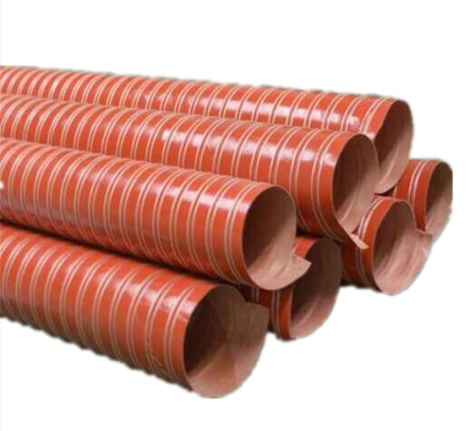
Double-Layer Silicone Fiberglass Cloth Duct
Product Overview
Double-Layer Silicone Fiberglass Cloth Duct is a high-temperature flexible air duct developed for exhaust, ventilation, fume extraction, and thermal-air handling systems operating in demanding environments. The duct is constructed from silicone-coated fiberglass fabric with a double-layer wall, combining heat resistance with mechanical reinforcement and flexible installation characteristics.
Compared with conventional PVC or single-layer fabric ducts, the two-layer construction provides additional protection against heat, abrasion, and mechanical handling while maintaining the flexibility required for routing around machinery. The fiberglass substrate provides dimensional stability and thermal resistance, while the silicone coating forms a protective barrier against moisture, hot air, and environmental exposure.
Its flexible structure allows the duct to be compressed, bent, and routed through restricted spaces, making it particularly suitable for industrial equipment where rigid metal ducting is difficult to install. Various diameters, lengths, connection configurations, and reinforcement options can be developed for specific operating conditions.
As a leading PTFE Hose Supplier, we engineer our flexible reinforced hoses to withstand extreme temperatures and aggressive chemicals, delivering exceptional durability and pressure resistance for demanding industrial applications worldwide.
Key Features
- Double-layer fabric construction— Provides greater structural integrity and protection than single-layer flexible fabric ducts.
- High-temperature capability— Silicone-coated fiberglass fabric is suitable for demanding hot-air and exhaust applications.
- Flexible routing— Can be bent around machinery, frames, and confined installation areas without rigid elbows.
- Good thermal insulation characteristics— The fabric-based wall reduces direct heat transfer compared with thin polymer tubing.
- Flame-resistant fiberglass substrate— Fiberglass provides a stable reinforcement base for high-temperature applications.
- Strong resistance to environmental exposure— Silicone coating provides protection against moisture and general industrial conditions.
- Custom-engineered dimensions— Diameter, length, wall construction, reinforcement, and end connections can be adapted to equipment requirements.
Technical Specifications
Parameter Specification Product Name Double-Layer Silicone Fiberglass Cloth Duct Base Fabric Fiberglass cloth Coating Silicone rubber Wall Construction Double-layer silicone-coated fiberglass fabric Inner Diameter Custom Length Custom Working Temperature Application dependent Short-Term Temperature Application dependent Flexibility Flexible Reinforcement Fabric / optional structural reinforcement Color Commonly red, black, gray, or customized Surface Silicone-coated fabric Connection Clamp, cuff, flange, sleeve, or customized Compression Available depending on construction Flame Resistance Available according to material specification OEM / ODM Available Temperature capability depends on silicone formulation, fiberglass grade, duct construction, airflow, exposure duration, and installation conditions. Final temperature ratings should be confirmed for the specific application.
Standard Sizes
Model OD (mm) Wall (mm) Min. bending Suggestion Single length (m) Working pressure bar Negative pressure bar 25 29 0.8 43 2.7 0.7 4 32 36 0.8 54 2.7 0.64 4 38 43 0.8 64 2.6 0.6 4 51 56 0.8 84 2.5 0.51 4 63 68 0.8 102 2.3 0.46 4 76 81 0.8 121 2.1 0.42 4 83 88 0.8 132 2 0.4 4 89 94 0.8 141 2 0.38 4 102 107 0.8 160 1.9 0.35 4 Model OD (mm) Wall (mm) Min. bending Suggestion Single length (m) Working pressure bar Negative pressure bar 114 120 0.8 180 1.6 0.29 4 127 133 0.8 199 1.5 0.26 4 152 158 0.8 237 1.3 0.18 4 165 172 0.8 258 1.2 0.15 4 178 184 0.8 276 1 0.13 4 203 209 0.8 313 0.8 0.1 4 254 260 0.8 390 0.6 0.08 4 305 311 0.8 466 0.5 0.07 4 Materials & Construction
The duct is manufactured from fiberglass fabric coated with silicone rubber and assembled as a double-layer flexible structure. Fiberglass serves as the primary reinforcement substrate because of its ability to retain mechanical integrity at elevated temperatures. The silicone coating protects the fabric from moisture, surface contamination, and environmental exposure while providing flexibility to the finished duct.
The two-layer configuration increases the material thickness and creates a more robust barrier between the hot airflow and the surrounding environment. It also improves resistance to handling damage during installation and repeated repositioning.
Depending on the required diameter and operating conditions, the fabric layers can be configured with different weights, weave structures, coating thicknesses, and reinforcement arrangements. Additional structural elements may be incorporated when the duct needs improved shape retention or resistance to external compression.
The resulting construction is substantially different from thermoplastic hoses: it is primarily engineered as a high-temperature flexible ducting system, where thermal performance, airflow management, installation flexibility, and fabric durability are more important than conventional fluid-pressure performance.
Applications
Flexible industrial hose is designed primarily for the movement of hot air, exhaust gases, fumes, and thermally loaded air streams. It is commonly used around industrial heaters, ovens, furnaces, dryers, engines, generators, welding equipment, exhaust systems, and specialized ventilation machinery.
The duct is particularly useful when the connection between two components requires flexibility and cannot be accommodated efficiently with rigid metal ducting. Its fabric construction allows it to follow equipment movement and complex routing paths while reducing the number of rigid bends and intermediate connections.
Typical applications include hot-air extraction, engine compartment ventilation, welding fume extraction, industrial oven exhaust, heating equipment, thermal processing machinery, and mobile ventilation systems.
Before selection, the actual gas composition, temperature, airflow velocity, installation length, bending radius, and exposure duration should be considered. Applications involving corrosive chemicals, direct flame, molten materials, or highly abrasive particles may require a specially formulated construction.
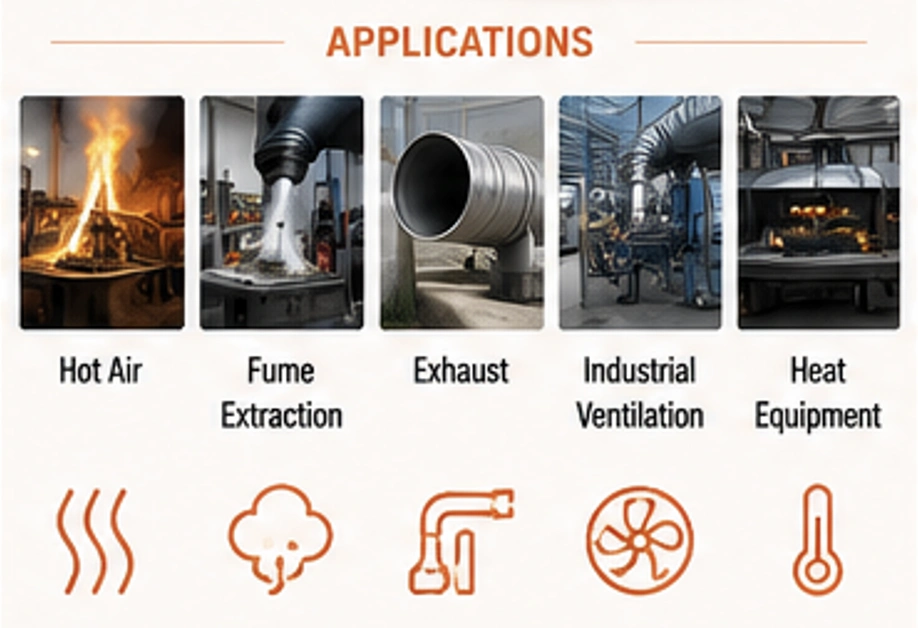
Manufacturing & Quality Control
Production of the double-layer silicone fiberglass duct involves controlled preparation of the fiberglass fabric, silicone coating, layer forming, cutting, joining, reinforcement, and final dimensional inspection. Fiberglass cloth is selected according to the required thermal and mechanical performance before the silicone coating process.
During coating, silicone is applied uniformly to the fiberglass substrate to achieve consistent coverage and stable adhesion. Coating thickness is controlled according to the intended application because it affects flexibility, surface protection, and overall durability. After coating, the fabric is processed into the required duct configuration.
The double-layer structure is assembled with controlled overlap and joining methods to maintain consistent wall construction around the circumference. For reinforced or shaped ducts, the structural components are positioned according to the specified pitch and geometry. Particular attention is given to the transition between the duct body and end connections, as these areas experience concentrated mechanical loads during installation.
Finished ducts undergo dimensional inspection covering inner diameter, length, wall appearance, connection dimensions, and construction uniformity. Visual inspection checks for coating defects, exposed fabric, uneven seams, delamination, and mechanical damage. Where required, samples can undergo temperature exposure, flexibility evaluation, dimensional stability testing, and connection-strength assessment.
Each production order can be manufactured against an approved drawing or technical specification to maintain consistency between batches.
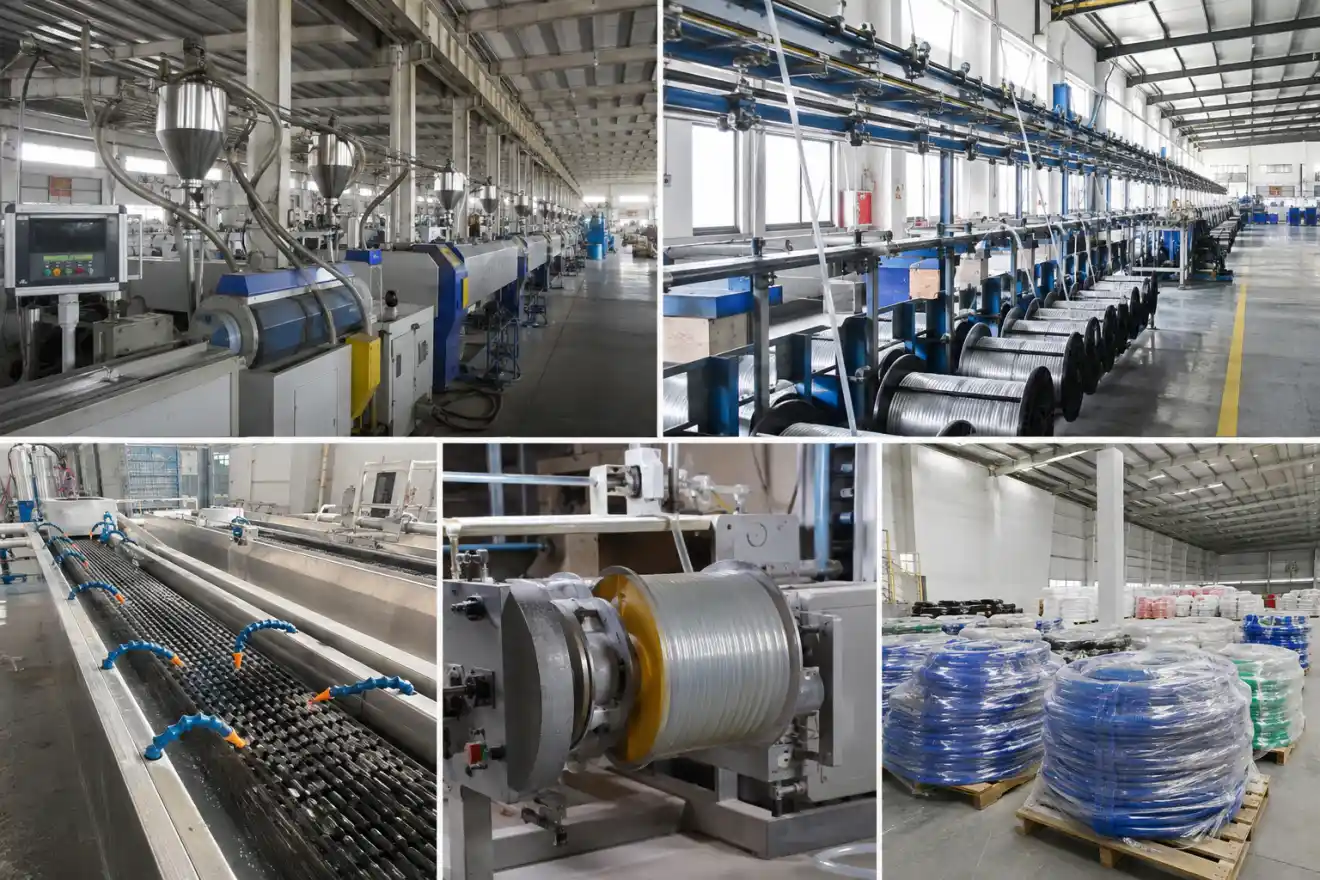
Customization / OEM & ODM
High-temperature ducting often requires customization because equipment layouts, exhaust temperatures, connection dimensions, and available installation space vary considerably. Yozonetech supports development of double-layer silicone fiberglass ducts according to drawings, samples, or detailed application requirements.
The customization process starts with confirmation of the operating temperature, airflow, duct diameter, required length, installation route, connection dimensions, and surrounding environment. These factors determine the appropriate fabric grade, silicone coating, wall construction, and reinforcement method.
Customization options include:
- Inner diameter and overall length
- Fiberglass fabric grade and weight
- Silicone coating formulation and thickness
- Single or double-layer construction
- Reinforcement structure
- Color and surface marking
- Cuffs, sleeves, clamps, flanges, and end fittings
- Connection geometry
- Packaging and private labeling
For OEM projects, customers can provide an existing duct, engineering drawing, photographs, or equipment interface dimensions. Samples can then be developed for installation and thermal-performance evaluation before the final construction is approved for series production.
FAQ
1. What is the advantage of using two fiberglass layers?
The double-layer structure provides a more robust thermal and mechanical barrier than a single fabric layer. It can improve durability during installation and repeated handling while providing additional protection around hot-air systems.
2. Is the duct suitable for continuous high-temperature operation?
It can be designed for continuous elevated-temperature service, but the allowable temperature depends on the silicone formulation, fiberglass specification, airflow, and exposure duration. The actual operating conditions should be provided before selecting the final construction.
3. Can this duct replace metal exhaust ducting?
In applications where flexibility is required, it can serve as a flexible connection or duct section. However, rigid metal ducting may remain preferable for long unsupported runs, very high mechanical loads, or applications requiring high structural rigidity.
4. Can you manufacture special end connections?
Yes. Cuffs, sleeves, clamps, flanges, and other interface configurations can be customized according to the customer’s equipment dimensions and installation method.
5. Can the duct be manufactured from a customer sample?
Yes. We can evaluate a supplied sample or drawing and develop a corresponding double-layer construction, subject to confirmation of the required temperature, dimensions, and application conditions.