 +86-13752771911
 E-mail:ptfetube@yozonetech.cn



fep heat shrink tubing
-
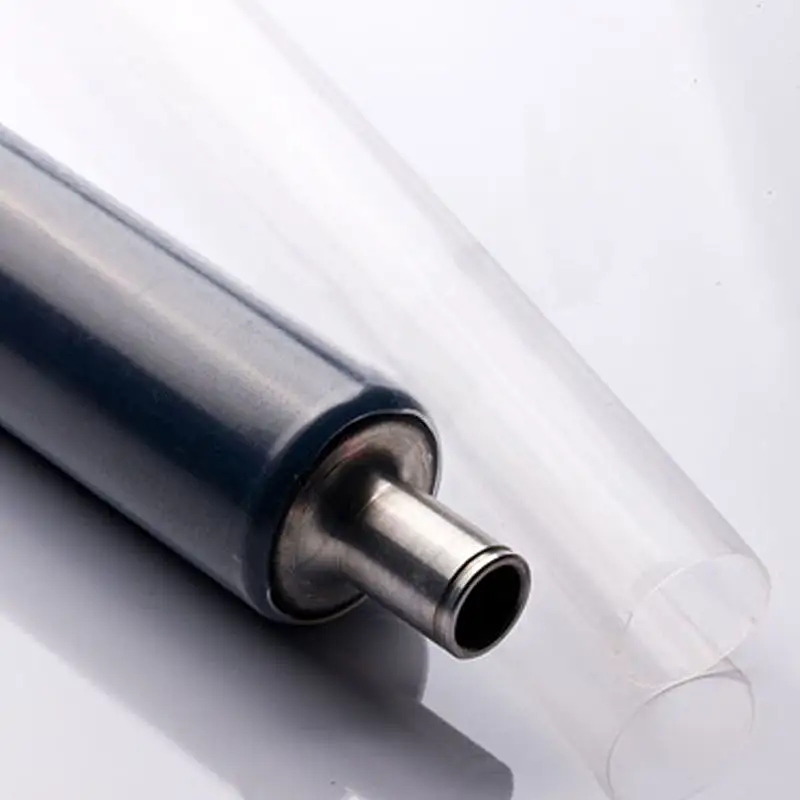
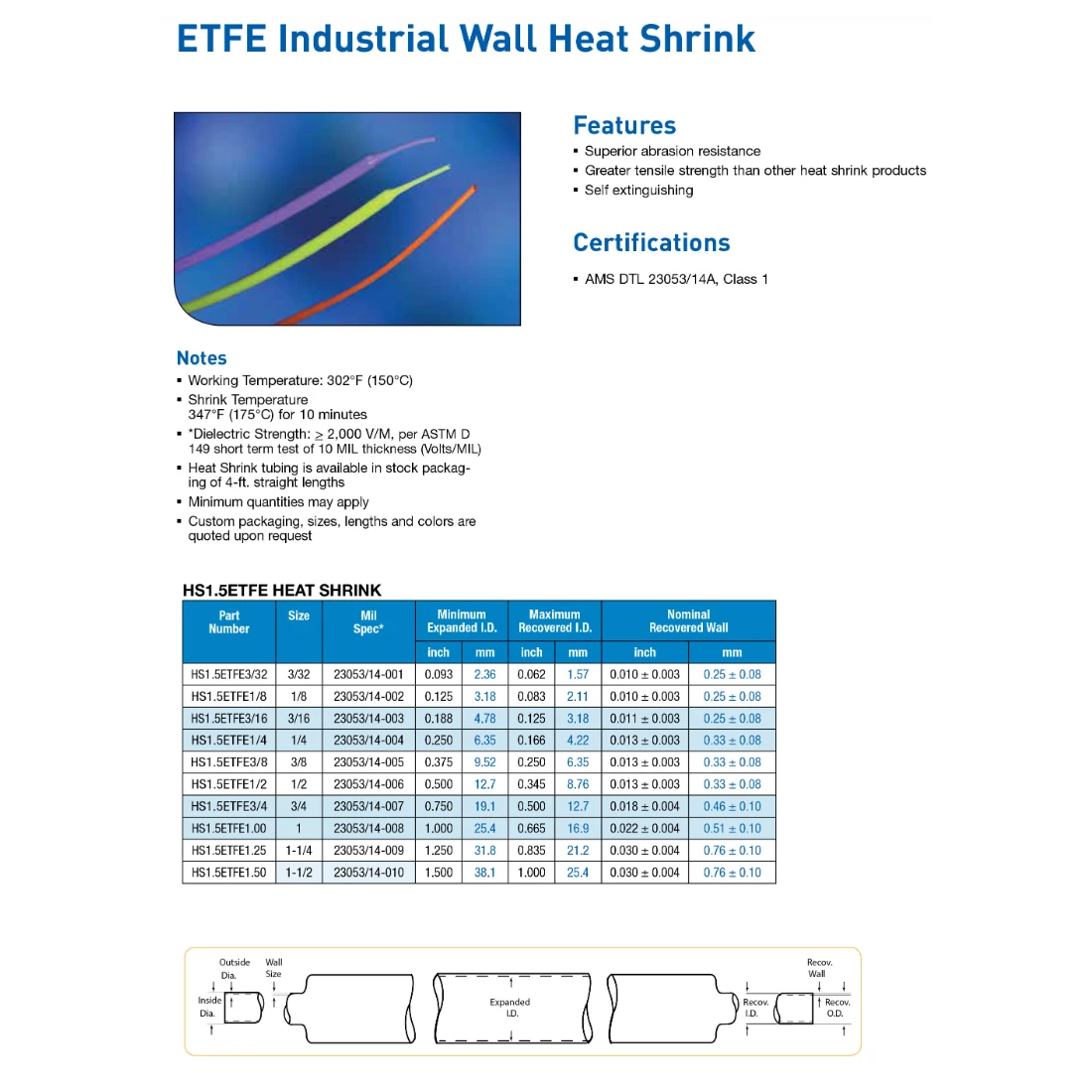
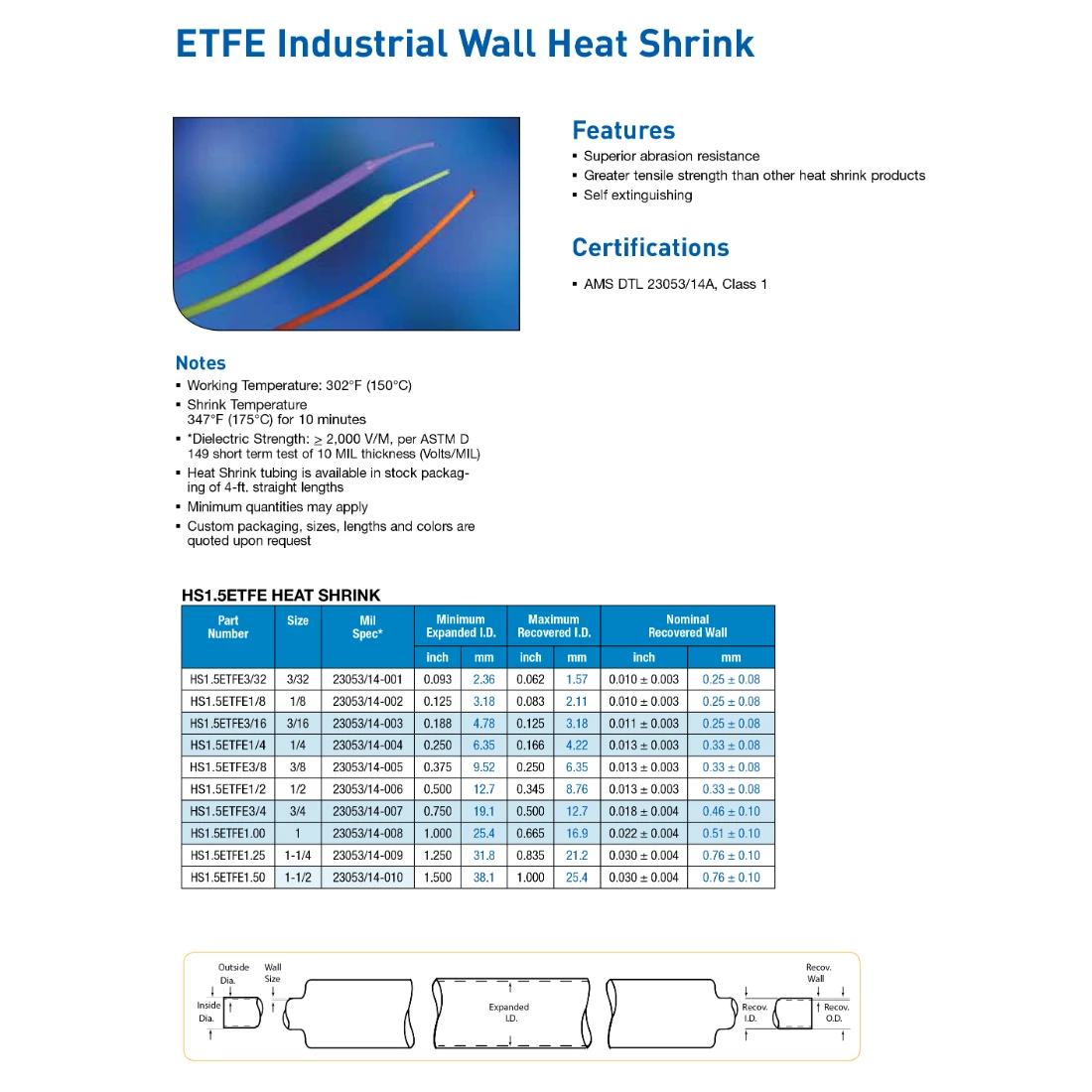
ETFE Customized Heat Shrink Tubing OEM Manufacturer
Best heat shrink tubing Product Description:
Our high shrinkage FEP and ETFE are usually used as a release layer in the aviation composite industry. The shrinkable fluoropolymer heat shrink tubing waterproof is a perfect solution as a gas-filled sealing ring of carbon fiber or glass fiber. FEP shrink tube has excellent high temperature resistance and can withstand curing temperatures up to 256°C.
Due to the chemical composition of ETFE, it is also an excellent dielectric barrier and chemical barrier. The shrinkage characteristics of the film make it fit closely with the original structure, which is easy to use and maintain. Heat shrink tubes makes it an excellent solution for battery applications and cooling channels in electronic components.
Best heat shrink tubing Product Specification:
Place of Origin: China
Brand Name: YOZONE heat shrink tubing suppliers
Material brand: Daikin chemical, DuPont. Dongyue & Chenguang (Domestic)
Length: Customized
Shape: Round
Color: White, customized.
Working temperature: -200°C - +150°C
Tolerance: ±0.05 mm
Chemical Resistance: stable in most medium.
Electrical Property: Insulation Resistant
Certification: UL, CE, FDA, RoHS, REACH.
Standard: ISO9001:2008.
Test: SGS passed
Sample: Free
Payment: T/T
Service Life: Depends on environment, please kindly consult our engineers.
Application: Petroleum transportation, food procession, electrical and etc.
Best heat shrink tubing Supply Ability:
100000 Meter/Meters per Month ETFE Heat Shrink Tube
Best heat shrink tubing Lead Time:
Quantity(Kilograms) 1 - 10 11 - 50 51 - 100 >100 Est. Time(days) 3 5 7 To be negotiated
Best heat shrink tubing Packaging & Delivery
ETFE Heat Shrink Tube into Carton and Wooden Pallet
Port: Tianjin, Shanghai, Shenzhen, Qingdao.
-
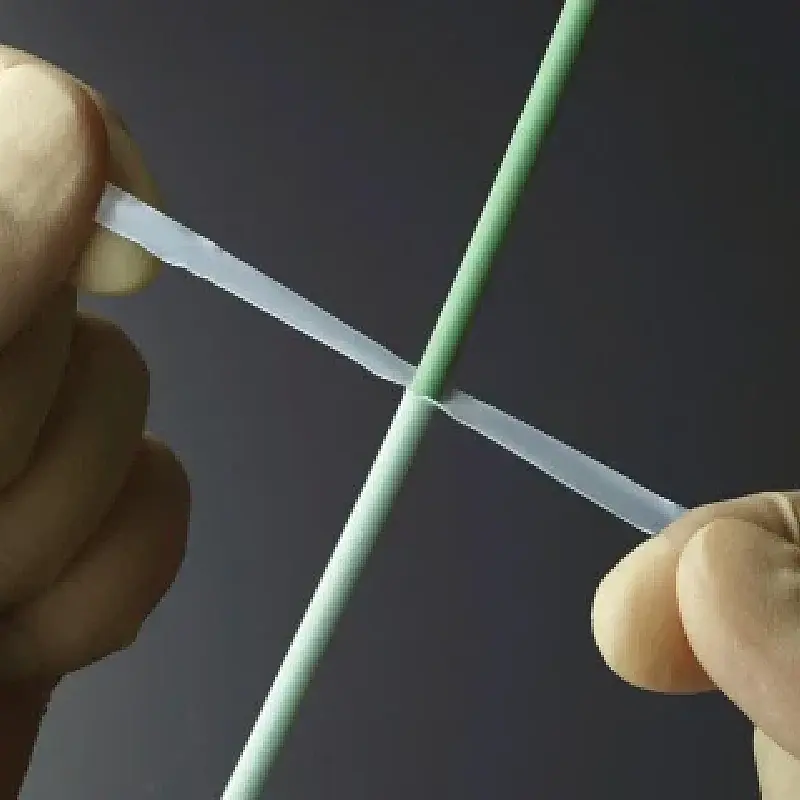
FEP Peelable Heat Shrink Medical Grade Tube with Bio-Compatibility Certification
Medical heat shrink tubing Performance and usage:
Polyper fluoroethylene propylene FEP medical peelable heat shrink tubing has excellent electrical insulation properties and high temperature resistance, and is used in
Components that need to be exposed to high temperature environments and have high insulation requirements during the process. Has excellent resistance to liquids and
Corrosive, physiologically inert, can be in direct contact with human skin, mainly used in surgical medical instruments and medical components and equipment.
Medical heat shrink tubing Features:
Shrink ratio: 1.3:1
Working temperature: -55℃~200℃
Initial shrinkage temperature: ≥150℃
good transparency
Excellent electrical insulation properties and physiological inertness
Meets ethylene oxide (ETO), gamma sterilization
Heat shrink tubing manufacturers Compliant with ISO 10993-1
Custom heat shrink tubing Environmental standards: no heavy metals, ROHS compliant
Standard color: transparent
Medical heat shrink tubing Specification
No.
Size
ID before shrinking(mm)
ID after shrinking(mm)
Wall after shrinking(mm)
1
XMC-FEP φ1.2mm
>1.20
<0.70
0.20±0.05
2
XMC-FEP φ2.5mm
>2.50
<1.80
0.20±0.05
3
XMC-FEP φ2.8mm
>2.80
<2.10
0.25±0.05
4
XMC-FEP φ3.1mm
>3.10
<2.20
0.25±0.05
5
XMC-FEP φ4.7mm
>4.70
<2.90
0.25±0.05
Medical heat shrink tubing Technical indicators
Item
Test method
Typical data
Tensile strength(Mpa)
ASTM D 638
≥13.8Mpa
Elongation at break
ASTM D 638
≥300%
Axial shrinkage change rate
ASTM D 2671
±10%
Dielectric strength (kV/mm)
ASTM D 2671
≥19.70
Insulation withstand voltage
ASTM D 149
4000V, no breakdown in 60s
Volume resistivity
UL 224
≥101*Ω.cm
Low temperature flexibility
AMS-DTL-23053
65℃/4 hours, no cracks
Copper corrosion
AMS-DTL-23053
No dents or blackening
clarity stability
AMS-DTL-23053
pass
Flame retardancy
ASTM D 2671C法
Self-extinguishing within 15s
-
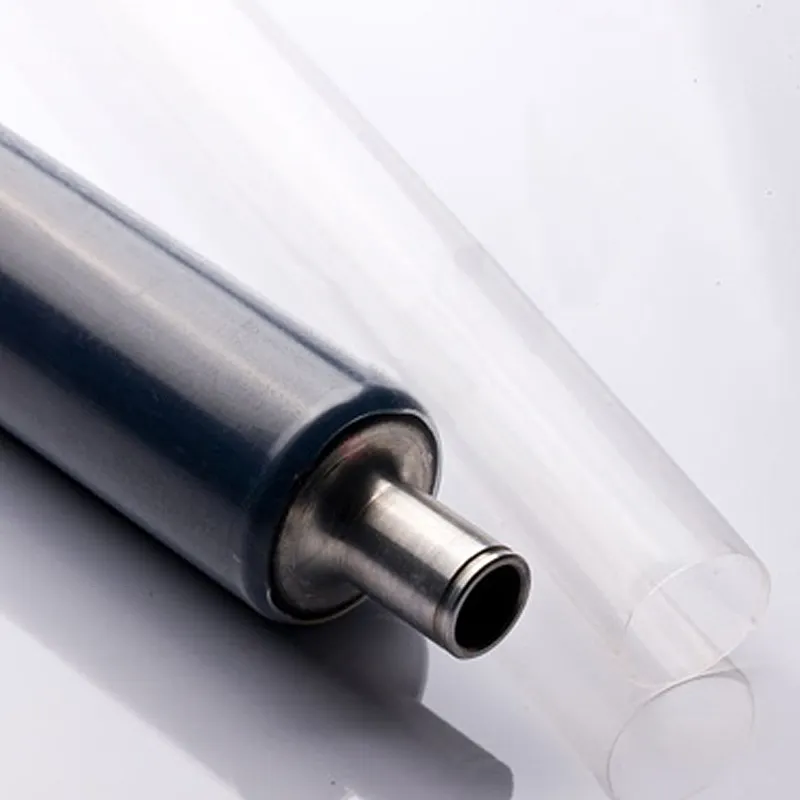
FEP Insulation Anti-Uv 1.6:1 1.3:1 Heat Shrink Diameter 1-150mm Tubing Sleeves
Product Overview
Yozonetech FEP Heat Shrink Tube is a transparent fluoropolymer heat-shrink tubing designed for applications requiring a combination of chemical resistance, electrical insulation, thermal performance and visual inspection.
Manufactured from FEP (Fluorinated Ethylene Propylene), the tubing is supplied in an expanded form and shrinks when heated to form a close-fitting protective layer around wires, connectors, sensors, terminals, medical or laboratory components and other assemblies.
Compared with opaque or conventional heat-shrink materials, FEP heat shrink tubing offers an important advantage: transparency. The transparent construction allows users to visually inspect covered components, markings, connections or internal assemblies without removing the protective tubing.
FEP also provides excellent resistance to many chemicals and solvents, low surface energy, good electrical insulation and strong thermal stability.
Yozonetech supplies FEP Heat Shrink Tube in standard and custom dimensions for industrial, electrical, chemical processing, laboratory and OEM applications.
Key Features
Transparent for Visual Inspection
The transparent FEP construction allows the covered component, wire, marking or connection to remain visible after installation.
Wire identification; Connector inspection; Sensor assemblies; Laboratory equipment; Fluid-related components; Electronic assemblies.
Excellent Chemical Resistance
FEP provides excellent resistance to many acids, alkalis, solvents and fuels. Final chemical compatibility should always be evaluated according to the specific chemical, concentration, temperature and exposure time.
Heat-Shrink Conformal Fit
When heated under appropriate conditions, the expanded tubing recovers around the component and creates a close-fitting protective layer.
Irregular components; Electrical connections; Wire assemblies; Sensors; Small-diameter parts; Protective encapsulation.
Excellent Electrical Insulation
FEP provides good dielectric properties and can be used as an insulating material for electrical and electronic assemblies.
Wire insulation; Terminal protection; Connector protection; Sensor leads; Electronic components.
High Temperature Performance
FEP offers significantly higher thermal performance than many conventional heat-shrink materials. It is important to distinguish between shrink/recovery temperature and continuous operating temperature; both should be selected according to the exact product construction and datasheet.
Smooth, Low-Friction Surface
The smooth fluoropolymer surface provides low surface energy and can help reduce friction during installation. It also provides resistance to contamination and adhesion in many industrial applications.
Why Choose FEP Heat Shrink Tubing
FEP Heat Shrink Tube is particularly suitable when a standard heat-shrink tube does not provide sufficient chemical or temperature performance, but complete visual coverage of the component is still required.
Choose FEP Heat Shrink Tube when you need:
Transparency; Heat-shrink protection; Chemical resistance; Electrical insulation; High-temperature capability.
This combination makes FEP different from both standard polyolefin heat shrink tubing and opaque PTFE heat shrink tubing.
Product Construction
FEP Heat Shrink Tube is manufactured from fluorinated ethylene propylene and processed into an expanded shrinkable structure.
Basic Construction: FEP fluoropolymer → Tube forming → Expansion process → Heat shrink tubing
During installation: Expanded Tube → Heat Application → Controlled Recovery → Close-Fitting Protective Layer
The final recovered dimensions depend on original tube dimensions, expansion ratio, recovered diameter, wall thickness, heating conditions and component geometry.
Technical Specifications
The following FEP reference parameters are drawn from the FEP column of the supplied catalog. Expanded ID, recovered ID, recovered wall thickness and shrink ratio should be considered together. Confirm the specification for the exact construction supplied.
Parameter FEP reference specification Material FEP / fluorinated ethylene propylene Construction Expanded, heat-activated shrinkable tubing Appearance Transparent Catalog stable operating range −200°C to +200°C Additional catalog temperature entry −200°C to +200°C, printed under “Heat shrink temperature range” Catalog shrink ratios 1.3:1 and 1.7:1 Chemical properties High chemical stability; compatibility depends on actual exposure Electrical properties Strong electrical insulating performance; confirm assembly requirements Physical properties Flexibility and resistance to brittleness at low temperature Biocompatibility description Listed in the catalog; application-specific qualification required Current tooling maximum ID 265 mm Maximum producible ID 310 mm Customization Expanded ID, recovered ID, wall thickness, length and tolerances The catalog’s “Heat shrink temperature range” label is reproduced for traceability. The negative lower limit and the identical operating-range entry do not establish a recovery heating procedure. Obtain the installation temperature and recovery time for the selected construction before use.
The catalog’s general biocompatibility description is not a finished-product medical qualification. Suitability and supporting documentation must be confirmed for each medical or life-science application.
Technical Specifications
- Physical & Chemical Properties of Fluororplastics
- SPECIFIC GRAVITY
- TECHNICAL NOTE for FLIUOROPOLYMER
Large Diameter Production Capability
Our existing tooling supports heat shrink tubing with a maximum inner diameter of 265 mm. We can manufacture heat shrink tubing with an inner diameter up to 310 mm.
For large diameter orders, specify whether your requested ID is the expanded or fully recovered diameter, together with wall thickness, length, shrink ratio and tolerance. The recovered specification and production arrangement will be confirmed with the quotation.
Complete FEP Heat Shrink Specification Table
All diameter and wall dimensions are in mm. Expanded ID is the minimum inner diameter before shrinkage; recovered ID is the maximum inner diameter after shrinkage. The listed wall thickness is measured after recovery.
Expanded ID mm Recovered ID mm Recovered wall mm Standard length m ≥3.8 ≤2.7 0.2 ± 0.03 1 ≥4.5 ≤3.3 0.2 ± 0.03 1 ≥5.5 ≤4.3 0.2 ± 0.03 1 ≥7.0 ≤5.1 0.2 ± 0.03 1 ≥7.9 ≤6.0 0.2 ± 0.03 1 ≥10.6 ≤7.4 0.3 ± 0.03 1 ≥12.5 ≤8.8 0.3 ± 0.05 1 ≥14.5 ≤10.7 0.3 ± 0.05 1 ≥19 ≤12.8 0.4 ± 0.05 1 ≥21 ≤16.5 0.5 ± 0.05 1 ≥24 ≤18.5 0.5 ± 0.05 1 ≥26 ≤19.5 0.5 ± 0.05 1 ≥30 ≤21.5 0.5 ± 0.05 1 ≥82 ≤24 0.5 ± 0.05 1 ≥91 ≤64 0.5 ± 0.05 1 ≥106 ≤82 0.6 ± 0.05 1 ≥118 ≤96 0.6 ± 0.05 1 ≥136 ≤103 0.6 ± 0.05 1 ≥156 ≤125 0.6 ± 0.05 1 The ≥82 mm expanded ID / ≤24 mm recovered ID row is reproduced exactly as printed. Its diameter relationship differs markedly from adjacent rows; confirm the intended specification before selection or ordering. A shrink ratio is not assigned to individual rows in this table.
Standard packaging in the source table is 1 m. Stock availability, custom lengths and manufacturing lead time are confirmed at quotation. Maximum diameter capability for Yozonetech is 265 mm with existing tooling and 310 mm for production.
Additional Catalog Size Examples
The following recovered ID × wall thickness examples are listed jointly for FEP/PFA in the supplied catalog. They are separate references from the preceding FEP specification table and should be confirmed for the requested FEP construction.
Recovered ID mm Wall thickness mm 1.6 0.15 3.6 0.1 8 0.3 16 0.25 30 0.35 130 0.5 180 0.55 200 0.6 Other dimensions may be requested. Use the Yozonetech diameter capability stated above when planning custom orders.
Additional Application References
The source catalog also lists aerospace, electronics, chemicals and automotive manufacturing, together with insulating sheaths, water treatment, communications equipment, motor rotor and stator insulation, office machinery, paper machinery, printing machinery and roller coverings. Select the FEP construction against the actual thermal, electrical, chemical and mechanical requirements.
Shrink Ratio and Product Selection
The correct FEP heat shrink size depends on both the installation diameter and the final required diameter.
Basic selection principle:
Expanded ID > Maximum component diameter; Recovered ID ≤ Required finished diameter.
For components with connectors, terminals or irregular shapes, the maximum outside dimension must be considered.
For custom projects, customers can provide: Maximum Installation OD; Finished Required OD; Required Wall Thickness; Component Drawing or Sample.
Yozonetech can then evaluate the appropriate FEP heat shrink construction.
Transparency: A Key Advantage of FEP
Transparency is one of the major reasons for selecting FEP Heat Shrink Tube. After installation, users may still be able to inspect internal wire colors, cable identification, connector conditions, sensor components, printed markings and internal assembly structures.
This is particularly useful for applications where complete encapsulation is required, but visual inspection or identification must remain possible.
Electrical Insulation
FEP Heat Shrink Tube can provide electrical insulation and mechanical protection for a variety of electrical assemblies.
Wire insulation; Terminal covering; Connector protection; Sensor lead protection; Electronic component insulation; High-temperature wiring assemblies.
For electrical applications, consider voltage, required dielectric performance, wall thickness, operating temperature and environment. For high-voltage or safety-critical applications, the electrical properties should be confirmed for the exact product construction.
Chemical Resistance and Environmental Protection
FEP provides excellent resistance to a broad range of chemicals. After shrinking, the tubing can provide a close-fitting protective layer around sensitive components.
Chemical processing equipment; Laboratory instruments; Sensors; Analytical equipment; Fluid-handling components; Corrosive environments.
Chemical compatibility depends on chemical type, concentration, temperature, exposure duration, pressure and mechanical stress. For critical applications, chemical compatibility should be evaluated using actual operating conditions.
Temperature Performance
FEP Heat Shrink Tube can be used in applications requiring greater thermal performance than conventional heat-shrink materials.
Recovery Temperature
The temperature required for the tubing to shrink.
Continuous Operating Temperature
The temperature range in which the finished tubing assembly can operate continuously.
Short-Term Temperature Exposure
Temporary thermal exposure that may differ from the continuous operating limit.
The final product specification should define these values according to the exact FEP material and construction.
FEP Heat Shrink Tube vs PTFE Heat Shrink Tube
Feature FEP Heat Shrink Tube PTFE Heat Shrink Tube Transparency Excellent Usually opaque / translucent Heat shrinkability Excellent Excellent Chemical resistance Excellent Excellent Electrical insulation Excellent Excellent Surface Smooth Smooth Visual inspection Major advantage Limited Temperature capability Excellent Higher potential in demanding applications Typical use Transparent protection and insulation Severe temperature and chemical environments Choose FEP Heat Shrink Tube when transparency and visual inspection are important. Choose PTFE Heat Shrink Tube when the application prioritizes more demanding high-temperature performance and PTFE-specific material properties.
FEP Heat Shrink Tube vs Standard FEP Tube
Feature Standard FEP Tube FEP Heat Shrink Tube Basic form Extruded tube Expanded shrinkable tube Diameter change after heating No Yes Transparency Excellent Excellent Fluid transfer Major application Limited / application-specific Component protection General Close-fitting Electrical insulation Excellent Excellent Installation Push / route / assemble Heat recovery Main selection ID / OD / wall Expanded ID / recovered ID / wall Choose Standard FEP Tube for fluid transfer, chemical tubing, transparent process lines, general insulation and continuous tubing.
Choose FEP Heat Shrink Tube for heat-shrink installation, close-fitting protection, transparent component coverage, electrical insulation and chemical-resistant encapsulation.
FEP Heat Shrink Tube vs Other Heat Shrink Materials
Material Main Advantage Typical Application FEP Transparency + chemical resistance Visual inspection and chemical protection PTFE High temperature + chemical resistance Severe industrial environments Polyolefin Cost-effective General electrical insulation PVDF Mechanical and chemical performance Industrial protection Silicone Flexibility Flexible electrical protection FEP is particularly attractive when the application requires a combination of Transparency + Chemical Resistance + Electrical Insulation + Heat Shrinkability.
Certifications
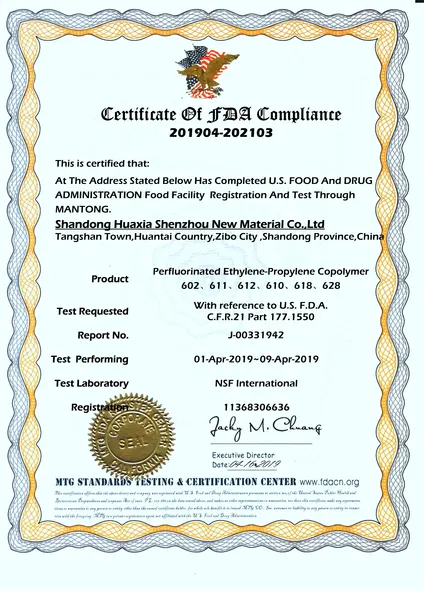
FEP FDA certificate
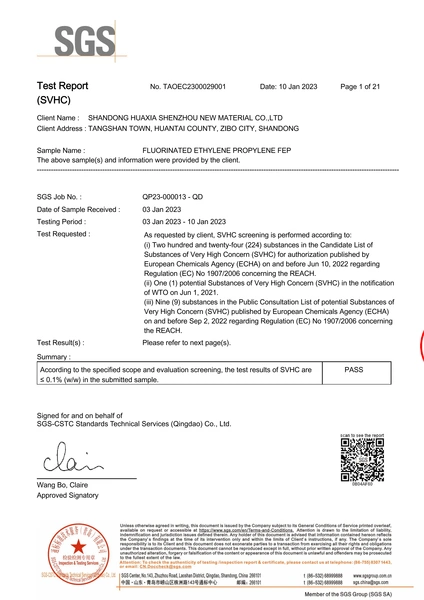
FEP REACH certificate
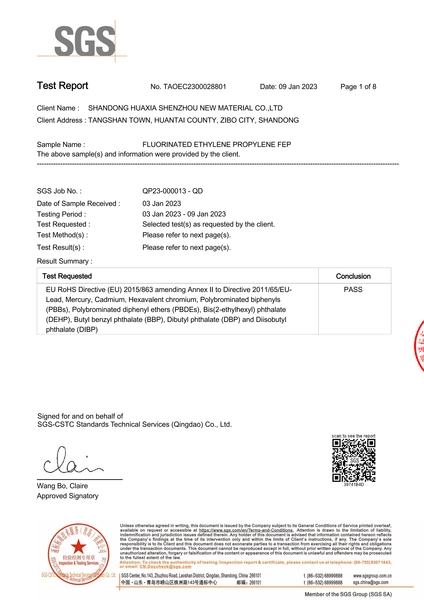
FEP ROHS certificate
FEP Heat Shrink Tubing Certification
- Yozonetech FEP FDA certificate
- Yozonetech FEP ROHS certificate
- Yozonetech FEP REACH certificate
- Yozonetech FEP MSDS
- Yozonetech FEP technical data sheet
Typical Applications
Electrical and Electronics
Wire insulation; Connector protection; Terminal covering; Sensor protection; Cable assemblies; Electronic components.
Chemical Processing
Instrument protection; Sensor sleeves; Chemical-resistant component protection; Corrosion-sensitive assemblies.
Laboratory and Analytical Equipment
Transparent component protection; Sensor assemblies; Wire insulation; Analytical instruments; Laboratory equipment.
Medical and Life Science Equipment
Medical equipment components; Transparent protective sleeves; Sensor assemblies; Instrument protection.
Semiconductor and Electronics Manufacturing
Sensor protection; Electrical insulation; Transparent fluoropolymer protection; Chemical-environment components.
Industrial Equipment
Cable protection; Electrical component insulation; Protective sleeves; Transparent identification covers; High-performance equipment assemblies.
For medical/life-science applications, material and regulatory suitability must be confirmed for the specific application.
For semiconductor applications, material cleanliness and particle-control requirements should be evaluated according to the actual process.
Manufacturing and Quality Control
The manufacturing consistency of FEP Heat Shrink Tube directly affects its dimensions, transparency and shrink performance.
Material Selection
FEP material is selected according to the required product grade and application.
Tube Manufacturing
The base tubing is produced with controlled dimensions and surface quality.
Expansion Process
Controlled expansion creates the heat-shrink structure.
Dimensional Inspection
Expanded ID; Recovered ID; Wall thickness; Length.
Shrink Performance Testing
Recovery behavior; Dimensional stability; Surface appearance; Transparency; Uniform shrink performance.
Visual Inspection
Surface defects; Contamination; Bubbles; Foreign particles; Dimensional abnormalities.
Packaging
Straight lengths; Coiled lengths; Custom-cut pieces.
Packaging requirements can be customized for OEM projects.
Custom FEP Heat Shrink Tube
Our existing tooling supports heat shrink tubing with a maximum inner diameter of 265 mm. We can manufacture heat shrink tubing with an inner diameter up to 310 mm.
Yozonetech supports custom FEP Heat Shrink Tube solutions.
Expanded inside diameter; Recovered inside diameter; Wall thickness; Shrink ratio; Length; Cut pieces; Continuous supply; Special dimensional tolerances; Application-specific requirements; OEM labeling; Custom packaging.
For a Fast Quotation
Please provide: Expanded ID × Recovered ID × Wall Thickness × Length × Quantity
If possible, also provide:
Component maximum OD; Required finished diameter; Operating temperature; Installation method; Electrical requirements; Chemical exposure; Application; Drawing; Sample.
Why Choose Yozonetech
Fluoropolymer Manufacturing Experience
Yozonetech focuses on fluoropolymer tubing and engineering plastic products for industrial and OEM applications.
Application-Based Product Selection
We help customers evaluate products according to dimensions, temperature, pressure, chemical exposure, electrical requirements and installation conditions.
Custom Manufacturing
Custom dimensions and OEM production are available for application-specific requirements.
Quality and Documentation
Applicable technical and compliance documentation can be provided according to the selected material grade and product requirements.
Complete Fluoropolymer Product Range
PTFE Tube; FEP Tube; PFA Tube; ETFE Tube; PTFE Braided Hose; PTFE Heat Shrink Tube; FEP Heat Shrink Tube; Fluoropolymer rods and sheets; Engineering plastic components.
Certifications and Compliance
FDA-related documentation for applicable grades; RoHS; REACH; ISO 9001; IATF 16949; Customer-specific documentation.
Compliance should always be confirmed for the exact material grade and finished product.
FAQ
What is FEP Heat Shrink Tube
FEP Heat Shrink Tube is an expanded fluoropolymer tubing that contracts when heated, forming a close-fitting protective or insulating layer around a component.
What is the main advantage of FEP Heat Shrink Tube
One of its key advantages is transparency, allowing the covered component to remain visible after installation.
What is FEP Heat Shrink Tube used for
It can be used for electrical insulation, wire protection, connector protection, sensor assemblies, chemical-resistant component protection and transparent protective covering.
Is FEP Heat Shrink Tube transparent
Yes. Transparency is one of the major advantages of FEP heat shrink tubing.
Is FEP Heat Shrink Tube chemically resistant
FEP provides excellent resistance to many chemicals and solvents. Final compatibility should be evaluated according to the specific operating conditions.
How do I choose the correct size
The expanded diameter must be large enough to pass over the component before installation, while the recovered diameter should provide the required finished fit.
What is the difference between FEP Tube and FEP Heat Shrink Tube
Standard FEP tubing maintains its original dimensions. FEP heat shrink tubing is expanded during manufacturing and contracts when heated.
Can FEP Heat Shrink Tube be customized
Yes. Custom expanded ID, recovered ID, wall thickness, length and other specifications can be evaluated. Our existing tooling supports heat shrink tubing with a maximum inner diameter of 265 mm. We can manufacture heat shrink tubing with an inner diameter up to 310 mm.
Can it be used for electrical insulation
Yes. FEP provides good electrical insulation properties and is suitable for many electrical and electronic applications.
What information is required for quotation
Expanded ID, recovered ID, wall thickness, length, quantity, component dimensions, application, operating temperature and any special requirements.
Request a Quote
Looking for Custom FEP Heat Shrink Tubing?
Send us your dimensions and application requirements.
Yozonetech can help evaluate FEP heat shrink solutions for:
Electrical Insulation; Transparent Protection; Chemical Resistance; Component Encapsulation; OEM Applications.
Email: ptfetube@yozonetech.cn
Website: chinaptfetube.com
-
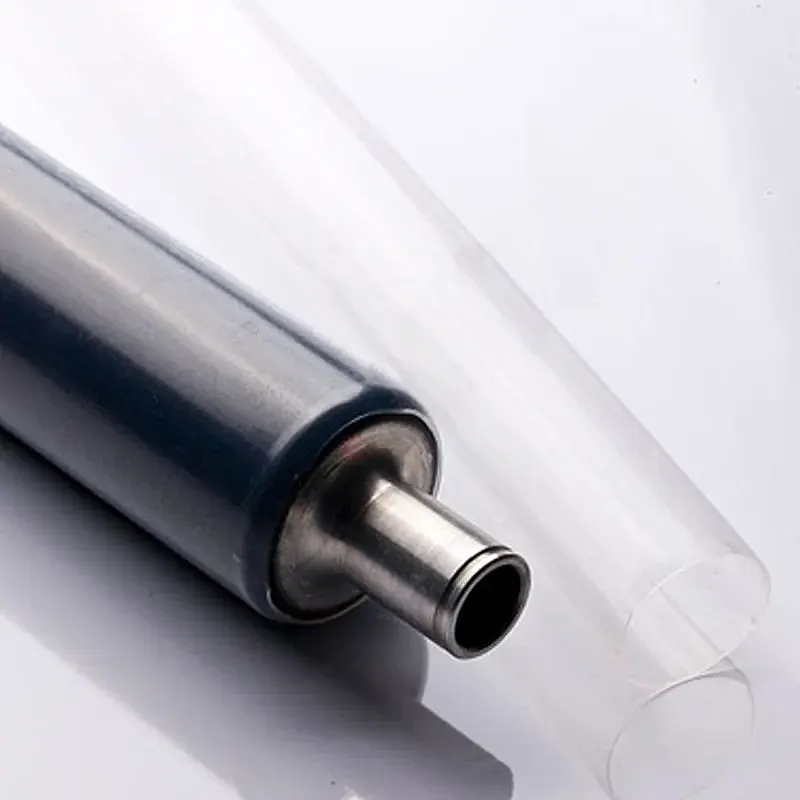
FEP Heat Shrinking Tube
YOZONE, as a leading manufacturer and supplier in the field of heat shrink tube production, always provides high quality heat shrink tube. Heat shrink tube is usually made of polymer materials such as polyolefin, which shrinks in diameter when heated and fits tightly to the object to which it is applied.
FEP heat shrinking tube are high-performance insulation materials designed for a variety of industrial and electrical applications. Known for their excellent chemical resistance, high-temperature tolerance, and electrical insulation properties, FEP heat shrinking tubes offer reliable protection for wires, cables, and other sensitive components.
FEP heat shrinking tube Key Features:
1.High Heat Resistance: FEP tubes can withstand temperatures up to 200°C (392°F), making them suitable for high-temperature applications.
2.Chemical Resistance: These tubes are highly resistant to acids, alkalis, and solvents, ensuring durability in harsh environments.
3.Excellent Electrical Insulation: FEP tubes provide superior insulation, preventing electrical leakage and ensuring safe operation.
4.Transparency: The tubes are transparent, allowing for easy inspection of the underlying components.
5.Flexible and Durable: FEP shrinking tubes are easy to apply and retain their strength, even under extreme conditions.
Characteristic Description Main Components Fluorinated Ethylene Propylene (FEP) polymer Temperature Resistance Range -200°C to 200°C (-328°F to 392°F) Chemical Resistance Acids, alkalis, organic solvents, and oils Electrical Insulation Advantages High dielectric strength, temperature stability, chemical resistance, non-flammability Shrink Ratio Typically 2:1 or 3:1 Applications of FEP Heat Shrinking Tubes
Industry Application Description Benefits Electronics Protecting and insulating wires and connections Enhanced safety and durability Automotive Insulating and bundling cables in vehicles Improved heat resistance and chemical durability Aerospace Providing insulation for wiring in aircraft systems Lightweight, reliable protection under extreme conditions Telecommunications Insulating connectors and bundling cables in telecom equipment Ensures signal integrity and environmental protection Medical Devices Protecting sensitive wiring in medical instruments High reliability and compliance with hygiene standards Industrial Equipment Insulating cables and protecting components in machinery Enhanced resistance to chemicals and mechanical wear Renewable Energy Insulating wiring in solar panels and wind turbines Durable protection against environmental factors What is the Lifespan of FEP Heat Shrinking Tubes?
FEP heat shrinking tubes are known for their long lifespan and durability. Under normal conditions, heat shrink tubing suppliers can last up to 20+ years. Their lifespan is largely determined by environmental factors such as temperature fluctuations, exposure to UV light, and chemical contact. In high-stress environments, like continuous high-temperature exposure or extreme chemical exposure, the lifespan may be shorter, but overall, FEP heat shrinking tubes are highly resistant to degradation, making them a reliable long-term solution.
What is the Shrinking Speed of FEP Heat Shrinking Tubes?
The shrinking speed of FEP heat shrink tubing is relatively fast compared to other materials.
Shrinking Speed of FEP Heat Shrinking Tubes
Characteristic
Description
Shrinking Speed
Starts shrinking within seconds of exposure to heat
Full Shrinkage Time
Typically takes 1-2 minutes to complete
Ideal Shrinkage Temperature
200°C to 250°C (392°F to 482°F)
Recommended Heat Source
Heat gun or oven
-
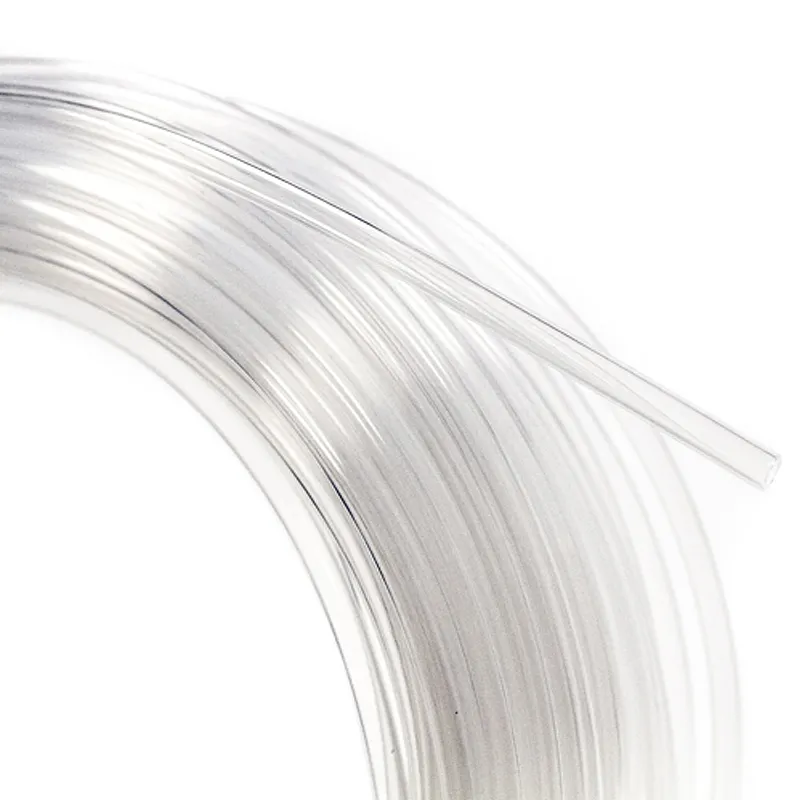
FEP100% Virgin Flexible Transparent Tubing OEM Manufacturer
Product Overview
FEP Tube is an extruded fluoropolymer tube made from fluorinated ethylene propylene (FEP). It is widely selected when a project needs the chemical resistance and thermal stability associated with fluoropolymers together with excellent transparency and melt-processability. The clear tubing construction is particularly useful when operators need to see flow, bubbles, color changes or possible contamination inside the line.
Compared with PTFE, FEP can be melt-processed, which supports continuous extrusion and consistent transparent tubing production. Compared with PFA, FEP is often considered when transparency, chemical resistance and practical processing are important without requiring the highest level of purity associated with specialized PFA grades.
Yozonetech supplies FEP tubing for chemical, laboratory, electrical, pneumatic, instrumentation and industrial applications. ID, OD, wall thickness and length can be evaluated according to the required application, production capability and agreed specification.
Why Choose FEP Tubing?
Performance Engineering / Application Value Excellent Transparency Clear tubing allows visual monitoring of fluid flow, bubbles, color and potential contamination. Chemical Resistance Resists many aggressive chemicals and solvents; final compatibility depends on the exact medium, concentration, temperature and exposure time. Melt Processability FEP can be melt-extruded, enabling continuous tubing manufacture and stable dimensional control. Thermal Stability Suitable for demanding thermal environments within the limits of the selected grade, geometry and service conditions. Electrical Insulation Strong dielectric properties make FEP suitable for selected wire, cable and electrical insulation applications. Low Surface Adhesion Smooth fluoropolymer surfaces can reduce adhesion of many materials and support clean fluid pathways. Low Moisture Absorption Very low water absorption supports stable performance in wet and humid environments. Weather / UV Resistance FEP provides strong resistance to many environmental influences and is useful in selected outdoor or exposed systems. Clean Processing Options Appropriate grades and processing controls can be selected when cleanliness is important; exact requirements should be specified. FEP Tube Product Range
Product Type Typical Positioning Standard FEP Tube General-purpose transparent fluoropolymer tubing for industrial, laboratory and fluid-handling applications. Transparent / Clear FEP Tube High-visibility tubing where visual inspection of the process path is important. Thin-Wall FEP Tube Lightweight tubing for insulation, instrumentation and compact fluid routing where the design permits reduced wall thickness. Thick-Wall FEP Tube Higher-wall construction for increased mechanical robustness; pressure capability must be confirmed for exact dimensions. Small-Bore FEP Tube Small-ID tubing for sampling, instrumentation, analytical equipment and compact fluid pathways. FEP Insulation Tube Electrical and wire/cable protection applications requiring fluoropolymer insulation. FEP Heat Shrink Tube Heat-shrinkable FEP products for applications requiring conformal insulation or protection; link to dedicated heat-shrink product page if applicable. Custom FEP Tube Application-specific ID, OD, wall thickness, length, packaging and other agreed requirements. FEP Material & Performance
FEP occupies an important position between conventional fluoropolymer tubing and specialized high-purity PFA tubing. Its combination of transparency, chemical resistance and melt-processability makes it a practical choice for many visible fluid paths and electrical applications.
Property Engineering Consideration Chemical Compatibility Excellent resistance to many acids, bases, solvents and process chemicals. Verify the exact medium and service conditions. Transparency One of FEP tubing's most useful characteristics, enabling visual inspection of the internal flow path. Thermal Performance Suitable for elevated-temperature service within grade- and application-specific limits. Electrical Properties High dielectric strength and good insulation behavior support electrical and cable applications. Surface Behavior Smooth fluoropolymer surface helps reduce adhesion and supports clean fluid handling. Melt Processability Allows conventional melt-extrusion manufacturing and supports consistent continuous tubing. Moisture Resistance Very low water absorption contributes to stable performance in humid conditions. Weather Resistance Good resistance to weathering and environmental exposure for suitable applications. Purity Clean or higher-purity options may be evaluated, but high-purity semiconductor requirements should be compared carefully with PFA grade options. Technical Specifications
This is the website-level specification framework. Exact dimensional ranges, tolerances, pressure capability, temperature limits and compliance should be confirmed against the current Yozonetech product datasheet or quotation.
Parameter Specification / Note Material FEP / Fluorinated Ethylene Propylene Product Construction Extruded FEP tubing Appearance Transparent / clear or natural; appearance depends on grade and processing Temperature Capability Application- and grade-dependent; confirm exact operating limits for the selected size and service Chemical Resistance Excellent resistance to many aggressive chemicals and solvents Transparency High; suitable for visual monitoring of flow and internal condition Electrical Insulation Excellent dielectric / insulating performance Inner Surface Smooth fluoropolymer surface Water Absorption Very low Inner Diameter (ID) Customized according to application and tooling capability Outer Diameter (OD) Customized according to application and tooling capability Wall Thickness Customized according to ID, OD, pressure and application Length Coil or straight cut; customized subject to specification Form Straight tube / coil; special constructions subject to evaluation Pressure Rating Size-, wall-thickness-, temperature- and construction-dependent; confirm exact application Compliance FDA, RoHS, REACH and other documentation may be available for applicable grades; confirm exact product and certificate Important: Do not publish a universal pressure rating or unconditional temperature rating for all FEP tubing. Mechanical capability changes with tube geometry, temperature, grade, fittings and installation conditions.
Technical Specifications
- Physical & Chemical Properties of Fluororplastics
- SPECIFIC GRAVITY
- TECHNICAL NOTE for FLIUOROPOLYMER
FEP Tube vs. PTFE and PFA
The most useful role of an FEP product page is to help a buyer understand when FEP is the better engineering choice rather than simply listing material properties.
Property FEP PTFE PFA Transparency Excellent Generally limited / translucent Excellent Chemical Resistance Excellent Excellent Excellent Melt Processability Yes No conventional melt processing Yes High-Purity Potential Good to very good; grade-dependent Good to excellent; grade-dependent Excellent; grade-dependent Electrical Insulation Excellent Excellent Excellent Typical Selection Logic Transparent, processable fluoropolymer tubing for visible fluid paths and insulation Broad chemical/thermal performance, low friction and electrical insulation High-purity, transparent and demanding chemical-processing systems Relative Positioning Balanced performance / transparency option Broad-performance workhorse Premium option for purity and demanding process environments Practical rule: choose FEP when transparency and melt-processable fluoropolymer construction are important; choose PTFE when broad chemical/thermal performance and low friction are priorities; choose PFA when high purity, transparency and demanding chemical-processing requirements justify the higher-spec material.
How to Select the Right FEP Tube
Selection Step What to Define 1. Identify the Medium Chemical, solvent, water, gas, reagent, oil, process fluid or other conveyed medium. 2. Define Visibility If operators need to see flow, bubbles, color or contamination, FEP's transparency may be a major advantage. 3. Define Temperature Specify minimum, normal and maximum operating temperature, including short-term peaks. 4. Define Pressure Provide working pressure, peak pressure, pulsation and pressure cycles. 5. Specify Dimensions ID, OD and wall thickness determine flow, fit, flexibility and mechanical behavior. 6. Define Flexibility Consider bend radius, routing, movement, vibration and installation method. 7. Define Electrical Requirements For insulation applications, specify voltage, dielectric requirements, cable size and environmental conditions. 8. Confirm Purity / Compliance State FDA, RoHS, REACH, USP Class VI or customer-specific requirements where applicable. 9. Define Packaging Specify coil length, straight length, protective packaging, labeling and quantity. Temperature & Pressure Considerations
FEP tubing should be evaluated as a complete system. A large-diameter thin-wall tube and a small-bore thick-wall tube can have very different pressure capability even when they use the same FEP material.
- Evaluate pressure at the actual operating temperature rather than relying on room-temperature data.
- Confirm peak pressure, pressure pulses and repeated thermal cycling.
- Consider fittings, clamps, bend radius, unsupported spans and installation stress.
- For demanding pressure service, request a rating for the exact tube dimensions and construction.
- For critical systems, confirm final specifications using the current Yozonetech datasheet or quotation.
Certifications
FEP FDA certificate
FEP REACH certificate
FEP ROHS certificate
FEP Tubing Certification
- Yozonetech FEP FDA certificate
- Yozonetech FEP ROHS certificate
- Yozonetech FEP REACH certificate
- Yozonetech FEP MSDS
- Yozonetech FEP technical data sheet
Applications
Industry Typical Uses Chemical Processing Transparent chemical transfer lines, reagent delivery, sampling and corrosive-media routing. Laboratory & Analytical Instrument tubing, sampling lines, reagent paths and visible fluid connections. Semiconductor & Electronics Chemical delivery, instrumentation and selected clean fluid applications where FEP grade requirements are satisfied. Electrical & Electronics Wire and cable insulation, protective sleeves and electrical isolation. Pneumatic & Instrumentation Clean gas, air and control lines where chemical and thermal resistance are required. Automotive Selected fluid routing, sensor lines and protective applications requiring fluoropolymer performance. Food & Beverage Suitable fluid-contact applications where the exact FEP grade meets applicable requirements. Pharmaceutical / Life Science Selected fluid pathways and laboratory systems subject to grade, cleanliness and regulatory requirements. Industrial Equipment Pump connections, process equipment, protective tubing and general chemical-resistant fluid routing. Manufacturing & Quality Control
Because FEP is melt-processable, extrusion control is central to achieving stable transparency and dimensional consistency. For industrial customers, repeatable ID, OD, wall thickness, length and appearance are important for assembly and system performance.
Process Quality Focus Material Selection Select FEP grade according to chemical, thermal, electrical, purity and regulatory requirements. Material Preparation Prepare resin according to the controlled extrusion process. Extrusion Control tooling, melt temperature and process parameters for stable tube geometry and appearance. Sizing & Cooling Control ID, OD and wall thickness during sizing and cooling. Dimensional Inspection Check ID, OD, wall thickness, length and appearance against the agreed specification. Surface / Appearance Check Inspect transparency, surface defects and overall tube condition. Cutting / Coiling Produce controlled straight lengths or coils with suitable protection. Final Inspection Verify dimensions, appearance, labeling, packaging and order-specific requirements. Custom FEP Tube Solutions
Yozonetech can evaluate custom FEP tubing for OEM and industrial programs. Instead of selecting only from a fixed catalog, the tubing can be specified around the actual fluid, dimensions, installation method and compliance requirements.
- Custom inner diameter and outer diameter
- Custom wall thickness
- Custom straight length or coil length
- Transparent / clear construction
- Small-bore tubing
- Thin-wall or thick-wall tubing
- Electrical insulation tubing
- Application-specific grade requirements
- OEM labeling and packaging subject to order requirements
- Application-specific documentation and compliance support
For a Fast Quotation: send ID × OD or ID × wall thickness, length, quantity, medium, operating temperature, working pressure, application, electrical requirements if applicable, and certification requirements. A drawing or sample is useful for non-standard tubing.
Why Choose Yozonetech for FEP Tubing?
Yozonetech Advantage Customer Value Manufacturer Direct Direct manufacturing supply for fluoropolymer tubing and related products. Broad Fluoropolymer Range PTFE, PFA, FEP, ETFE and PVDF tubing support application-based material selection. Custom Dimensions Application-specific ID, OD, wall thickness and length can be evaluated. OEM / ODM Support Suitable for customized industrial programs and repeat production. Application-Oriented Support Technical discussions can be based on medium, temperature, pressure, dimensions, electrical needs and compliance. Documentation Support Applicable technical and compliance documentation can be provided according to product grade and market. Integrated Product Portfolio FEP can be combined with PTFE/PFA tubing, heat-shrink products and reinforced hose solutions. Certifications & Compliance
Depending on product grade, application and destination market, documentation may include:
- FDA-related documentation for applicable food-contact grades
- RoHS
- REACH
- ISO 9001
- ISO 14001
- ISO 45001
- IATF 16949
- USP Class VI for applicable grades/products
- Other customer-specific documentation subject to product and market requirements
Compliance Disclaimer: Certification availability is grade- and product-specific. Every FEP formulation should not be assumed to carry every certificate. Confirm the exact declaration, certificate or test report for the product supplied.
FEP Tube FAQ
What is FEP tubing?
FEP tubing is extruded tubing made from fluorinated ethylene propylene, a melt-processable fluoropolymer known for transparency, chemical resistance, thermal stability and electrical insulation.
What is FEP tubing used for?
Typical uses include chemical transfer, laboratory equipment, analytical systems, electrical insulation, instrumentation and industrial fluid handling.
Is FEP tubing transparent?
Yes. FEP can provide excellent optical clarity, making it useful where operators need to visually monitor flow or the condition of the internal fluid path.
What is the difference between FEP and PTFE tubing?
Both provide strong chemical and thermal performance. FEP is melt-processable and highly transparent, while PTFE is widely selected for broad performance, low friction and demanding thermal applications.
What is the difference between FEP and PFA tubing?
Both are melt-processable and transparent fluoropolymers. PFA is commonly chosen when higher purity and demanding chemical-processing performance are central requirements, while FEP is often a practical choice where transparency and overall performance balance are the priority.
Can FEP tubing handle aggressive chemicals?
FEP resists many aggressive chemicals and solvents. Compatibility should always be checked against the exact medium, concentration, temperature and exposure time.
Can FEP tubing be used for electrical insulation?
Yes. FEP has strong dielectric and insulating properties and is used in selected wire, cable and electrical protection applications.
Can FEP tube dimensions be customized?
Yes. ID, OD, wall thickness and length can be customized subject to tooling and production capability.
Can FEP tubing be supplied in coils?
Yes. Suitable dimensions can be supplied in coils, and straight-cut lengths can also be specified.
What information should I provide for an FEP tube quotation?
Provide ID × OD or ID × wall thickness, length, quantity, medium, temperature, pressure, application and certification requirements. For insulation use, also provide electrical requirements.
Request an FEP Tube Quote
Need transparent fluoropolymer tubing for chemical transfer, laboratory equipment, electrical insulation or industrial fluid handling? Send the dimensions and service conditions. Yozonetech can evaluate the appropriate FEP grade, tubing construction and manufacturing specification.
Information Recommended Details Required Dimensions ID × OD or ID × wall thickness Length Coil length or straight-cut length Medium Chemical / gas / water / oil / reagent / process fluid / other Temperature Minimum / normal / maximum operating temperature Pressure Working pressure and peak pressure Electrical Requirements Voltage / insulation / cable or wire size, if applicable Quantity Sample / trial / batch / annual demand Compliance FDA / RoHS / REACH / USP Class VI / customer standard Application Equipment, industry and installation conditions