 +86-13752771911
 E-mail:ptfetube@yozonetech.cn



HDPE vs. PTFE: Material Differences and Comparisons
enero 15, 2026
HDPE vs. PTFE: Understanding the Fundamentals
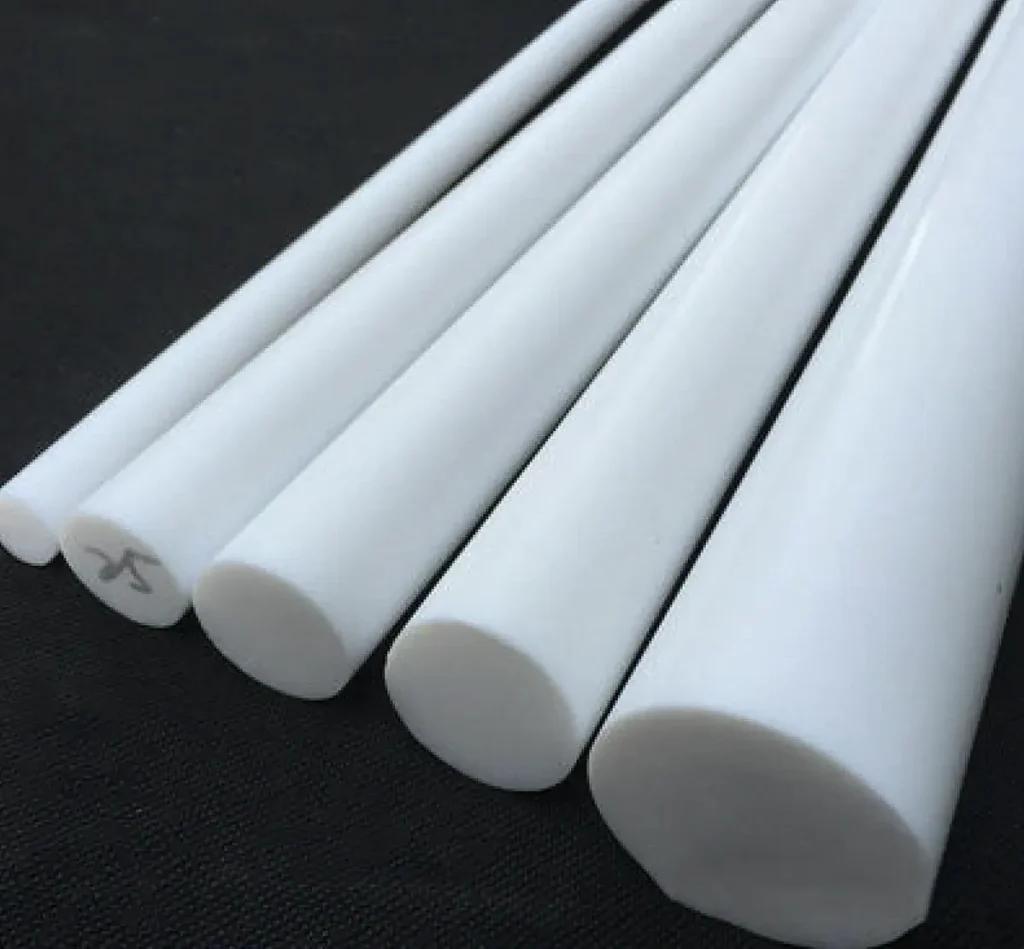
In the diverse world of high-performance polymers, High-Density Polyethylene (HDPE) and Polytetrafluoroethylene (PTFE) represent two of the most widely used materials, yet they serve vastly different industrial roles. To truly understand hdpe vs teflon, one must first acknowledge that they are both thermoplastics but exist at opposite ends of the thermal and chemical spectrum. HDPE is a robust, cost-effective hydrocarbon used primarily for its strength-to-density ratio, while PTFE—commonly known by its brand name, Teflon—is a fluoropolymer valued for its near-total chemical inertness and extreme temperature resistance.
The choice between these two often comes down to the severity of the environment. HDPE is the “workhorse” for structural piping and containers, whereas PTFE is the “specialist” for high-heat medical devices and aggressive chemical transport.
Chemical Resistance and Molecular Structure
The most significant difference between these two materials lies in their chemical makeup. HDPE consists of long chains of carbon and hydrogen. While it offers excellent resistance to many acids and bases, its hydrocarbon nature makes it susceptible to certain solvents and oxidizing agents. In contrast, PTFE replaces hydrogen atoms with fluorine. The carbon-fluorine bond is one of the strongest in organic chemistry, making PTFE impervious to almost all industrial chemicals, including concentrated acids and organic solvents.
When you partner with a specialized PTFE Tubing Supplier, you are typically sourcing for applications where HDPE would simply dissolve or degrade. PTFE’s non-reactive surface also prevents contamination, making it a critical material for high-purity laboratory environments and semiconductor manufacturing.
Thermal Performance and Operating Ranges
Thermal stability is where the gap between these materials widens significantly. HDPE is a relatively low-temperature plastic, with a softening point usually around 125°C and a maximum continuous operating temperature of about 80°C to 100°C. If exposed to higher heat, HDPE will lose its structural integrity and eventually melt.
PTFE, however, is a thermal outlier. It can operate continuously at temperatures as high as 260°C (500°F) and remains flexible even at cryogenic temperatures as low as -200°C. This makes PTFE the only viable option for aerospace gaskets, high-temp industrial hoses, and steam-cleaning equipment where standard polyethylene would fail instantly.
Mechanical Strength and Durability
While PTFE wins in heat and chemical battles, HDPE often wins in mechanical durability. HDPE is significantly tougher and more rigid than PTFE. It has a higher tensile strength and is far more resistant to abrasion and impact. PTFE is a relatively soft, “waxy” material that is prone to “creep” or cold flow—meaning it can slowly deform under a constant load even at room temperature.
For structural applications like underground water mains or large storage tanks, HDPE is the superior choice because it can withstand the physical rigors of installation and shifting soil. PTFE is rarely used as a standalone structural material; instead, it is often used as a liner or coating to protect more rigid materials (like steel or HDPE) from chemical attack.
Coefficient of Friction and Non-Stick Properties
If your application requires parts to slide or move against each other, PTFE is the undisputed champion. It has one of the lowest coefficients of friction of any solid material—similar to the friction of two pieces of melting ice. This “slipperiness” is what makes it famous for non-stick cookware and low-friction bearings.
HDPE also has a relatively low friction surface compared to other plastics like Nylon or PVC, but it cannot compete with the lubricity of PTFE. In many industrial conveyor systems, HDPE is used for the wear strips because it is “slippery enough” while providing the necessary impact resistance that PTFE lacks.
Material Property Comparison Table
To help in the decision-making process, the following table summarizes the key physical and chemical differences between HDPE and PTFE.
| Propiedad | HDPE (High-Density Polyethylene) | PTFE (Teflon / Polytetrafluoroethylene) |
| Max Operating Temp | ~80°C – 100°C | ~260°C |
| Resistencia química | Good (Sensitive to some solvents) | Exceptional (Inert to almost all) |
| Resistencia a la tracción | High (Approx. 38 MPa) | Moderate (Approx. 20-25 MPa) |
| Coeficiente de fricción | Low (~0.2 – 0.3) | Extremely Low (~0.05 – 0.1) |
| Densidad | ~0.95 g/cm³ | ~2.20 g/cm³ |
| Primary Processing | Injection Molding / Extrusion | Compression Molding / Sintering |
| Coste relativo | Bajo | Alta |
Processing and Manufacturing Challenges
The way these materials are manufactured also differs. HDPE is easily “melt-processable,” meaning it can be melted and injected into molds or extruded into long pipes using standard machinery. This makes it highly efficient for mass production, contributing to its lower cost.
PTFE does not “melt” in the traditional sense; when heated, it turns into a high-viscosity gel rather than a liquid. Therefore, it must be processed using techniques similar to powder metallurgy—compression molding the powder into a shape and then “sintering” it in an oven to fuse the particles. This labor-intensive process, combined with the high cost of fluorine raw materials, makes PTFE significantly more expensive than HDPE.
Sterilization and Medical Applications
In the medical and food industries, sterilization is a key factor. PTFE is highly compatible with autoclave (steam) sterilization and ETO (Ethylene Oxide) gas due to its high temperature and chemical resistance. However, it cannot be sterilized using Gamma radiation, as the radiation breaks down the polymer chains and makes the material brittle.
HDPE is more limited in the autoclave because of its lower melting point, but it is highly compatible with Gamma sterilization. This makes HDPE a popular choice for single-use medical packaging and disposable laboratory components where high-heat resistance isn’t required but radiation safety is.
Environmental Impact and Recyclability
From an environmental standpoint, HDPE is a success story. It is one of the most widely recycled plastics in the world (Resin Code #2), commonly transformed into plastic lumber, bins, and new piping. Its lifecycle is relatively circular in many municipal systems.
PTFE is more challenging. While it can be mechanically recycled (ground up and reused as filler), it is not biodegradable and is often classified under the “forever chemicals” (PFAS) category. This has led to increased regulation and a push for more responsible end-of-life management in industrial sectors. Choosing between hdpe vs teflon may now involve environmental compliance audits as much as technical performance reviews.