 +86-13752771911
 E-mail:ptfetube@yozonetech.cn



flexible ptfe-schläuche
-
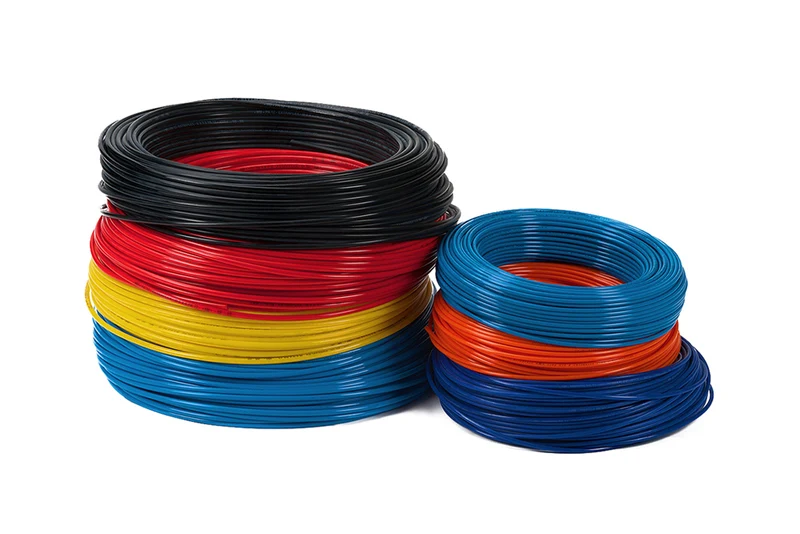
PA Tube – PA11 & PA12 Tubing for Oil, Fuel and Vapor Transfer
Product Overview
PA Tube is a high-performance thermoplastic tubing solution designed for applications requiring reliable resistance to oils, fuels, hydrocarbons, abrasion, pressure, and mechanical stress. Manufactured from high-quality polyamide materials, including PA11 and PA12, the Extrudierte Rohre provides an excellent balance of flexibility, chemical resistance, dimensional stability, and long-term service performance.
PA11 and PA12 tubing are widely used in fuel delivery, oil transfer, fuel vapor management, lubrication systems, pneumatic circuits, automotive fluid systems, and industrial equipment. Their relatively low density and excellent mechanical strength make them a practical alternative to heavier metal tubing in many fluid-transfer applications.
Depending on the application, Yozonetech ptfe tube manufacturer can supply PA tubing in different dimensions, wall thicknesses, hardness levels, colors, and performance grades. Material selection can be optimized according to the transported medium, temperature, pressure, flexibility requirements, and applicable industry standards.
Wesentliche Merkmale
- Excellent oil and fuel resistance— Suitable for many oil, fuel, hydrocarbon and lubricant transfer applications.
- PA11 and PA12 material options— Select the appropriate polyamide grade according to temperature, flexibility and chemical requirements.
- Good fuel vapor resistance— Suitable for selected fuel vapor, vent and emission-control tubing applications when the material construction meets the required specifications.
- High mechanical strength— Resists pressure, impact, vibration and mechanical stress during service.
- Excellent abrasion resistance— Suitable for applications involving repeated movement, contact or vibration.
- Lightweight construction— Significantly lighter than many conventional metal tubing solutions.
- Good dimensional stability— Maintains consistent tubing dimensions under normal operating conditions.
- Flexible and easy to install— Can be bent and routed through compact equipment and vehicle systems.
- Customizable construction— Available in different diameters, wall thicknesses, colors and material grades.
Technical Specifications
Artikel PA11 Tube PA12 Tube Base Material Polyamide 11 Polyamide 12 Appearance Natural / Black / Custom Natural / Black / Custom Inner Diameter Benutzerdefiniert Benutzerdefiniert Outer Diameter Benutzerdefiniert Benutzerdefiniert Wanddicke Benutzerdefiniert Benutzerdefiniert Härte Benutzerdefiniert Benutzerdefiniert Working Pressure Application dependent Application dependent Temperaturbereich Application dependent Application dependent Flexibilität Ausgezeichnet Ausgezeichnet Oil Resistance Ausgezeichnet Ausgezeichnet Fuel Resistance Excellent* Excellent* Abrasion Resistance Ausgezeichnet Ausgezeichnet Chemische Beständigkeit Good–Excellent Good–Excellent Manufacturing Method Extrusion Extrusion *Fuel compatibility depends on fuel composition, temperature, pressure, exposure time and tubing construction. Specific fuel formulations should be evaluated before final material selection.
PA11 vs. PA12: Which Material Should You Choose?
Although PA11 and PA12 are both high-performance polyamide materials, their characteristics make them suitable for somewhat different application requirements.
PA11 Tube
PA11 is particularly attractive for applications requiring a combination of fuel resistance, flexibility, toughness and long-term mechanical performance. It has been widely used in automotive and industrial fluid systems where the tubing may be exposed to fuels, oils, hydraulic fluids or other hydrocarbon-based media.
PA11 is a strong candidate for fuel lines, fuel vapor systems, oil transfer lines and applications where improved flexibility and resistance to environmental stress are important.
PA12 Tube
PA12 offers excellent dimensional stability, low moisture absorption, chemical resistance and flexibility. It is widely used in pneumatic systems, automotive fluid lines, fuel-related applications and industrial equipment.
Its relatively low moisture absorption compared with some other polyamide materials helps maintain stable mechanical and dimensional properties in changing environmental conditions.
The final choice between PA11 and PA12 should be based on the actual medium, operating temperature, pressure, environmental exposure, installation method and required service life.
Materials & Construction
Yozonetech PA tubing is manufactured through controlled extrusion processes to achieve consistent dimensions and stable wall thickness. The tubing can be produced using PA11, PA12 and other polyamide grades according to application requirements.
For oil and fuel-related applications, the material formulation is particularly important. Tubing performance is influenced not only by the nominal polymer type but also by resin grade, additives, processing conditions, wall thickness and the specific fuel or oil being transported.
For demanding applications, the tubing can be developed with customized formulations or constructions to improve resistance to fuel permeation, temperature, pressure, vibration and environmental exposure.
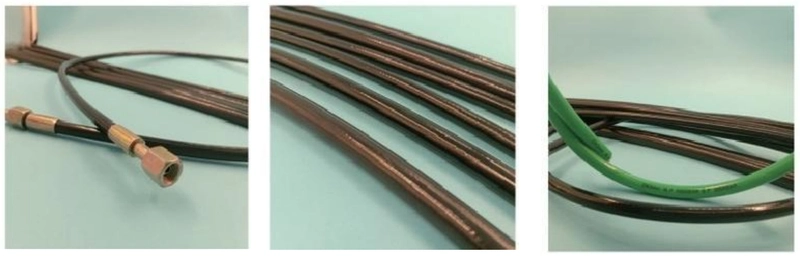
Black tubing is commonly selected for outdoor and automotive applications because it provides improved protection against UV exposure, while natural or transparent options may be selected when visual inspection of the internal medium is beneficial.
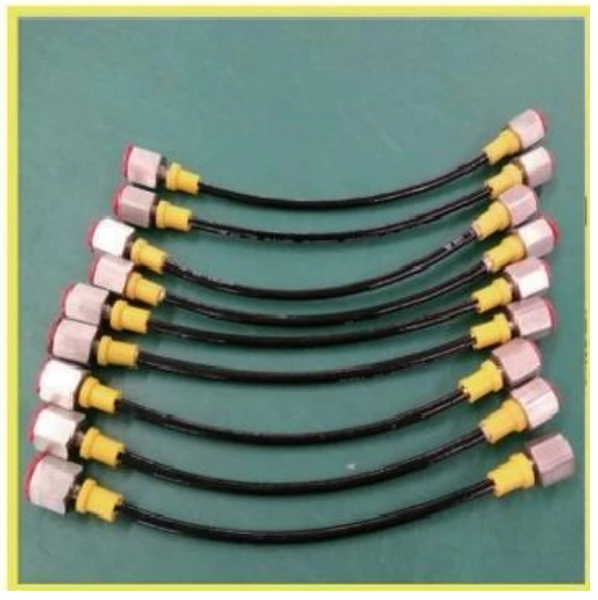
Anwendungen
PA11 and PA12 tubing can be used across a wide range of fluid and gas-transfer systems.
Automotive & Transportation
- Fuel supply and return lines
- Fuel vapor and vent systems
- EV thermal management auxiliary systems
- Lubrication systems
- Oil transfer
- Air and pneumatic lines
- Engine compartment fluid routing
Oil & Fuel Systems
- Fuel transfer
- Oil transfer
- Hydrocarbon fluid routing
- Fuel vapor management
- Tank vent systems
- Lubrication circuits
- Small-engine fuel systems
Industrielle Ausrüstung
- Hydraulic and pneumatic equipment
- Compressors
- Pumps
- Industrial machinery
- Fluid-control systems
- Chemical processing equipment
- Automation systems
Agricultural & Outdoor Equipment
- Lawn and garden equipment
- Small engines
- Generators
- Agricultural machinery
- Fuel delivery systems
- Lubrication equipment
For applications involving gasoline, diesel, ethanol-blended fuels, fuel vapor or specific hydrocarbons, the tubing should be evaluated against the actual fluid composition and operating conditions.
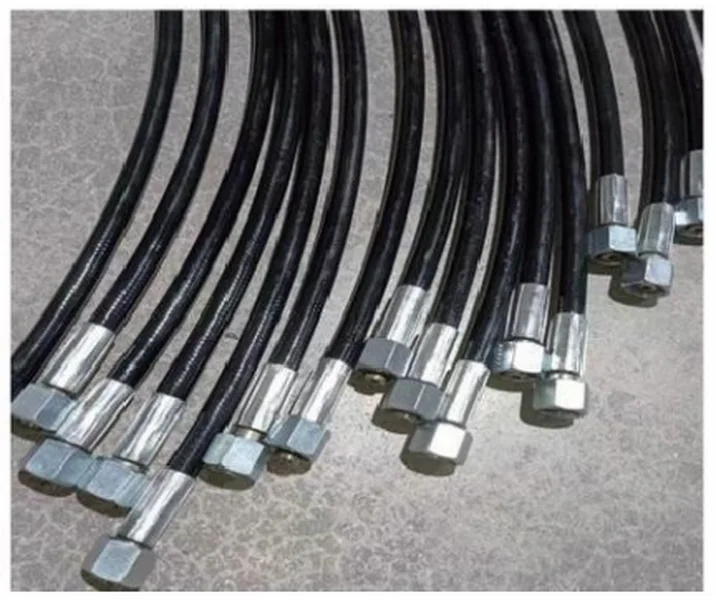
PA Tubing for Oil & Fuel Vapor Applications
PA11 and PA12 are especially valuable where tubing must handle both liquid hydrocarbons and fuel vapor environments while maintaining mechanical integrity.
In automotive and small-engine systems, tubing may experience continuous exposure to gasoline, diesel, lubricants or fuel vapor together with vibration, temperature changes and mechanical movement. A suitable polyamide tubing can provide a combination of chemical resistance, flexibility and mechanical durability that is difficult to achieve with ordinary general-purpose plastic tubing.
For fuel-vapor applications, however, permeation performance is an important consideration. The correct tubing construction should be selected according to the applicable emission requirements and fuel formulation. For applications involving high ethanol content or special fuel blends, Yozonetech can evaluate the material compatibility and recommend a suitable grade or multilayer construction where required.
Manufacturing & Quality Control
Yozonetech manufactures polyamide tubing using controlled extrusion equipment and standardized production procedures. During production, key parameters including material drying, extrusion temperature, extrusion speed, dimensional accuracy and cooling conditions are monitored to maintain consistent tubing quality.
Each production batch can be inspected for:
- Inner and outer diameter
- Wandstärke
- Surface appearance
- Dimensional tolerance
- Härte
- Zugfestigkeit
- Dehnung
- Pressure performance
- Chemical compatibility
- Material consistency
For customized fuel and oil applications, additional testing can be arranged according to the customer’s technical requirements.
Our production system is designed to provide stable dimensions and repeatable performance for both standard and customized tubing orders.
Customization / OEM & ODM
Yozonetech supports OEM and ODM production for PA11 and PA12 tubing.
Customers can specify:
- Material— PA11, PA12 or other polyamide grades
- Tube size— ID, OD and wall thickness
- Härte— According to installation and flexibility requirements
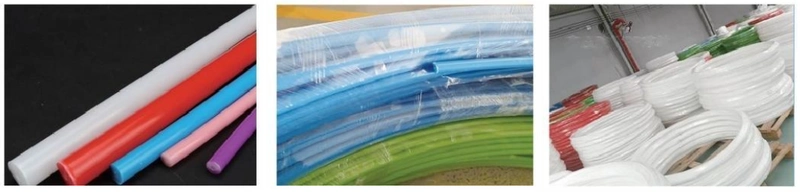
- Farbe— Natural, black or customized colors
- Surface— Standard smooth surface or customized construction
- Packaging— Coils, rolls, straight lengths or customer-specified packaging
- Application requirements— Fuel, oil, vapor, pneumatic or industrial fluid transfer
For fuel-related projects, customers can provide the fuel composition, operating temperature, working pressure, expected service life and applicable standards. Our technical team can then help determine whether PA11, PA12 or a customized construction is the most appropriate solution.
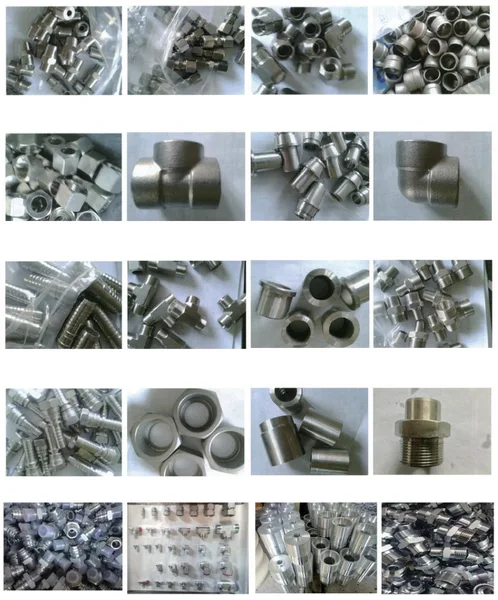
Why Choose Yozonetech PA Tube?
Yozonetech combines material selection, extrusion manufacturing and application-oriented technical support to provide reliable polyamide tubing for demanding fluid-transfer applications.
Whether you need standard PA12 pneumatic tubing, flexible PA11 fuel tubing, customized oil-transfer tubing or tubing for fuel vapor management, we can supply products according to your required dimensions and performance specifications.
Our production capabilities support both regular orders and customized OEM projects, with technical documentation and quality inspection available for international customers.
FAQ
1. What is the difference between PA11 and PA12 tubing?
PA11 generally provides excellent toughness, flexibility and resistance to fuels and hydrocarbons, while PA12 offers excellent dimensional stability, low moisture absorption and chemical resistance. The appropriate choice depends on the actual application.
2. Can PA11 and PA12 tubes be used for gasoline?
They can be suitable for certain gasoline and fuel applications, but compatibility depends on the exact fuel formulation, temperature, pressure, exposure time and tubing construction. The actual fuel should be specified when selecting the material.
3. Can PA tubing be used for ethanol-blended gasoline?
PA tubing can be designed for certain ethanol-containing fuels, but compatibility should not be assumed solely from the PA11 or PA12 designation. For E10, E20, E30 or higher ethanol blends, the exact formulation and required permeation performance should be evaluated before production.
4. Is PA tubing suitable for fuel vapor?
Yes, PA11 and PA12 can be used in selected fuel vapor, vent and emission-control applications. Where low fuel permeation is required, a specialized grade or multilayer construction may be more appropriate.
5. Can you manufacture customized PA tubing?
Yes. We can customize material grade, inner diameter, outer diameter, wall thickness, hardness, color, length and packaging according to your technical requirements and application conditions.
-
FKM Fuel Tubing for E30 Ethanol-Blended Gasoline
Product Overview
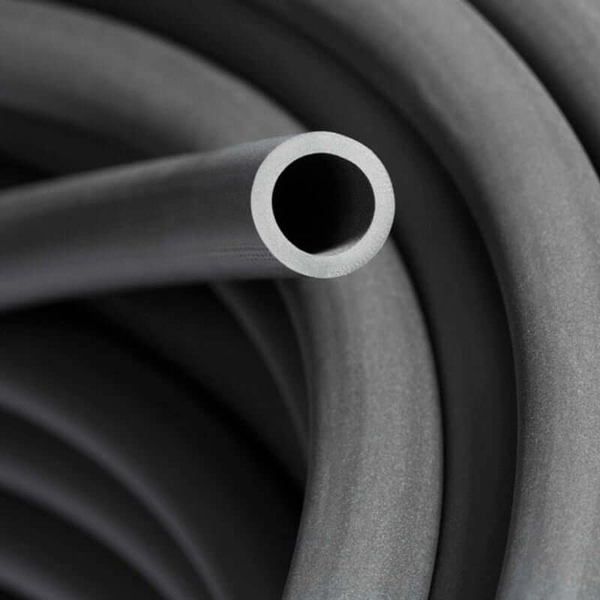
Yozonetech FKM Fuel Tubing is a high-performance fluorocarbon rubber tubing solution developed for demanding fuel, oil and hydrocarbon applications. It is particularly suitable for selected E30 ethanol-blended gasoline fuel systems, where resistance to gasoline, ethanol-containing fuels, oil, heat and aggressive chemical environments is required.
FKM, also known as Fluoroelastomer or Fluorocarbon Rubber, provides excellent resistance to many fuels, oils, hydrocarbons and elevated temperatures. Compared with conventional general-purpose rubber tubing, FKM tubing offers significantly improved chemical stability and long-term resistance in demanding fuel environments.
The Extrudierte Rohre can be used for fuel supply and return lines, fuel vapor lines, carburetor systems, small engines, generators, lawn and garden equipment, motorcycles, automotive applications and industrial fuel systems.
For E30 applications, material selection is critical. Yozonetech ptfe tube manufacturer can provide FKM tubing formulated and manufactured according to the required fuel composition, operating temperature, pressure, flexibility and service-life requirements.
Wesentliche Merkmale
E30 Fuel Application
Designed for selected fuel systems using gasoline blended with up to approximately 30% ethanol, subject to formulation and application validation.
Excellent Fuel Resistance
FKM provides strong resistance to gasoline, oils, hydrocarbons and many petroleum-based fluids, making it suitable for demanding fuel-transfer applications.
Ethanol-Blended Fuel Resistance
Compared with many conventional elastomers, appropriately formulated FKM can provide improved resistance to ethanol-containing gasoline. The exact formulation should be selected according to the required ethanol concentration and operating conditions.
Excellent Heat Resistance
FKM maintains useful mechanical and sealing properties over a wide temperature range and is suitable for fuel systems exposed to elevated engine-compartment temperatures.
Low Fuel Permeation
FKM has relatively low permeability to many fuels and hydrocarbons, making it useful where controlling fuel vapor and fuel permeation is important.
Oil & Chemical Resistance
The material offers excellent resistance to many mineral oils, lubricants, fuels and chemical media.
Long Service Life
Its resistance to heat, fuel and chemical degradation helps extend service life in demanding environments.
Flexible Fuel Line Construction
The tubing can be manufactured in different inner diameters, wall thicknesses and hardness levels to accommodate different fuel-system designs.
Technical Specifications
Artikel Spezifikation Product Type FKM Fuel Tubing Material FKM / Fluoroelastomer Primary Application Fuel & Hydrocarbon Transfer Fuel Compatibility Gasoline / Selected E30 Blends Ethanol Content Up to approximately 30%, subject to formulation validation Inner Diameter Kundenspezifisch Outer Diameter Kundenspezifisch Wanddicke Kundenspezifisch Härte Kundenspezifisch Farbe Black / Customized Working Temperature Application dependent Working Pressure Application dependent Bauwesen Extruded FKM Tubing Surface Smooth Custom Length Verfügbar Note: E30 compatibility should be confirmed according to the actual gasoline composition, ethanol content, additives, temperature, pressure and expected service life. Material compatibility testing is recommended for critical fuel-system applications.
Why Use FKM for E30 Gasoline?
Ethanol-blended gasoline creates additional material-selection challenges compared with conventional gasoline.
Ethanol is a polar solvent and can interact differently with elastomers, additives and fuel-system components. Long-term exposure may cause some materials to swell, soften, harden, lose mechanical strength or experience increased fuel permeation.
For this reason, a fuel hose intended for E30 gasoline should not be selected solely based on its appearance or nominal rubber type.
Appropriately formulated FKM can provide a combination of:
- Gasoline resistance
- Hydrocarbon resistance
- Ethanol-blend resistance
- Oil resistance
- High-temperature stability
- Low fuel permeation
- Good aging resistance
- Long-term dimensional stability
For small engines and fuel equipment, the tubing formulation should also be evaluated against the actual fuel mixture, including gasoline additives and storage conditions.
E30 Fuel Compatibility
E30 refers to gasoline containing approximately 30% ethanol and 70% gasoline by volume.
For fuel tubing, ethanol concentration is only one part of the compatibility equation. The actual performance can also be influenced by:
- Gasoline formulation
- Ethanol concentration
- Fuel additives
- Operating temperature
- Fuel pressure
- Continuous or intermittent exposure
- Static immersion versus dynamic flow
- Fuel vapor exposure
- Storage conditions
- Required service life
Yozonetech therefore recommends providing the actual fuel specification when ordering FKM fuel tubing for E30 applications.
For demanding applications, the material can be evaluated for volume change, hardness change, tensile properties, elongation, mass change and visual condition after exposure to the specified fuel.
Anwendungen
Small Engine Fuel Systems
FKM tubing is particularly suitable for compact gasoline engines where fuel compatibility and temperature resistance are important.
Typical applications include:
- Chainsaws
- String trimmers
- Brush cutters
- Lawn mowers
- Leaf blowers
- Small generators
- Small pumps
- Portable power equipment
Automotive Fuel Systems
Depending on the system requirements and applicable standards, FKM tubing can be used for:
- Fuel supply lines
- Fuel return lines
- Fuel vapor lines
- Carburetor connections
- Fuel tank connections
- Fuel system auxiliary lines
Motorcycle & Recreational Equipment
- Motorcycle fuel systems
- ATVs
- Utility vehicles
- Recreational equipment
- Small gasoline-powered equipment
Industrial Fuel Equipment
- Fuel transfer systems
- Fuel pumps
- Fuel dispensing equipment
- Petroleum equipment
- Engine test equipment
- Fuel handling systems
FKM Fuel Tubing for Small Engines
Small gasoline engines often operate under demanding conditions. Fuel tubing may be exposed to gasoline, ethanol blends, heat, vibration, mechanical movement and repeated fuel cycling at the same time.
For applications such as chainsaws, trimmers, blowers, lawn equipment and small generators, the fuel hose must remain flexible while maintaining resistance to swelling, hardening and cracking.
For E30 gasoline, the tubing should be selected according to the actual fuel formulation rather than relying only on generic “gasoline resistant” claims.
Yozonetech can evaluate the required FKM formulation according to the customer’s fuel specification and operating conditions.
Materials & Construction
FKM is a fluorinated elastomer with a high proportion of fluorine-containing polymer structure. This gives it excellent resistance to many hydrocarbons, oils and aggressive fluids.
Yozonetech FKM tubing is manufactured through controlled extrusion processes to achieve a uniform tube wall and smooth internal surface.
The formulation can be adjusted according to the intended application, with particular attention to fuel compatibility, hardness, flexibility and temperature resistance.
For E30 fuel systems, the tubing can be evaluated against the specified gasoline/ethanol mixture to ensure that the selected formulation provides appropriate resistance to swelling, mechanical property changes and fuel permeation.
Different wall thicknesses and dimensions can be manufactured according to the customer’s fuel-system design.
Performance in Fuel Environments
The performance of fuel tubing depends on both the elastomer and the operating environment.
Performance Requirement FKM Performance Gasoline Resistance Ausgezeichnet Hydrocarbon Resistance Ausgezeichnet Mineral Oil Resistance Ausgezeichnet Heat Resistance Ausgezeichnet Alterungsbeständigkeit Ausgezeichnet Fuel Vapor Resistance Ausgezeichnet Ethanol-Blended Gasoline Grade dependent E30 Compatibility Formulation dependent Flexibilität Gut Abrasion Resistance Gut Low Permeation Ausgezeichnet The table represents general characteristics of FKM. Actual E30 performance must be verified for the selected formulation and operating conditions.
Manufacturing & Quality Control
Yozonetech manufactures FKM tubing using controlled rubber extrusion processes.
Production control covers material preparation, compounding, extrusion, dimensional control, curing and final inspection.
Depending on the application, quality inspection may include:
- Inner diameter
- Outer diameter
- Wandstärke
- Härte
- Zugfestigkeit
- Dehnung
- Surface condition
- Dimensional tolerance
- Fuel immersion testing
- Volume change
- Mass change
- Hardness variation
- Appearance after fuel exposure
For E30 fuel applications, specific fuel-resistance testing can be arranged using the customer’s specified fuel or a representative fuel formulation.
Customization / OEM & ODM
Yozonetech provides customized FKM fuel tubing for OEM and aftermarket applications.
Customers can specify:
Dimensions
- Inner diameter
- Outer diameter
- Wandstärke
- Länge
- Coil or straight-cut length
Material
- Standard FKM
- Fuel-resistant FKM formulation
- Customized FKM compound
- Application-specific formulation
Physical Properties
- Härte
- Flexibilität
- Pressure resistance
- Temperature resistance
Anmeldung
- E30 gasoline
- Benzin
- Fuel vapor
- Diesel
- Lubricating oil
- Hydrocarbon fluids
For an E30 project, customers are encouraged to provide the fuel composition, temperature range, pressure, tubing dimensions and expected service life. This information allows our technical team to select or develop a suitable FKM formulation.
How to Select FKM Tubing for E30 Fuel
When purchasing FKM fuel tubing for an E30 gasoline system, the following parameters should be confirmed:
- Fuel composition
Confirm the ethanol concentration and whether additional oxygenates or fuel additives are present.
- Temperatur
Consider both normal operating temperature and short-term temperature peaks, especially when tubing is installed close to an engine.
- Pressure
Determine whether the tubing is used for low-pressure fuel delivery, return lines, vapor systems or higher-pressure fuel circuits.
- Flexibilität
Small engines and compact fuel systems often require tubing that can be bent around tight installation spaces without kinking.
- Permeation requirements
If the system is subject to emissions or fuel-vapor regulations, permeation performance may be as important as basic fuel resistance.
- Service life
For OEM applications, the expected operating hours, fuel exposure cycles and storage conditions should be considered.
- Applicable standards
If the fuel hose is intended for automotive, marine, small-engine or regulated applications, the applicable industry or OEM standard should be confirmed before production.
Why Choose Yozonetech FKM Fuel Tubing?
Yozonetech focuses on customized fluoropolymer and high-performance elastomer tubing for industrial and fuel-transfer applications.
For E30 fuel projects, we do not rely only on a generic “FKM is fuel resistant” specification. Instead, we can evaluate the application according to the fuel composition, ethanol concentration, temperature, pressure, dimensions and service requirements.
This allows customers to select a tubing formulation that is appropriate for the actual fuel environment.
We support standard and customized dimensions, OEM production, material evaluation and application-specific fuel compatibility testing.
FAQ
1. Is FKM suitable for E30 gasoline?
Selected FKM formulations can be suitable for E30 gasoline applications. However, E30 compatibility depends on the exact FKM formulation, gasoline composition, additives, temperature, pressure and exposure conditions. The specific formulation should be validated before use in critical systems.
2. Can FKM fuel tubing be used for small engines?
Yes. FKM tubing is suitable for selected small-engine fuel applications, including chainsaws, trimmers, lawn equipment, blowers and generators, particularly where resistance to gasoline, ethanol blends and elevated temperatures is required.
3. Is FKM better than ordinary rubber for ethanol-blended gasoline?
In demanding fuel environments, appropriately formulated FKM generally provides better resistance to heat, hydrocarbons, oils and many aggressive fuel environments than many general-purpose rubber compounds. However, the correct material should be selected based on the actual fuel formulation.
4. Can you make FKM tubing specifically for E30 fuel?
Yes. We can evaluate the required FKM formulation based on E30 gasoline composition, operating temperature, pressure, tubing dimensions and expected service life.
5. What information should I provide when requesting an E30 FKM tube?
Ideally provide the fuel composition, ethanol concentration, operating temperature, pressure, required inner and outer diameter, application, expected service life and any required industry standards or testing requirements.
6. Can FKM tubing be used for fuel vapor?
Yes. FKM has good resistance to many hydrocarbon vapors and can be used in selected fuel vapor and vent applications. Where strict permeation limits apply, the exact formulation and construction should be evaluated.
-
PTFE Brake Hose – PTFE Brake Line for Automotive & Motorcycle Brake Systems
Product Overview
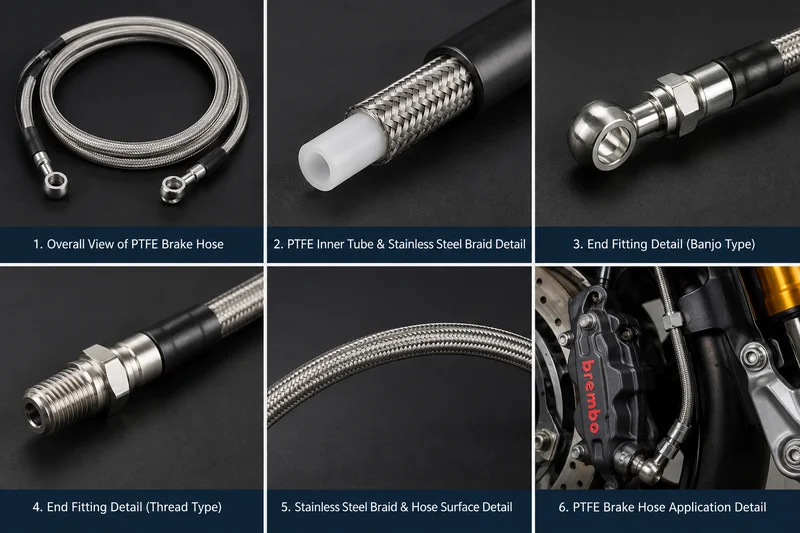
Yozonetech PTFE Brake Hose is a high-performance brake line designed for automotive, motorcycle, racing and other hydraulic braking systems requiring excellent resistance to brake fluid, high temperature, pressure and chemical exposure.
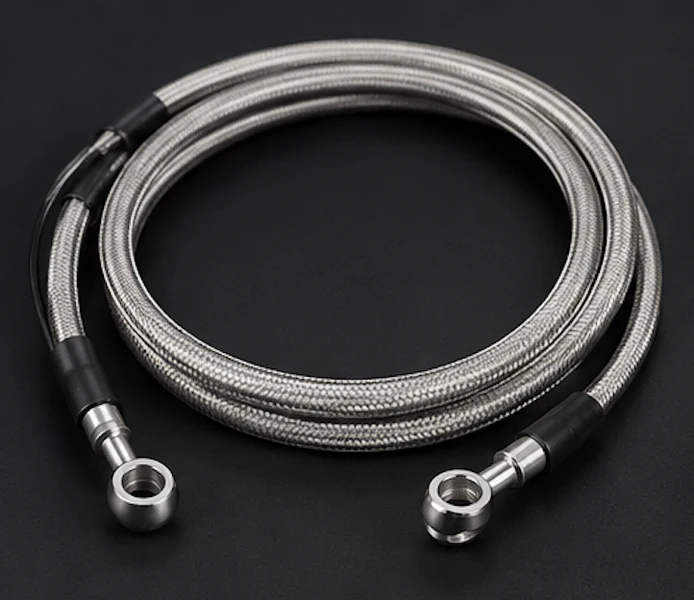
The hose uses a PTFE inner tube as the fluid-contact layer, providing excellent chemical resistance and a smooth internal surface for reliable brake-fluid transmission. Depending on the required pressure and mechanical protection, the PTFE tube can be reinforced with stainless steel wire braid or other high-strength reinforcement.
Compared with conventional rubber brake hoses, Extrudierte Rohre provides very low fluid permeability, excellent chemical resistance and strong resistance to temperature and aging. The reinforced construction also helps reduce hose expansion under hydraulic pressure, contributing to a more consistent braking response.
Yozonetech ptfe tube manufacturer supplies PTFE brake hoses in different inner diameters, outer diameters, reinforcement structures, lengths and fitting configurations for OEM and aftermarket applications.
Wesentliche Merkmale
Excellent Brake Fluid Resistance
PTFE is highly resistant to a wide range of hydraulic fluids and brake-fluid environments, making it suitable for demanding braking systems.
High Temperature Resistance
The PTFE inner tube can withstand elevated temperatures generated around braking systems, making it suitable for applications where conventional thermoplastic tubing may not be appropriate.
Low Expansion
The reinforced construction provides improved dimensional stability under hydraulic pressure, helping minimize hose expansion and maintain consistent hydraulic response.
Smooth Internal Surface
PTFE provides a very smooth internal surface, helping reduce flow resistance and minimizing fluid retention inside the tube.
Excellent Chemical Resistance
PTFE is resistant to many oils, solvents, fuels, hydraulic fluids and aggressive chemicals.
Low Permeability
PTFE has very low permeability compared with many conventional elastomeric materials, helping maintain stable performance over extended service periods.
Excellent Aging Resistance
The material is resistant to thermal aging, chemical degradation and environmental exposure, supporting long-term service performance.
Flexible Hose Construction
The reinforced PTFE hose can be routed through compact spaces while maintaining the required mechanical strength.
Technical Specifications
Artikel Spezifikation Product Type PTFE Brake Hose Inner Tube PTFE Reinforcement Stainless Steel Wire Braid / Customized Inner Diameter Kundenspezifisch Outer Diameter Kundenspezifisch Wanddicke Kundenspezifisch Working Pressure Application dependent Burst Pressure Application dependent Temperaturbereich Application dependent Brake Fluid Compatibility Application dependent Fittings Kundenspezifisch Hose Length Kundenspezifisch Farbe Natural PTFE / Black Cover / Customized Manufacturing Extrusion + Braiding + Assembly Actual pressure and temperature ratings depend on hose dimensions, reinforcement structure, fittings and application conditions.
Materials & Construction
Yozonetech PTFE brake hose consists primarily of a PTFE inner tube and high-strength reinforcement layer.
The PTFE inner tube provides direct contact with the brake fluid and offers excellent chemical and thermal resistance. Its smooth internal surface facilitates hydraulic fluid flow and provides stable performance during repeated pressure cycles.
For high-pressure brake applications, the PTFE tube can be reinforced with stainless steel wire braid. The reinforcement increases resistance to internal pressure, mechanical deformation and external impact while helping reduce radial expansion during braking.
Depending on the application, the hose can also be supplied with an additional protective outer layer to improve resistance to abrasion, moisture, road debris and environmental exposure.
The final construction can be optimized according to the vehicle type, pressure requirements, installation space and required service life.
Anwendungen
PTFE brake hose is suitable for a wide range of hydraulic braking systems.
Automobilindustrie
- Hydraulic brake systems
- Brake caliper connections
- Master cylinder lines
- Brake distribution systems
- Performance brake systems
- Modified and high-performance vehicles
Motorcycle
- Front brake lines
- Rear brake lines
- Racing motorcycles
- Street motorcycles
- Off-road motorcycles
- Custom motorcycle brake systems
Racing & Performance Vehicles
PTFE stainless steel braided brake hoses are widely suited to applications requiring high pressure resistance, low expansion and consistent braking response.
Typical applications include:
- Track cars
- Racing motorcycles
- Performance vehicles
- Motorsport braking systems
- High-performance brake upgrades
Industrial Hydraulic Systems
Depending on the hydraulic medium and pressure requirements, PTFE reinforced hose can also be considered for selected hydraulic fluid transfer applications where high chemical and temperature resistance is required.
Why Use PTFE for Brake Lines?
Brake systems require tubing that can withstand repeated pressure cycles while remaining compatible with the hydraulic fluid over a long service period.
Conventional rubber hoses can gradually change their mechanical properties due to temperature, aging and fluid exposure. PTFE provides a highly chemically stable inner surface and excellent resistance to elevated temperatures.
When combined with stainless steel reinforcement, the PTFE hose can provide:
PTFE Inner Tube → Chemical Resistance → Smooth Fluid Flow → Stainless Steel Reinforcement → Low Expansion → Stable Hydraulic Response
This construction is particularly attractive for performance-oriented brake systems where maintaining a consistent pedal feel and hydraulic response is important.
PTFE Brake Hose vs. Conventional Rubber Brake Hose
Eigentum PTFE Brake Hose Conventional Rubber Hose Chemische Beständigkeit Ausgezeichnet Gut Brake Fluid Resistance Excellent* Good–Excellent* Temperaturbeständigkeit Ausgezeichnet Moderate–Good Permeability Very Low Höher Alterungsbeständigkeit Ausgezeichnet Application dependent Internal Surface Very Smooth Rubber surface Pressure Stability Excellent with reinforcement Gut Expansion Control Excellent with braid Application dependent Flexibilität Gut Ausgezeichnet Service Environment Demanding applications General applications *Compatibility depends on the specific brake fluid and hose formulation.
Brake Fluid Compatibility
PTFE is resistant to a broad range of hydraulic fluids, but the complete brake hose assembly must be evaluated as a system.
Brake-fluid compatibility depends on the actual fluid type, formulation, temperature and operating conditions.
Common brake-fluid families may include:
- DOT 3
- DOT 4
- DOT 5
- DOT 5.1
However, DOT 5 silicone-based brake fluid and glycol-based fluids have different chemical characteristics, so the complete hose construction, fittings and sealing materials should be selected accordingly.
Customers should specify the exact brake fluid before ordering for OEM or critical braking applications.
Pressure & Temperature Performance
Brake hoses experience repeated hydraulic pressure pulses rather than a single static pressure condition.
Therefore, the design should consider:
- Normal operating pressure
- Peak hydraulic pressure
- Pressure cycling
- Temperature near the brake caliper
- Vibration
- Bending
- Abrasion
- Fitting connection
- Required service life
The stainless steel braided construction helps maintain hose dimensions during pressure cycling and provides additional mechanical protection.
For customized projects, Yozonetech can develop hose dimensions and reinforcement structures according to the customer’s required working and burst pressure.
Manufacturing & Quality Control
Yozonetech manufactures PTFE brake hose using controlled PTFE extrusion, reinforcement braiding and hose assembly processes.
The PTFE tube is produced with controlled dimensions and surface quality before being combined with the reinforcement layer.
Quality inspection may include:
- Inner diameter
- Outer diameter
- Wandstärke
- Dimensional tolerance
- PTFE surface quality
- Reinforcement coverage
- Working pressure
- Burst pressure
- Leakage
- Pressure cycling
- Fitting assembly
- Appearance inspection
For OEM brake-system applications, additional performance testing can be arranged according to customer requirements and applicable standards.
Fittings & Connections
PTFE brake hoses can be supplied with different end fittings according to the brake-system design.
Available configurations can include:
- Straight fittings
- Banjo fittings
- 45° fittings
- 90° fittings
- Male fittings
- Female fittings
- Customized thread configurations
Common fitting materials and surface treatments can be selected according to the application, including stainless steel and other suitable metal materials.
Customers can provide a drawing, sample or fitting specification for customized hose assembly.
Customization / OEM & ODM
Yozonetech supports customized PTFE brake hose production for automotive, motorcycle, racing and industrial applications.
Customers can specify:
Hose Construction
- PTFE inner tube
- Stainless steel braided reinforcement
- Additional protective outer layer
- Customized reinforcement structure
Dimensions
- Inner diameter
- Outer diameter
- Wandstärke
- Overall length
Leistung
- Working pressure
- Burst pressure
- Temperaturbereich
- Pressure-cycle requirements
- Flexibility requirements
Fittings
- Fitting type
- Thread specification
- Angle
- Material
- Surface treatment
- Connection configuration
Appearance
- Natural PTFE
- Stainless steel braid
- Black protective cover
- Customized outer covering
OEM production can be developed according to drawings, samples or complete technical specifications.
Why Choose Yozonetech PTFE Brake Hose?
Yozonetech combines PTFE extrusion, reinforced hose manufacturing and customized fitting assembly to provide complete PTFE brake hose solutions.
Our PTFE brake hose is designed for applications requiring excellent chemical resistance, high-temperature performance, low permeability and controlled expansion under hydraulic pressure.
Whether you need a standard PTFE brake line for motorcycles or a customized stainless steel braided brake hose for automotive and performance applications, we can manufacture the hose according to your required dimensions, pressure rating and fitting configuration.
FAQ
1. Why use PTFE for brake hoses?
PTFE provides excellent chemical resistance, high-temperature resistance, low permeability and a smooth internal surface. When reinforced with stainless steel braid, it can also provide good pressure stability and low expansion.
2. Can PTFE brake hose be used with DOT 4 brake fluid?
PTFE is generally highly resistant to many brake-fluid environments, including glycol-based fluids such as DOT 3, DOT 4 and DOT 5.1. However, the complete hose assembly should be validated against the specific brake fluid and operating conditions.
3. Can you manufacture stainless steel braided PTFE brake lines?
Yes. We manufacture PTFE inner tubes with stainless steel braided reinforcement and can supply complete hose assemblies with customized fittings.
4. Can the brake hose length and fittings be customized?
Yes. Hose length, inner diameter, reinforcement, fitting type, thread specification and fitting angle can all be customized according to drawings or samples.
5. Is PTFE brake hose suitable for motorcycles?
Yes. PTFE brake hose is suitable for many motorcycle applications, including front and rear hydraulic brake lines, racing motorcycles, off-road motorcycles and customized performance brake systems.
6. Can you provide samples before mass production?
Yes. Samples can be produced according to the required dimensions, hose construction and fitting configuration before bulk production.
-
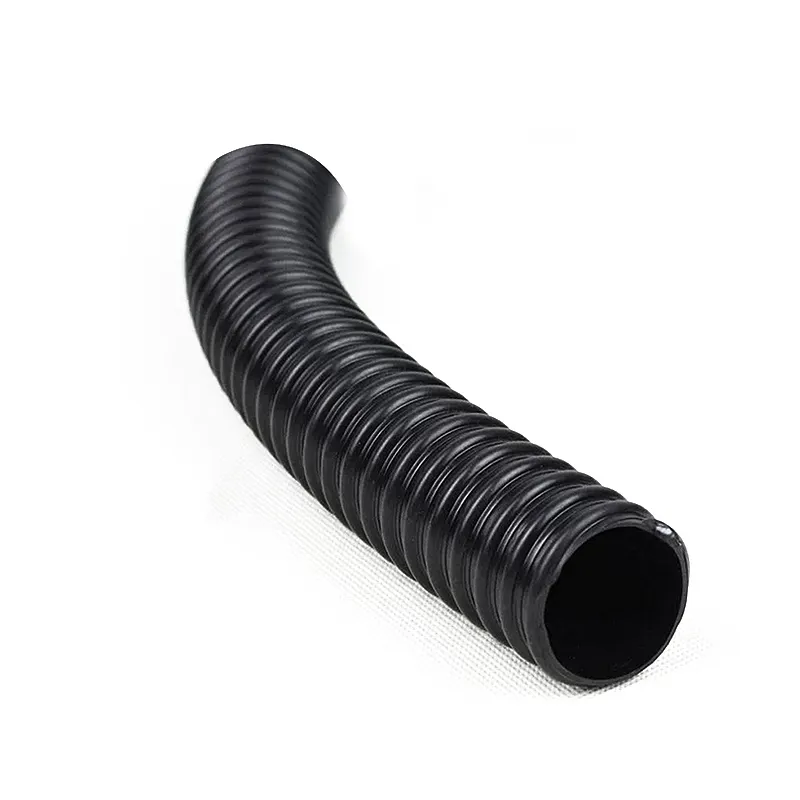
PTFE Flexibler extrudierter gewellter Schlauch OEM Hersteller
PTFE Tubing Flexible Produktbeschreibung:
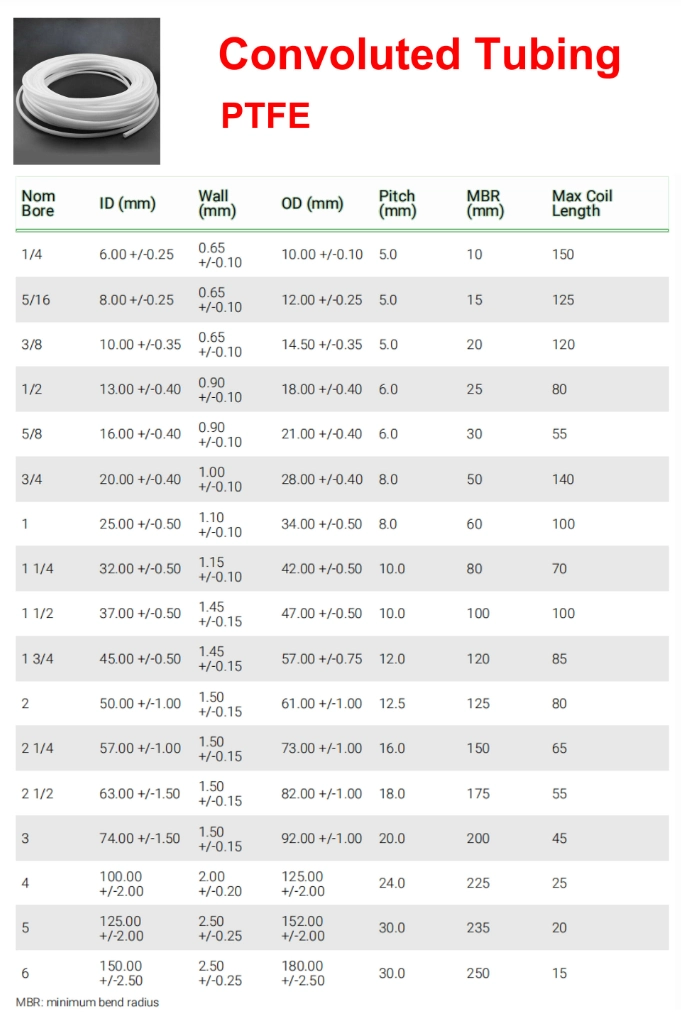
1. Polytetrafluoroethylene (PTFE) convoluted tube is made of modified standard PTFE. Compared with most fluoropolymers, it has excellent bending life performance and greatly improves the resistance to stress cracking.
2. Compared with standard materials, the PTFE spiral tube has fewer pinholes and lower penetration, which makes it an excellent choice for the transmission of fine chemicals and highly searchable gases (such as chlorine) .
3. PTFE can be made into corrugated PTFE pipe, which has excellent flexibility. Anti-static design (black) or straight end (for connectors/accessories) are also available. In addition to PTFE, we also provide PFA, FEP and PVDF bellows.
We can also provide stainless steel braided corrugated PTFE tube, whose engineering strength will be greatly increased
Key properties of convoluted PTFE tubing:
• UV-resistant (does not age)
• Almost absolutely chemical inert
• FDA- approved (suitable for food industry)
• Applications from -50 up to 260°C
• No attachment (easily to clean)
• Vacuum lasting up to 90%
• Electric isolated (high dielectricity)
PTFE Tubing Flexible Produkt-Spezifikation:
Herkunftsort: China
Markenname: YOZONE
Material Marke: Daikin chemical, DuPont. Dongyue & Chenguang (Inland)
Spezifikation: DN6 - DN 150, kundenspezifisch.
Länge: Kundenspezifisch
Die Form: Rund
Farbe: Weiß, transparent schwarz, rot, gelb usw.
Toleranz: ±0,05 mm
Zugfestigkeit: 20Mpa (verschiedene Spezifikationen sind unterschiedlich)
Chemische Beständigkeit: stabil in den meisten Medien.
Elektrische Eigenschaft: Isolationsbeständig
Zertifizierung: UL, CE, FDA, RoHS, REACH.
Norm: ISO9001:2008.
Prüfung: SGS bestanden
Muster: Kostenlos
Bezahlung: T/T
Nutzungsdauer: Abhängig von der Umgebung, bitte konsultieren Sie unsere Ingenieure.
Anwendung: Erdöltransport, Lebensmittelverarbeitung, Elektrotechnik usw.
PTFE Tubing Flexible Lieferfähigkeit:
2000 Meter pro Monat Kunststoff PTFE Faltenschlauch
PTFE Tubing Flexible Verpackung und Lieferung:
Kunststoff PTFE extrudierte ausgekleidete Rohre auf Spulen in Kartons oder Holzpaletten
Hafen: Tianjin, Shanghai, Shenzhen, Qingdao.
We are one of the professional manufacturers and ptfe rohr lieferant of custom tube in China, if you are interested in our custom 4mm ptfe tubing, custom 6mm ptfe tubing,custom ptfe extrudiertes Rohr, high purity custom ptfe tubing made in China, please contact us immediately!
[embed]https://youtu.be/wFtLvm9Kzko[/embed]
Yozonetech PTFE convoluted and corrugated tube has excellent suppleness and its outer diameter can be larger or smaller than straight part.
-
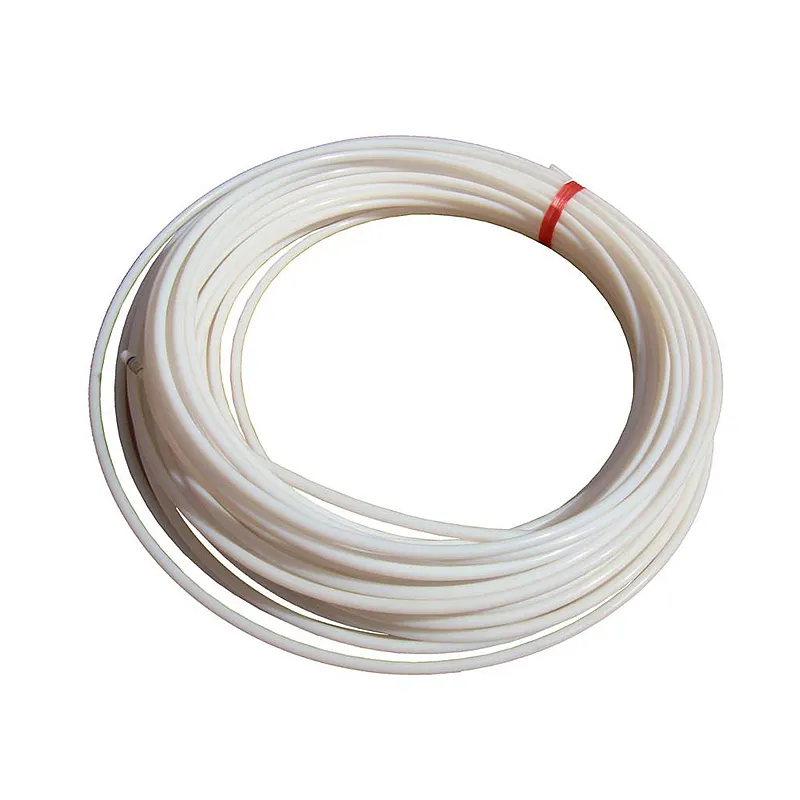
PTFE kundenspezifische flexible extrudierte Schläuche mit glatter Bohrung OEM-Hersteller
Product Overview
Yozonetech supplies PTFE tubing and rigid PTFE tubes for customers who need chemical resistance, thermal stability, electrical insulation and low friction. Our range covers small bore flexible tubing, standard metric and inch dimensions, and thick wall or large diameter rigid tubes. Nonstandard dimensions and special lengths can be customized to match drawings and application requirements.
PTFE stands for polytetrafluoroethylene. Its combination of chemical resistance and low surface friction makes it useful in industrial transfer lines, insulating sleeves and protective components. The right tube depends on the medium, temperature, pressure, installation space and connection method. We help customers turn those requirements into an agreed specification.
Product Highlights
Chemische Beständigkeit
The catalog rates PTFE chemical solvent resistance as excellent. Confirm compatibility with the actual medium, concentration and operating conditions before use.
Temperature capability
The material table lists a maximum continuous operating temperature of 260°C. This is a material reference and does not establish a pressure rating at that temperature.
Low friction
A reference coefficient of friction of 0.02 against steel supports applications where low surface drag is useful.
Electrical insulation
Reference dielectric constant is 2.1 at both 10³ Hz and 10⁵ Hz, with high volume and surface resistivity.
Low water absorption
The listed 24 hour water absorption is below 0.01 percent, helping limit moisture uptake.
Choice of dimensions
Flexible sizes, inch sizes and rigid tube dimensions allow selection around flow requirements, insulation clearance and component geometry.
Technical Specifications
The following values are PTFE material reference data, not guaranteed finished tube acceptance limits. Actual performance depends on resin grade, processing, tube geometry and service conditions. Agree any required test method and acceptance limit before ordering.
Eigentum PTFE reference value Catalog test method Relative density 2.13–2.22 ASTM D792 Zugfestigkeit 14–48 MPa ASTM D638 Dehnung bei Bruch 200–450% ASTM D638 Compressive strength 24 MPa ASTM D695 Flexural modulus 490–586 MPa ASTM D790 Shore D hardness 50–60 ASTM D636 as printed Friction coefficient against steel 0.02 Not stated Melting point 320–327°C Not stated Wärmeleitfähigkeit 0.25 Unit not stated Maximum continuous operating temperature 260°C Catalog reference at 20000 h Flame retardance UL 94 V-0 Material reference Dielectric constant at 10³ Hz 2.1 ASTM D150 Dielectric constant at 10⁵ Hz 2.1 ASTM D150 Durchgangswiderstand >10¹⁸ Ω·cm ASTM D257 Surface resistivity >10¹⁷ Ω ASTM D257 Chemical solvent resistance Ausgezeichnet ASTM D543 Water absorption at 24 h <0.01% ASTM D570 Refractive index 1.35 Not stated Material reference values do not establish certification of every finished tube. The hardness method is reproduced as printed and should be confirmed if a formal test report is required. Thermal conductivity is shown without an inferred unit because the source does not provide one.
Pressure and Temperature Selection
A PTFE tube pressure rating must be specified for the selected ID, OD, wall thickness, temperature and fitting arrangement. Request the permitted working pressure for your exact tube. Do not apply the PFA or FEP pressure charts to PTFE tubing. The temperature capability of the polymer also does not authorize pressurized service at the maximum temperature.
Standard Flexible Tubing Dimensions
All dimensions below are in millimeters. ID means inner diameter; OD means outer diameter. Wall thickness is calculated as (OD − ID) ÷ 2. The catalog lists these sizes in its common fluoropolymer tubing table and refers the PTFE flexible tube range to that table. Confirm the PTFE material and dimensional tolerance when ordering.
ID mm OD mm Wall mm 0.3 0.6 0.15 1 2 0.5 1 3 1 1.5 2.5 0.5 2 3 0.5 2 4 1 2 4.5 1.25 2 5 1.5 2.5 4.5 1 3 4 0.5 3 5 1 3 6 1.5 3.5 4.5 0.5 3.5 5.5 1 4 5 0.5 4 5.5 0.75 4 6 1 4 7 1.5 4 8 2 5 6 0.5 5 7 1 5 8 1.5 5 9 2 6 7 0.5 6 7.5 0.75 6 8 1 6 9 1.5 6 10 2 6.5 8.5 1 6.5 10 1.75 7 8 0.5 7 9 1 7 10 1.5 7.5 9 0.75 7.5 10 1.25 8 10 1 8 12 2 8.5 10.5 1 9 10 0.5 9 11 1 9 12 1.5 9.5 10.5 0.5 9.5 11.5 1 10 11 0.5 10 11.5 0.75 10 12 1 10 13 1.5 11 12.5 0.75 11 13 1 12 14 1 12 15 1.5 12 16 2 13 15 1 14 16 1 15 17 1 15 18 1.5 16 19 1.5 17 19 1 17 20 1.5 18 20 1 20 22 1 20 23 1.5 22 24 1 22 25 1.5 33 38 2.5 Other sizes can be customized. A listed dimension is a catalog option rather than a statement of stock availability.
Inch Tubing Dimensions
The source expresses inch tubing as OD × ID. This table retains that order and the catalog millimeter conversions rather than silently changing rounding conventions.
OD inch ID inch OD mm ID mm 1/8 1/16 3.17 1.57 1/4 1/8 6.35 3.17 1/4 5/32 6.35 3.96 1 1/4 — 31.75 27.95 1/4 5.5/32 6.35 4.35 1/4 3/16 6.35 4.76 3/8 1/4 9.525 6.35 1 1/2 — 38.1 33.7 1/2 3/8 12.7 9.525 3/4 5/8 19.05 15.88 1 7/8 25.4 22.2 2 — 50.8 42.5 The 1/4 × 5.5/32 inch entry and its 4.35 mm ID are reproduced from the catalog. Confirm the intended nominal size before ordering. For entries with no inch ID given, use the listed millimeter bore.
Packaging and Color Options
Catalog packaging options include 10 m, 20 m, 30.4 m, 50 m, 100 m and 500 m rolls, plus 2 m straight lengths. Availability depends on the selected tube size and construction. Specify whether your production process needs continuous rolls, straight pieces or custom cut lengths.
The shared tubing table lists transparent, semitransparent, white, red, blue, black, yellow, green and multicolor options across PTFE, FEP and PFA. PTFE is typically associated with a milky white or semitransparent appearance in the catalog. Confirm the achievable color and appearance for the chosen PTFE grade; transparent options in the shared table should not be interpreted as a promise of clear PTFE.
Dimensional Ordering
Always state which diameter comes first. Metric flexible sizes here use ID × OD; rigid tube dimensions on the following pages use OD, ID and wall thickness in separate columns. For custom production, provide tolerances for both diameters, cut length, end finish and any inspection requirements.
Rigid PTFE Tube Dimensions
The following is the complete rigid tube size list from the catalog. Dimensions are in millimeters. Reference mass is the theoretical value for 1000 mm of tube, expressed in kilograms. It is not a measured shipment weight. The catalog also gives 4200 mm theoretical masses; use the confirmed finished length and actual weight for purchasing or freight planning.
OD mm ID mm Wall mm Mass kg per m 9.5 6 1.75 0.09 9.5 4 2.75 0.13 13.5 5.5 4 0.26 14.5 6.5 4 0.28 20 15 2.5 0.30 20 16 2 0.24 20 14 3 0.34 20 13 3.5 0.39 20 12 4 0.43 20 10 5 0.51 20 8 6 0.57 20.5 16.5 2 0.25 30 24 3 0.55 30 25 2.5 0.47 30 20 5 0.84 30 18 6 0.97 30.5 22.5 4 0.72 40 34 3 0.75 40 33 3.5 0.86 40 32 4 0.97 40 30 5 1.18 40 25 7.5 1.65 50 46 2 0.65 50 45 2.5 0.80 50 44 3 0.95 50 43 3.5 1.10 50 23 13.5 3.33 50 40 5 1.52 60 53 3.5 1.34 60 50 5 1.86 70 64 3 1.36 70 46 12 4.70 71 61 5 2.23 70 50 10 4.05 80 75 2.5 1.31 80 74 3 1.56 80 70 5 2.53 80 72 4 2.05 90 84 3 1.76 90 80 5 2.87 90 74 8 4.43 90 70 10 5.40 90 78 6 3.40 100 80 10 6.08 100 90 5 3.21 110 104 3 2.17 110 100 5 3.54 130 121 4.5 3.81 150 143.6 3.2 3.17 250 220 15 23.80 260 250 5 8.61 305 295 5 10.13 350 340 5 11.65 360 349 5.5 13.16 408 397 5.5 14.95 460 448 6 18.39 508 495.4 6.3 21.34 Nonstandard sizes and special lengths can be customized. The catalog size labels for some rigid tubes are shorthand; select by the explicit OD and ID columns.
Catalog Diameter Tolerance Bands
Catalog diameter band mm Listed tolerance mm 15–50 ±0.3 51–100 ±0.4 101–207 ±0.5 208–360 ±1 400–500 ±1.5 The catalog does not identify which diameter these bands control, and it leaves some sizes outside the stated bands. Confirm OD, ID and wall acceptance limits separately for every order; do not extrapolate the bands to unlisted sizes.
Vollständiges Prozess-Qualitätskontrollsystem
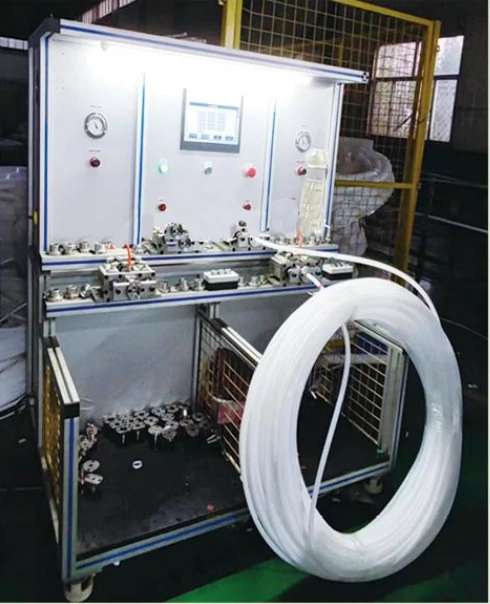
Air pressure detection
Unser ptfe rohr hersteller verwendet vollautomatische importierte Sensor-Luftdruckprüfgeräte. Alle PTFE-Schläuche werden mit 8 kg Luftdruck im Inneren getestet und der Druck wird 60 Sekunden lang aufrechterhalten, um Gaslecks zu verhindern.
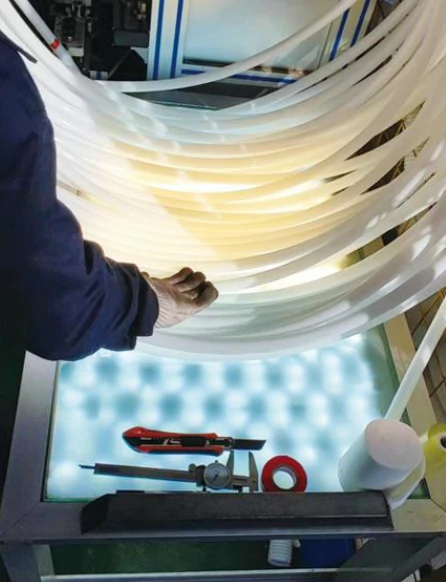
Nachweis von Verunreinigungen mit starkem Licht
Die Detektionslichtquelle besteht aus verschiedenen monochromatischen Lichtquellen und zusammengesetzten Lichtquellen, um verschiedene Verunreinigungen wie schwarze Verunreinigungen und Paraffin zu prüfen, die bei der Herstellung von PTFE-Innenrohren nicht leicht zu finden sind.
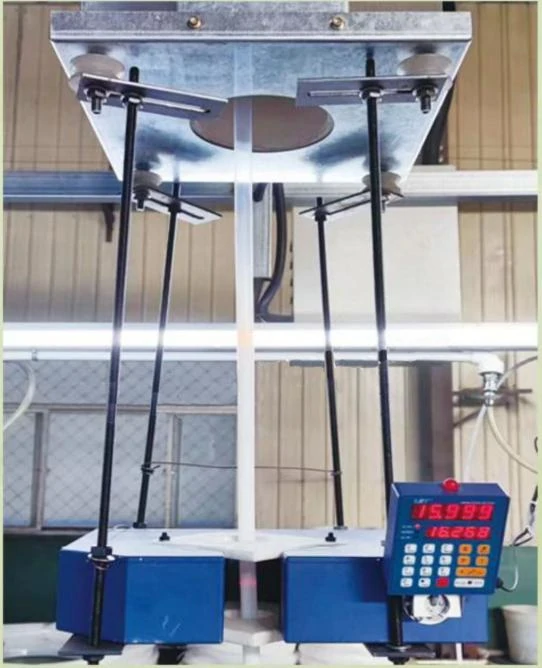
Steuerung des Laserdurchmessers
Es kann die Innen- und Außendurchmesser sowie die Toleranzen während des gesamten Produktionsprozesses von PTFE-Rohren kontinuierlich und genau kontrollieren.
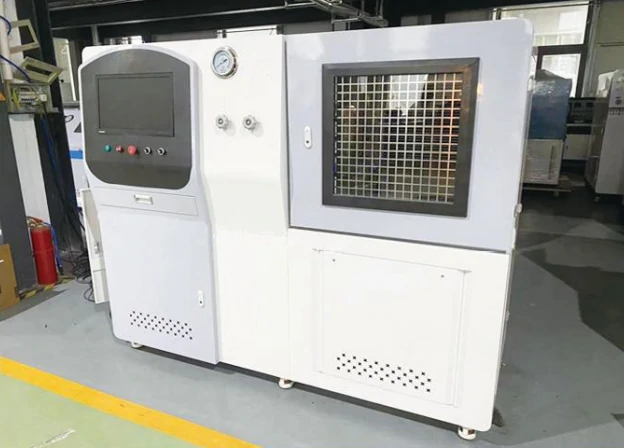
Hochtemperatur-Impuls-Prüfstand
Großhandel ptfe rohr ist der erste Impulsprüfstand für mittlere Temperaturen (+260°) in der Industrie, der die Impulshäufigkeit von Polytetrafluorethylenrohren bei verschiedenen Mediumstemperaturen prüfen kann.
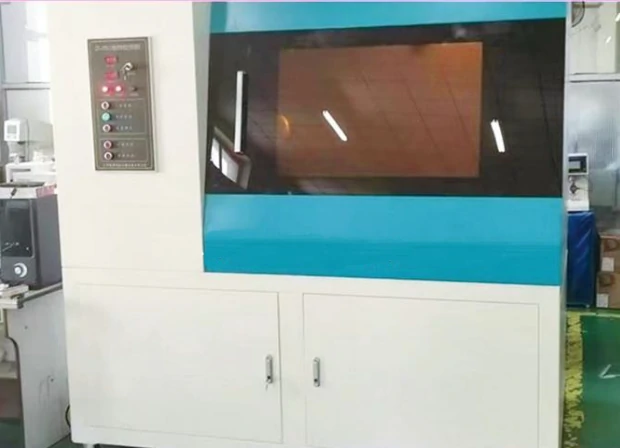
Elektrischer Durchschlagstest (SAE J30)
Prüfung der Isolierung von PTFE-Schlauch
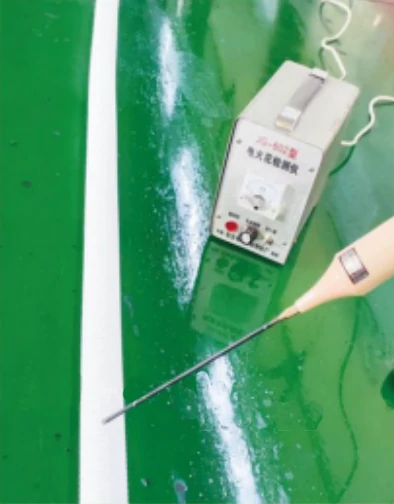
Sparkle-Test
Mit der Sparkle-Prüfung lassen sich kleine Lecks in PTFE-Schläuchen genauer erkennen.
Zertifizierungen
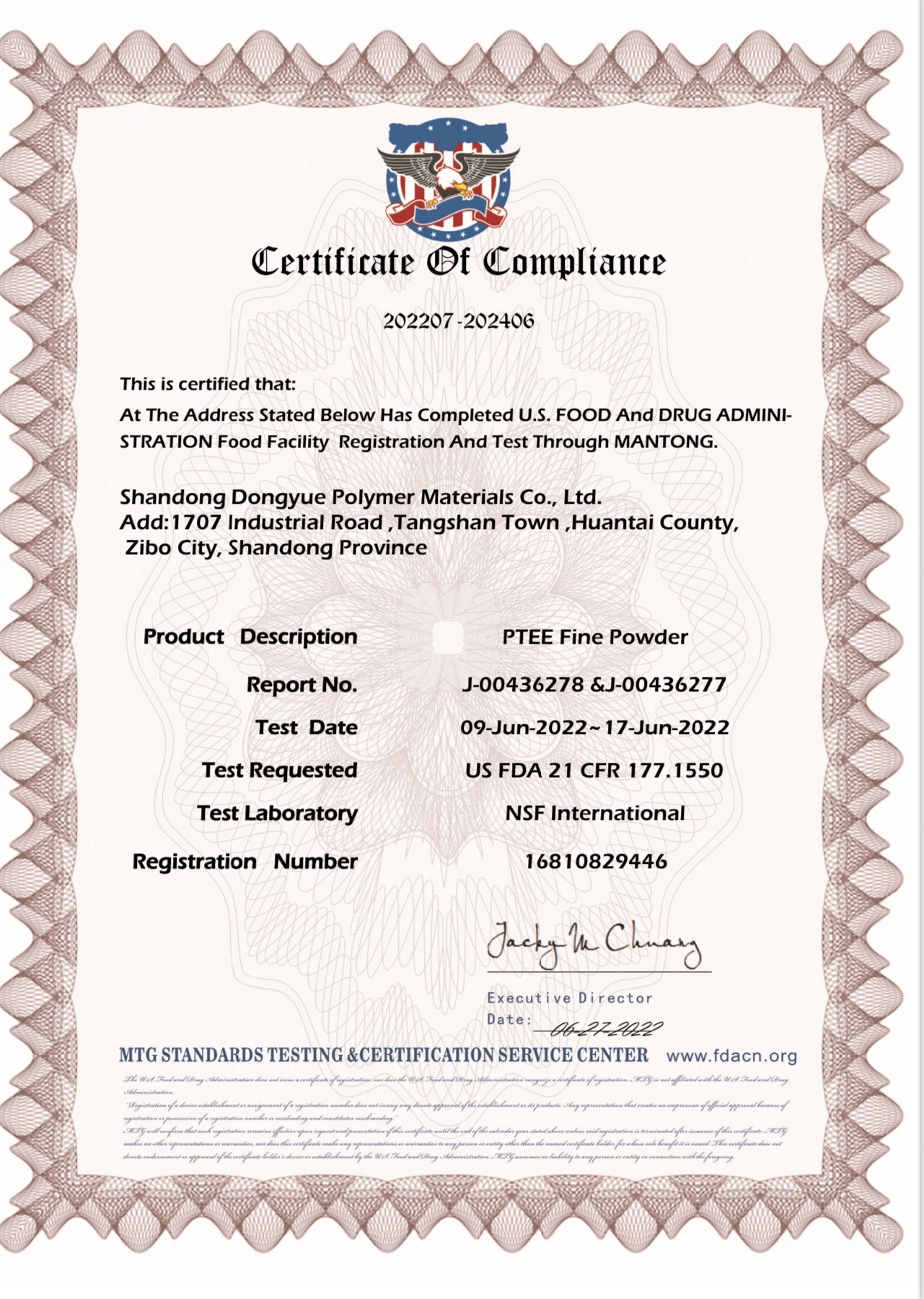
PTFE-Schlauch FDA-Zertifikat
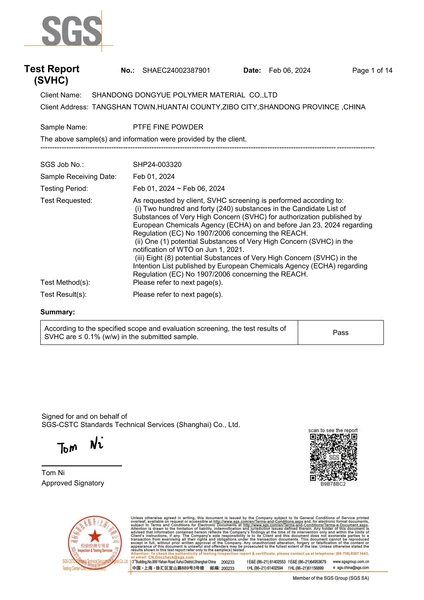
PTFE tube REACH certificate
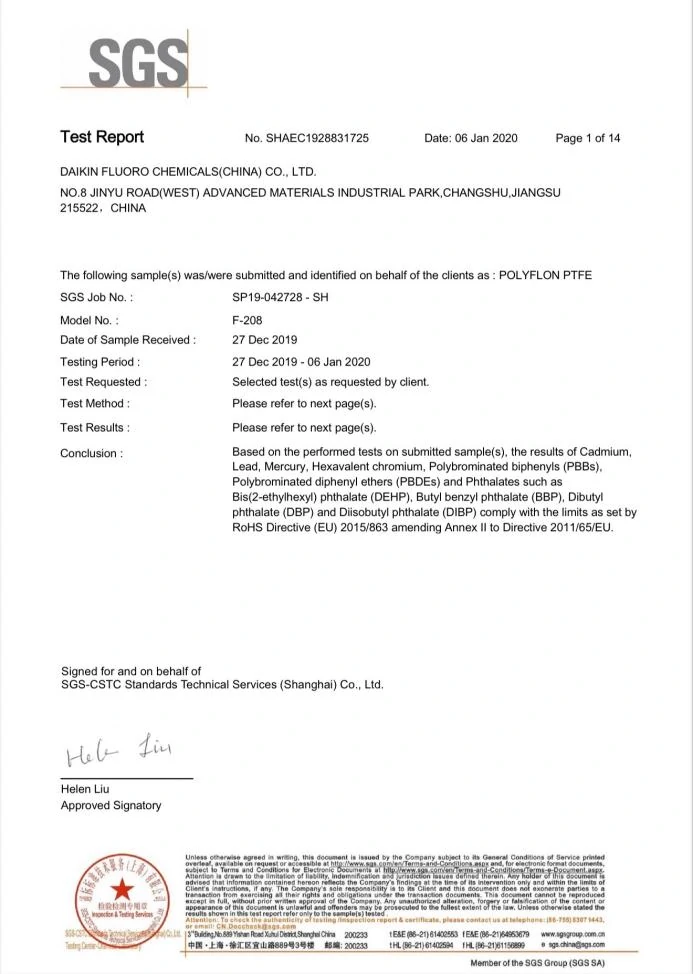
PTFE-Schlauch RoHS-Zertifikat
PTFE-Kapillarrohr-Spezifikationen
AWG ID OD VERPACKUNG Min Normal Max Modell S T-Modell L Modell 30 0.25 0.30 0.38 0.76 0.76 0.60 305 28 0.33 0.38 0.46 0.84 0.84 0.68 305 26 0.41 0.46 0.53 0.92 0.92 0.76 305 24 0.51 0.56 0.66 1.16 1.06 0.86 305 23 0.58 0.66 0.74 1.26 1.16 0.96 305 22 0.66 0.71 0.81 1.31 1.21 1.01 305 21 0.74 0.81 0.89 1.41 1.31 1.11 305 20 0.81 0.86 0.97 1.66 1.46 1.16 305 19 0.91 0.96 1.07 1.76 1.56 1.26 305 18 1.01 1.07 1.17 1.87 1.67 1.37 305 17 1.14 1.19 1.32 1.99 1.79 1.49 305 16 1.29 1.34 1.47 2.14 1.94 1.64 305 15 1.45 1.50 1.65 2.30 2.10 1.80 153 14 1.62 1.68 1.83 2.48 2.28 2.08 153 13 1.83 1.93 2.05 2.73 2.53 2.33 153 12 2.05 2.16 2.31 2.96 2.77 2.56 153 11 2.31 2.41 2.57 3.21 3.01 2.81 153 10 2.59 2.69 2.84 3.49 3.29 3.09 100 9 2.90 3.00 3.15 4.00 3.76 3.40 100 8 3.28 3.38 3.53 4.38 4.14 3.78 100 7 3.65 3.76 3.94 4.76 4.52 4.16 100 6 4.11 4.22 4.41 5.22 4.98 4.72 100 5 4.62 4.72 4.95 5.72 5.48 5.22 100 4 5.18 5.28 5.53 6.28 6.04 5.78 100 3 5.81 5.94 6.20 6.94 6.70 6.44 100 2 6.55 6.68 6.93 7.68 7.44 7.18 100 1 7.34 7.46 7.75 8.48 6.22 7.96 100 0 8.26 8.38 8.69 9.38 9.14 8.88 100 Applications and Selection
Industrial Chemical Transfer
PTFE tubing is a candidate for industrial lines exposed to chemically demanding media. Select the tube around the actual fluid and concentration, including any cleaning chemicals. Chemical resistance alone does not determine whether a tube is suitable: pressure, permeation, temperature and connection integrity also matter. Send the full operating conditions for technical review.
Electrical and Electronic Insulation
Small bore PTFE tubing can serve as an insulating sleeve around wires or components when its dimensions and electrical performance match the design. Low water absorption and the catalog electrical reference data support this selection process. Required voltage performance must be verified for the finished wall thickness and assembly.
Laboratory and Analytical Equipment
PTFE tubing may be considered for reagent transfer and protective sleeves in laboratory equipment. Specify bore size, routing, dead volume constraints and connection dimensions. Applications sensitive to contamination should define cleanliness, extractables and packaging requirements separately rather than assuming that every standard industrial tube meets them.
Machinery and Protective Components
Rigid PTFE tubes provide hollow stock for sleeves, spacers or other components where a tubular starting shape is useful. Select enough wall thickness for the final geometry and machining allowance. Review mechanical loading, dimensional stability and friction behavior under the actual operating conditions.
Semiconductor and Medical Equipment Selection
For semiconductor applications, define purity, particle and contamination requirements before selecting a grade. Standard PTFE tubing is not automatically qualified for high purity chemical delivery. For medical equipment, consider only appropriately reviewed external or nonpatient contact functions: this catalog specifically prohibits direct contact with biological tissues or fluids and use inside the human body. Medical contact applications require a separately qualified product and supporting evidence.
Choosing the Tube Construction
Flexible tubing is suited to installations that need routing flexibility and a small outside diameter. Rigid tubing is intended for layouts or components that benefit from a stiffer tubular form. Neither construction should be selected solely by name. Check the actual size, allowable pressure, installation geometry and joint design.
Capillary tubing, spiral cut tubing, corrugated tubing, heat shrink tubing and braided hose are separate product constructions. Their own size tables and performance data should be used when those functions are required; a smooth tube specification does not qualify them interchangeably.
Custom Production and Quality Requirements
Yozonetech manufactures standard and customized polymer products according to drawings and agreed specifications. Our company capabilities include extrusion, injection molding, blow molding and CNC machining or turning across the wider product range. Our quality management systems include ISO 9001 and ISO 45001.
Custom Specifications
For a custom PTFE tube, provide ID, OD, wall thickness, length and dimensional tolerance. Add resin grade requirements, color, surface condition, end finish and preferred packaging. For a machined rigid component, include a drawing with critical features, datum references and the inspection method needed for those features.
Inspection and Documentation
Agree the inspection plan before production. Relevant items may include diameter and wall measurements, ovality, length, visible defects, end condition and identification. If pressure performance is required, specify the test conditions and acceptance criteria for the finished tube and its intended fittings. Material documentation, certificates and any application specific reports should be confirmed at quotation stage.
A polymer property table is useful for initial selection, but it does not replace a batch test report or finished product qualification. Any requirement for food contact, biocompatibility, flame testing, restricted substances or special cleanliness must be tied to the actual grade and supplied product.
Installation and Use
Use the product only for its agreed application and within the confirmed service temperature and pressure limits. Allow a routing radius that avoids flattening or kinking, and confirm bend performance for the exact tube. Do not use another material’s bend radius table as a PTFE specification.
Support the tube to prevent strain at connections. Use fittings compatible with the chosen tube material and dimensions, and confirm the assembled system rating. Review the line after repeated use for abrasion, damage, hardening, dimensional change or signs of leakage. The catalog recommends periodic replacement where recurring friction may cause deterioration.
For acids, alkalis and highly hazardous media, consult technical personnel and confirm suitability before use. Keep tubing away from fire and welding. Processing above the stated maximum service temperature may release fluoropolymer decomposition gases; maintain adequate ventilation and follow the product safety data sheet. Dispose of used material in accordance with applicable local requirements.
Request a PTFE Tube Quotation
Send your required quantity, ID and OD or drawing, length, tolerances, color and packaging. Include the medium, concentration, normal and maximum temperature, working pressure and fitting type. For equipment qualification, add the standards and reports required. We can then review the specification and confirm supply details.
Website: www.chinaptfetube.com
E-Mail: ptfetube@yozonetech.cn
WhatsApp / Tel / WeChat: +86 13752771911Häufig gestellte Fragen
1 What is PTFE tubing used for
PTFE tubing is used where chemical resistance, insulation or low friction is needed. Candidate applications include industrial fluid lines, insulating sleeves, laboratory equipment and protective components. Confirm the tube against the actual service conditions.
2 What is the difference between flexible and rigid PTFE tubes
Flexible tubing allows easier routing, while rigid tubes provide a stiffer tubular form and can serve as stock for components. Size, wall thickness and construction determine practical behavior, so compare the exact product specifications.
3 Which standard metric sizes are available
The common flexible tubing table lists ID values from 0.3 to 33 mm and OD values from 0.6 to 38 mm. The rigid tube table spans OD 9.5 to 508 mm. These are listed catalog options, with nonstandard dimensions available for review.
4 Can you supply inch sizes
Yes. Catalog options include 1/8, 1/4, 3/8, 1/2, 3/4 and 1 inch outside diameters, plus larger entries. Specify both OD and ID because a nominal inch diameter alone does not define the bore or wall thickness.
5 What is the maximum operating temperature
The material reference table lists 260°C as the maximum continuous operating temperature. Confirm the finished tube service limits for its load, pressure and installation. The melting point of 320–327°C is not an operating temperature.
6 What working pressure can PTFE tubing withstand
There is no single rating covering this entire range. Working pressure must be confirmed for the actual tube dimensions, material, service temperature and fittings. Provide those details when requesting a quotation.
7 Are the listed material properties guaranteed for every tube
No. The catalog states that technical performance data are experimental reference values rather than guaranteed limits. Required properties and acceptance criteria must be agreed for the supplied product.
8 Is this PTFE tubing suitable for direct medical contact
The catalog prohibits contact with biological tissues or fluids and use inside the human body. Do not use this standard industrial range for direct patient contact. Such applications need a separately qualified product and documentation.
9 Can dimensions and colors be customized
Nonstandard sizes and special lengths can be reviewed. Color availability should be confirmed for PTFE rather than inferred from the shared PTFE, FEP and PFA color list. State the desired appearance and tolerances in your inquiry.
10 How is the tubing packaged
Catalog options include rolls of 10, 20, 30.4, 50, 100 and 500 meters and 2 meter straight lengths. Confirm the packaging option for your selected size, or request custom cut lengths and protective packaging requirements.